
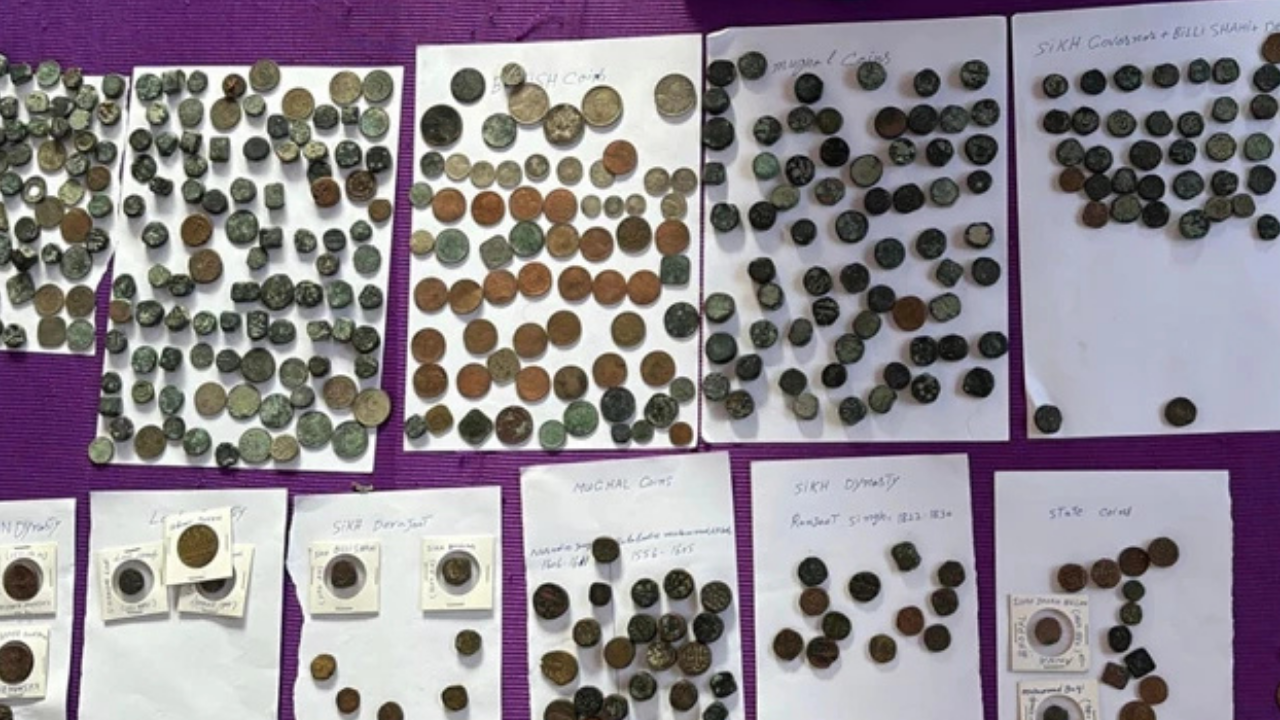


Archaeological authorities have acquired nearly 400 ancient coins that were uncovered from the Kuki Hill Torrent in proximity to the shrine of Hazrat Sakhi Sarwar Syed Ahmed Sultan located in Dera Ghazi Khan.
Deputy Commissioner Usman Khalid reported that the coins originate from various centuries and dynasties and have been transferred to the archaeology department. A team led by deputy director of archaeology Sulaiman Tanveer visited the site, secured the coins, and stated that plans for further excavations along the torrent bed are in progress.
The initial discovery of the coins was made by local residents near the shrine of Hazrat Sakhi Sarwar, who is believed to have entered the region in 1077. Historical records indicate that he was martyred alongside his family and interred in that same area. Recognized for his efforts in promoting Islam, the shrine eventually evolved into a significant religious site in southern Punjab.
Prior to his arrival, historians note the existence of an ancient temple in the settlement. Along the path leading to this temple were rest houses called Dhodah Ranas, named after a local sweet bread. These facilities catered to travelers and devotees, although their original structures have undergone changes over time. A third Dhodah Rana was situated in the village of Wadore, which was positioned on the historic route that connected Nigaha-Moqam, the former name of Sakhi Sarwar, to Afghanistan. Historical narratives also document that Mughal emperor Babur traversed this ancient trail.
Recently, remnants of an old check post have also been found along the Kuki torrent. Archaeologists believe these discoveries highlight the region’s importance as a stopover on trade and travel routes for numerous centuries.
The town of Sakhi Sarwar, formerly known as Nigaha and Moqam, has historically possessed both Islamic and pre-Islamic significance. Scholars assert that its geographical position on an ancient trade route linked it to Ghazi Ghat on the Indus River, which was previously referred to as Pattan Moqam. The latest findings contribute to the documentation of the town’s complex history, blending religious, cultural, and commercial narratives from diverse eras.
'%3e%3crect%20y='0.445312'%20width='48'%20height='48'%20rx='24'%20fill='white'%20fill-opacity='0.5'/%3e%3crect%20x='0.5'%20y='0.945312'%20width='47'%20height='47'%20rx='23.5'%20stroke='%23808080'/%3e%3cpath%20d='M34.625%2024.4453L14%2024.4453'%20stroke='%23808080'%20stroke-width='0.920053'/%3e%3cpath%20d='M23.375%2034.4453L13.375%2024.4453L23.375%2014.4453'%20stroke='%23808080'%20stroke-width='0.920053'/%3e%3c/g%3e%3cdefs%3e%3cfilter%20id='filter0_b_489_44344'%20x='-12'%20y='-11.5547'%20width='72'%20height='72'%20filterUnits='userSpaceOnUse'%20color-interpolation-filters='sRGB'%3e%3cfeFlood%20flood-opacity='0'%20result='BackgroundImageFix'/%3e%3cfeGaussianBlur%20in='BackgroundImageFix'%20stdDeviation='6'/%3e%3cfeComposite%20in2='SourceAlpha'%20operator='in'%20result='effect1_backgroundBlur_489_44344'/%3e%3cfeBlend%20mode='normal'%20in='SourceGraphic'%20in2='effect1_backgroundBlur_489_44344'%20result='shape'/%3e%3c/filter%3e%3c/defs%3e%3c/svg%3e)
'%3e%3crect%20y='0.445312'%20width='48'%20height='48'%20rx='24'%20fill='white'%20fill-opacity='0.5'/%3e%3crect%20x='0.5'%20y='0.945312'%20width='47'%20height='47'%20rx='23.5'%20stroke='%23808080'/%3e%3cpath%20d='M13.375%2024.4453L34%2024.4453'%20stroke='%23808080'%20stroke-width='0.920053'/%3e%3cpath%20d='M24.625%2014.4453L34.625%2024.4453L24.625%2034.4453'%20stroke='%23808080'%20stroke-width='0.920053'/%3e%3c/g%3e%3cdefs%3e%3cfilter%20id='filter0_b_489_44344'%20x='-12'%20y='-11.5547'%20width='72'%20height='72'%20filterUnits='userSpaceOnUse'%20color-interpolation-filters='sRGB'%3e%3cfeFlood%20flood-opacity='0'%20result='BackgroundImageFix'/%3e%3cfeGaussianBlur%20in='BackgroundImageFix'%20stdDeviation='6'/%3e%3cfeComposite%20in2='SourceAlpha'%20operator='in'%20result='effect1_backgroundBlur_489_44344'/%3e%3cfeBlend%20mode='normal'%20in='SourceGraphic'%20in2='effect1_backgroundBlur_489_44344'%20result='shape'/%3e%3c/filter%3e%3c/defs%3e%3c/svg%3e)