
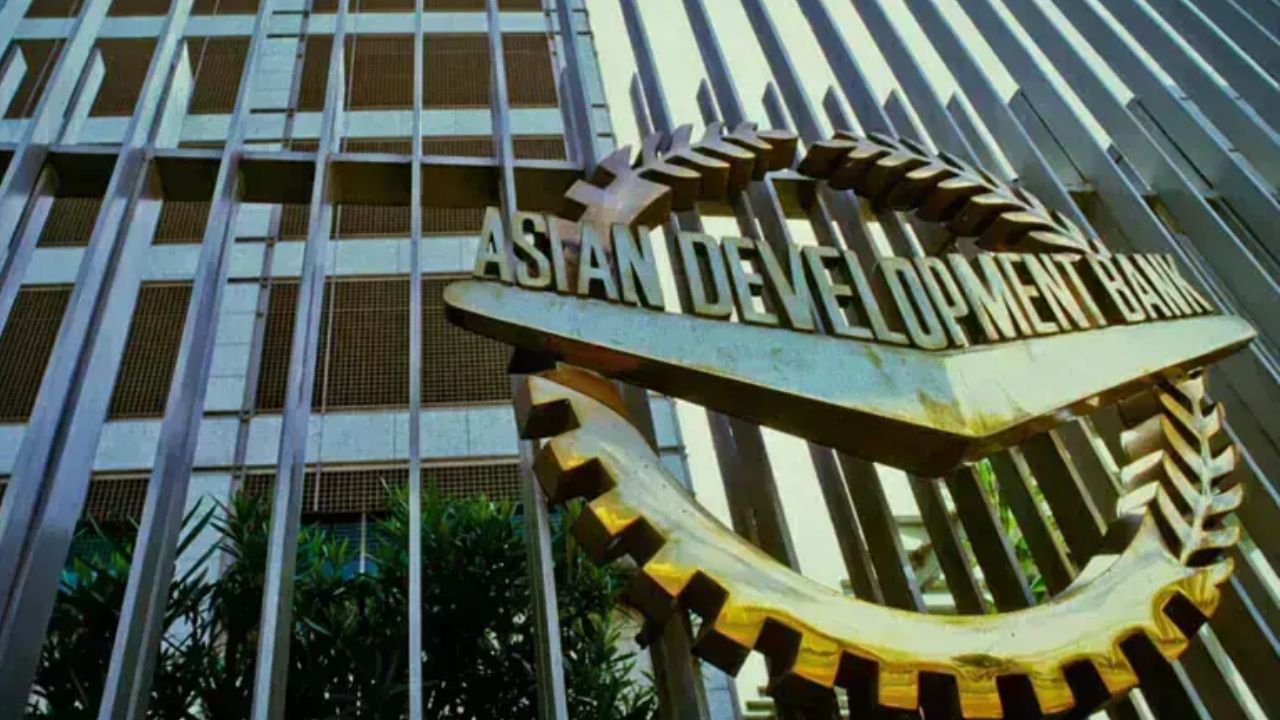


The Asian Development Bank (ADB) has approved an indicative $10–12 billion lending programme for Pakistan over five years, covering financing for critical minerals development and upgrades to Pakistan Railways’ Main Line-I (ML-I).
The decision was taken at an ADB board meeting, where India’s executive director also supported the strategy while raising observations on Pakistan’s governance and debt situation.
The Manila-based lender launched its Country Partnership Strategy (CPS) for Pakistan 2026–2030, outlining support for the country’s transition towards sustainable and inclusive growth through private-sector-led development, according to its Pakistan office.
The CPS sets three priority areas: enabling private sector growth, advancing inclusion and empowerment, and strengthening resilience and sustainability.
While the ADB did not officially confirm the total size of the package, officials and multilateral sources said the indicative lending volume is based on current annual approvals and is estimated at $10–12 billion over five years. Individual projects will be negotiated within the overall framework during the period.
Officials said the package size could increase if Pakistan’s credit rating improves. Rating upgrades by international agencies were noted, though they remain insufficient to significantly lower long-term borrowing costs.
Pakistan currently receives around $2 billion annually in ADB financing, roughly half in concessional loans. The ADB approved $2.6 billion in lending for Pakistan last year.
The CPS states that the bank will provide financing, policy support and technical assistance to develop critical mineral value chains in Pakistan.
ADB Country Director for Pakistan Emma Fan said the strategy is designed to address structural challenges and support inclusive growth.
The document says the bank will help develop Pakistan’s mineral sector by supporting governance frameworks, infrastructure integration, and environmental and social safeguards.
Pakistan holds deposits of copper, barite, chromite, gold, salt and marble, but the mining sector contributes about 2.4 percent to GDP and 0.2 percent to employment.
Mineral exports remain limited, reflecting gaps in infrastructure, governance and regulation, the CPS noted.
ADB plans to support the sector through improved geodata systems, regulatory reforms, co-financing arrangements and fiscal policy changes.
The lender also plans to support the establishment of sovereign wealth funds to improve benefit-sharing and long-term investment planning.
A proposed $500 million loan will support reforms in pension and insurance systems and development of capital markets to channel long-term savings into productive investment.
Main Line-I upgrades remain a key component of the strategy, including improvements to tracks, signalling systems and stations to modernise the rail corridor and improve regional connectivity.
China had initially planned to finance ML-I under the China-Pakistan Economic Corridor (CPEC) framework but later withdrew due to Pakistan’s rising debt concerns.
The ADB said its future financing will also extend to port modernisation, motorways and highways, along with broader trade and logistics reforms aimed at streamlining cross-border trade procedures.
The CPS notes that Pakistan’s poverty rate stands at 45 percent, with rural poverty significantly higher than urban levels. It adds that the top 10 percent of households earn 42 percent of national income, while the bottom 50 percent account for 13 percent.
The strategy also includes support for disaster risk management, climate governance, and increased climate-related investment for resilience and mitigation.
The lender said Pakistan’s production base remains narrow, its regulatory environment complex, and its public financial management uneven, with inefficiencies in energy, transport and urban services.
It noted that more than 200 state-owned enterprises account for assets worth around 48 percent of GDP, contributing to governance and accountability challenges due to overlapping oversight structures.
The ADB added that Pakistan ranks near the lower end globally on governance indicators across multiple categories.
'%3e%3crect%20y='0.445312'%20width='48'%20height='48'%20rx='24'%20fill='white'%20fill-opacity='0.5'/%3e%3crect%20x='0.5'%20y='0.945312'%20width='47'%20height='47'%20rx='23.5'%20stroke='%23808080'/%3e%3cpath%20d='M34.625%2024.4453L14%2024.4453'%20stroke='%23808080'%20stroke-width='0.920053'/%3e%3cpath%20d='M23.375%2034.4453L13.375%2024.4453L23.375%2014.4453'%20stroke='%23808080'%20stroke-width='0.920053'/%3e%3c/g%3e%3cdefs%3e%3cfilter%20id='filter0_b_489_44344'%20x='-12'%20y='-11.5547'%20width='72'%20height='72'%20filterUnits='userSpaceOnUse'%20color-interpolation-filters='sRGB'%3e%3cfeFlood%20flood-opacity='0'%20result='BackgroundImageFix'/%3e%3cfeGaussianBlur%20in='BackgroundImageFix'%20stdDeviation='6'/%3e%3cfeComposite%20in2='SourceAlpha'%20operator='in'%20result='effect1_backgroundBlur_489_44344'/%3e%3cfeBlend%20mode='normal'%20in='SourceGraphic'%20in2='effect1_backgroundBlur_489_44344'%20result='shape'/%3e%3c/filter%3e%3c/defs%3e%3c/svg%3e)
'%3e%3crect%20y='0.445312'%20width='48'%20height='48'%20rx='24'%20fill='white'%20fill-opacity='0.5'/%3e%3crect%20x='0.5'%20y='0.945312'%20width='47'%20height='47'%20rx='23.5'%20stroke='%23808080'/%3e%3cpath%20d='M13.375%2024.4453L34%2024.4453'%20stroke='%23808080'%20stroke-width='0.920053'/%3e%3cpath%20d='M24.625%2014.4453L34.625%2024.4453L24.625%2034.4453'%20stroke='%23808080'%20stroke-width='0.920053'/%3e%3c/g%3e%3cdefs%3e%3cfilter%20id='filter0_b_489_44344'%20x='-12'%20y='-11.5547'%20width='72'%20height='72'%20filterUnits='userSpaceOnUse'%20color-interpolation-filters='sRGB'%3e%3cfeFlood%20flood-opacity='0'%20result='BackgroundImageFix'/%3e%3cfeGaussianBlur%20in='BackgroundImageFix'%20stdDeviation='6'/%3e%3cfeComposite%20in2='SourceAlpha'%20operator='in'%20result='effect1_backgroundBlur_489_44344'/%3e%3cfeBlend%20mode='normal'%20in='SourceGraphic'%20in2='effect1_backgroundBlur_489_44344'%20result='shape'/%3e%3c/filter%3e%3c/defs%3e%3c/svg%3e)