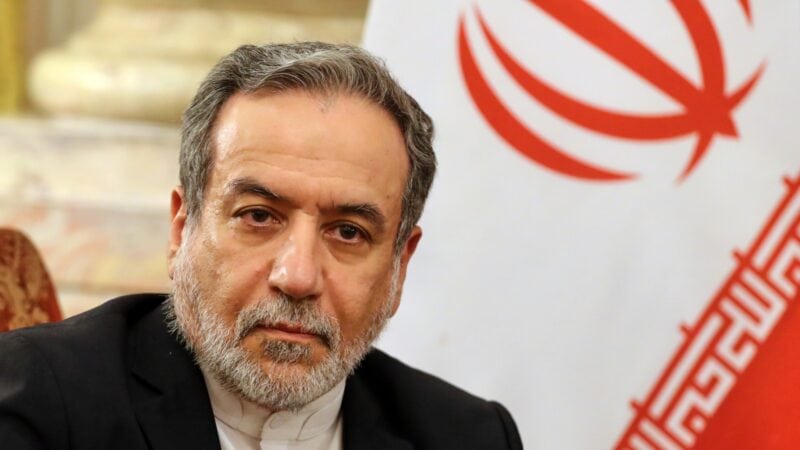
Iranian Foreign Minister Abbas Araghchi has stated in a televised news conference broadcast by Iranian state television that the United States (US) “begged” Iran for negotiations, according to media reports.
Araghchi recalled that US President Donald Trump demanded unconditional surrender at the start of the conflict. “The US President wrote two words at the beginning of the war: ‘Unconditional surrender’,” Araghchi said. “That was what they wanted from us and, 20 days later, the same enemy was begging for negotiations.”
During the broadcast, Araghchi declared that Iran proved itself as a “tough and invincible power.”
He quoted foreign officials telling him, “You Iranians created a miracle; you surprised the whole world.” Araghchi added, “No one thought that Iran could resist America like this,” noting that the US operated with backing from Israel, Western nations, and other countries.
Concurrently, US President Donald Trump posted on Truth Social a demand for “compensation” from Iran “for all of the people that they have killed and gravely wounded with their roadside bombs and many conflicts.”
Trump noted that Iranian representatives requested compensation for damages during negotiations over the last five months. “But it is an interesting idea,” Trump posted, “because I am now likewise demanding compensation from Iran.”
Trump expanded the demand to cover “damages and death” caused in Lebanon, Syria, Yemen, and the Gaza Strip.
The US president stated that compensation should also go to families of “hundreds of thousands of innocent protestors that Iran has killed over the last 50 years” along with 52,000 killed in recent months. “I have instructed my representatives to put this firmly into any, and all, future negotiations,” Trump wrote.
Meanwhile, Iran’s Supreme Leader Ayatollah Mojtaba Khamenei posted on X that Iran is “in a strategic, fateful confrontation with Global Arrogance.” Khamenei issued directives targeting an increase in capabilities to achieve “maximum deterrence,” along with “readiness in intelligence” for offensive operations, cultural advancement within the IRGC, and organizational management endowed with “spiritual and scientific foundations and modern skills.”
The directives followed Khamenei appointing six senior military commanders across the General Staff, IRGC, and Basij.
Major General Ali Abdollahi became chief of staff of the Armed Forces, with Brigadier General Kioumars Heydari as deputy. Major General Ahmad Vahidi took command of the IRGC, with Mostafa Izadi as deputy. Rear Admiral Ali Ozmaei became commander of the IRGC Navy, while Hossein Taeb took leadership of the Basij.