
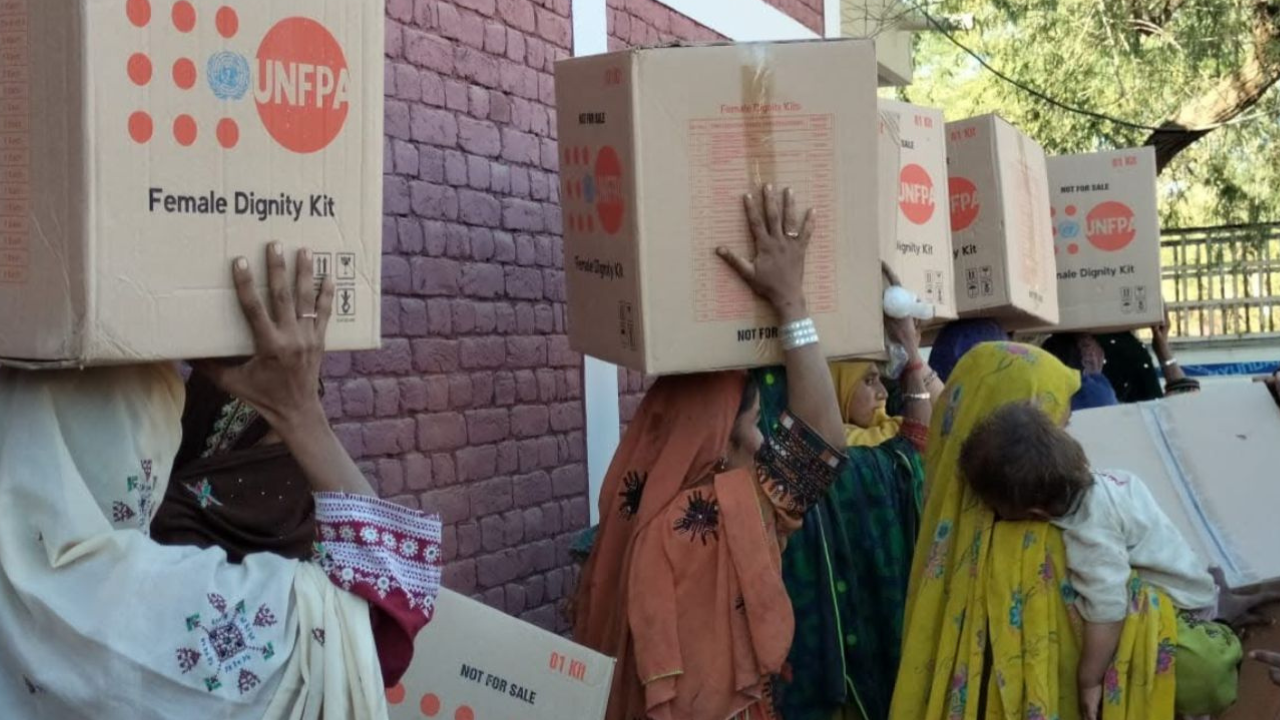


Balochistan Minister for Education Raheela Durrani has announced that the provincial government plans to pursue legislative action aimed at women’s health and dignity, during a consultative meeting on Wednesday.
The session focused on strategizing a joint assembly resolution for tax reforms on menstrual health and hygiene (MHH) products.
The meeting, organized by the Menstrual Hygiene Management (MHM) Working Group alongside Unicef Pakistan, brought together policymakers, executive authorities, and international development partners to address the economic barriers facing women in the province.
Durrani stated that steps are currently being taken to provide facilities that support the empowerment of women in Balochistan.
The proposed resolution seeks to either reduce provincial taxes on essential MHH products by 50 percent or abolish them entirely. The primary goal of this move is to ensure these items are affordable for vulnerable segments of the population.
MHM Working Group chairperson Dr Tahira Kamal Umrani identified the removal of these taxes as a "critical public health priority" intended to ease the economic burden on marginalised communities.
Former health minister Rehmat Saleh Baloch argued that the removal of financial barriers to health necessities is a shared legislative responsibility. He called for immediate consensus across different political parties to move the proposal forward.
From an administrative standpoint, Balochistan Revenue Authority chairperson Abdullah Khan indicated a readiness to review the proposal. The session ended with lawmakers pledging to take ownership of the legislative drafting process.
The representatives intend to table the resolution in the Balochistan Assembly to establish a precedent for policy reforms centered on women.
The participants agreed to expedite the process to make these products accessible across the province. This initiative marks a shift toward addressing specific public health costs through provincial tax adjustments.
'%3e%3crect%20y='0.445312'%20width='48'%20height='48'%20rx='24'%20fill='white'%20fill-opacity='0.5'/%3e%3crect%20x='0.5'%20y='0.945312'%20width='47'%20height='47'%20rx='23.5'%20stroke='%23808080'/%3e%3cpath%20d='M34.625%2024.4453L14%2024.4453'%20stroke='%23808080'%20stroke-width='0.920053'/%3e%3cpath%20d='M23.375%2034.4453L13.375%2024.4453L23.375%2014.4453'%20stroke='%23808080'%20stroke-width='0.920053'/%3e%3c/g%3e%3cdefs%3e%3cfilter%20id='filter0_b_489_44344'%20x='-12'%20y='-11.5547'%20width='72'%20height='72'%20filterUnits='userSpaceOnUse'%20color-interpolation-filters='sRGB'%3e%3cfeFlood%20flood-opacity='0'%20result='BackgroundImageFix'/%3e%3cfeGaussianBlur%20in='BackgroundImageFix'%20stdDeviation='6'/%3e%3cfeComposite%20in2='SourceAlpha'%20operator='in'%20result='effect1_backgroundBlur_489_44344'/%3e%3cfeBlend%20mode='normal'%20in='SourceGraphic'%20in2='effect1_backgroundBlur_489_44344'%20result='shape'/%3e%3c/filter%3e%3c/defs%3e%3c/svg%3e)
'%3e%3crect%20y='0.445312'%20width='48'%20height='48'%20rx='24'%20fill='white'%20fill-opacity='0.5'/%3e%3crect%20x='0.5'%20y='0.945312'%20width='47'%20height='47'%20rx='23.5'%20stroke='%23808080'/%3e%3cpath%20d='M13.375%2024.4453L34%2024.4453'%20stroke='%23808080'%20stroke-width='0.920053'/%3e%3cpath%20d='M24.625%2014.4453L34.625%2024.4453L24.625%2034.4453'%20stroke='%23808080'%20stroke-width='0.920053'/%3e%3c/g%3e%3cdefs%3e%3cfilter%20id='filter0_b_489_44344'%20x='-12'%20y='-11.5547'%20width='72'%20height='72'%20filterUnits='userSpaceOnUse'%20color-interpolation-filters='sRGB'%3e%3cfeFlood%20flood-opacity='0'%20result='BackgroundImageFix'/%3e%3cfeGaussianBlur%20in='BackgroundImageFix'%20stdDeviation='6'/%3e%3cfeComposite%20in2='SourceAlpha'%20operator='in'%20result='effect1_backgroundBlur_489_44344'/%3e%3cfeBlend%20mode='normal'%20in='SourceGraphic'%20in2='effect1_backgroundBlur_489_44344'%20result='shape'/%3e%3c/filter%3e%3c/defs%3e%3c/svg%3e)