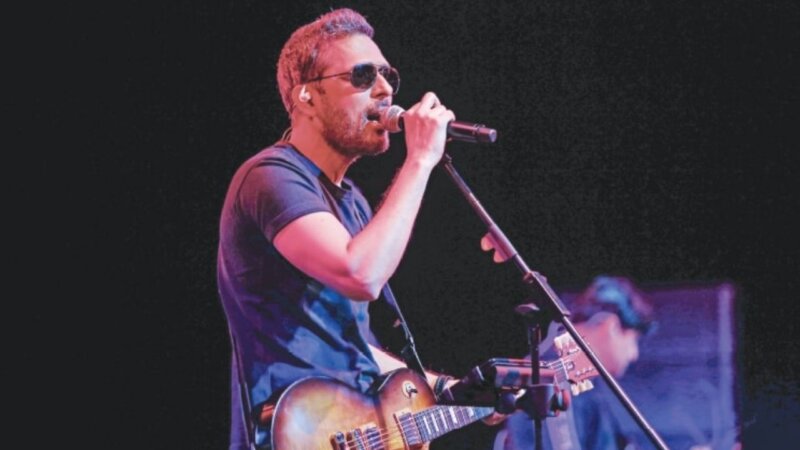
Singer Bilal Maqsood has criticised the way Coke Studio operates across South Asia, saying that the franchise follows the same pattern in every country and is flattening the region’s musical identity.
Maqsood, who offered his view on the intersection of music, culture, creativity and commercial investment, pointed to the opening songs of the Pakistani and Bangladeshi editions as proof. “Coke Studio Pakistan, you see Coke Studio India, you see Coke Studio Bangladesh, all follow the same pattern,” he opined during a recent podcast.
The first Pakistani song featured Sindhi rallis, traditional patchwork quilts, while the first Bangla song featured saris.
When the interviewer suggested that this amounts to standardising creativity, Maqsood agreed and claimed yhat instructions now come from outside the countries themselves. “They are killing individuality,” he remarked.
He said Coke Studio Pakistan once had a distinct sound, whether people call it folk fusion or something else. In his view, the company now uses the platform to make the sound of the entire region uniform.
Maqsood also pointed to the scale of the money involved. He said the company has the power to invest millions of dollars, and that this kind of spending creates its own pressure. “When you invest that much money, understand that it’s put on a ventilator. It constantly requires money.”
Maqsood co-founded the pop-rock band Strings in 1988 with classmates at the Government College of Commerce and Economics in Karachi. He composed the band’s music and played the guitar, while his father, the writer Anwar Maqsood, wrote its lyrics. Faisal Kapadia sang lead vocals.
Strings entered the Bollywood music scene in 2006 with “Yeh Hai Meri Kahani” for the film Zinda. From 2014 to 2017, Maqsood and Kapadia produced and directed Coke Studio Pakistan for seasons seven to ten. In 2017, they announced that season ten would be their last.
In 2020, Maqsood became director and executive producer of the first season of Velo Sound Station, another music show. Strings split in 2021 after more than three decades together. Maqsood launched his solo career in 2022, releasing his first single, “Naya Naya,” in May and an album, Urdu Nursery Rhymes, the same year.