
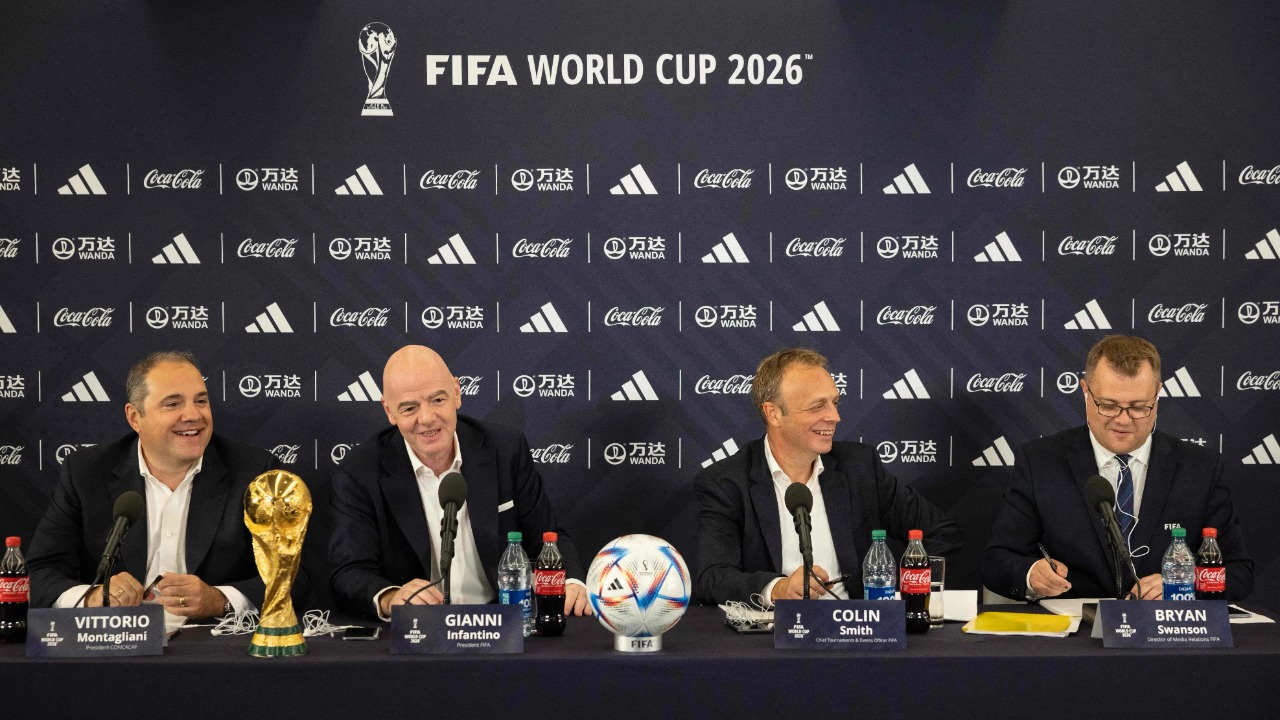


2026 FIFA World Cup: Everything You Need to Know
The excitement surrounding the 2026 FIFA World Cup is already building. For the first time in history, the tournament will feature 48 teams, a massive expansion from the usual 32. Scheduled to take place from June to July 2026, this monumental event will be hosted by three countries: the United States, Canada, and Mexico. The stage is set for what promises to be one of the most thrilling tournaments in football history.
Expanded Format to Welcome More Teams
The 2026 FIFA World Cup marks a new chapter with its 48-team format. This expansion seeks to increase inclusivity, giving more nations a chance to shine on the global stage. The spots have been redistributed across confederations to ensure diversity.
Here’s the breakdown of allocations for the expanded format:
-
Europe increases its qualifying spots from 13 to 16.
-
Africa now has 9 direct qualifiers, plus 1 potential intercontinental playoff spot.
-
Asia secures 8 spots, also with a playoff opportunity for an additional spot.
-
North and Central America gets between 6 to 8 teams due to hosting privileges in the region.
-
South America sees its qualification pool grow to 6, including a playoff possibility.
-
Oceania earns a direct spot for the first time.
This evolution creates opportunities for smaller footballing nations, transforming the World Cup into a truly global celebration.
The Hosts Prepare for Action
Three countries: USA, Canada, and Mexico are set to host a record 80 matches. This collaborative effort showcases North America’s ability to unite for an event of this scale.
United States
The USA will host the majority of the games, including key matches such as the semi-finals and finals. Cities like Los Angeles, New York, and Miami are getting ready to welcome fans from around the world. The tournament also provides a golden opportunity for the United States to boost its vibrant soccer culture.
Canada
Canada, known for its passionate sports fanbase, will host 10 matches split between two cities: Toronto and Vancouver. Toronto’s BMO Field, home to some of Canada’s most iconic soccer moments, is undergoing a $146 million renovation. Temporary seating will increase its capacity to 45,000, while permanent upgrades include new LED video boards, Wi-Fi improvements, and a ticketed rooftop patio.
BC Place in Vancouver will host 7 matches, including two knockout round games. The stadium’s reputation for world-class sports events ensures it’s an ideal venue for the World Cup.
Mexico
Mexico, a proud soccer nation, also joins the host roster for the third time, having hosted in 1970 and 1986. Cities such as Mexico City, Guadalajara, and Monterrey, all steeped in football history, are gearing up to welcome the global audience. The famous Azteca Stadium in Mexico City will be a highlight, having already witnessed two iconic World Cup finals.
Major Controversies and Exclusions
While excitement is high, the 2026 FIFA World Cup isn’t without challenges. FIFA recently made headlines by excluding three nations: Russia, Congo, and Pakistan from the tournament.
Russia’s Continued Ban
Russia remains banned from international football due to geopolitical sanctions relating to the invasion of Ukraine in 2022. FIFA and UEFA have upheld their decision, emphasizing their stance against violating global standards. This ongoing exclusion reflects the governing body’s commitment to integrity despite the controversy.
Congo’s Governance Issues
Congo faces suspension for "third-party interference" in its football federation. FIFA prohibits any involvement of external parties in football governance. Until Congo resolves this issue, their national team remains sidelined.
Pakistan’s Administrative Failures
Pakistan’s exclusion stems from the failure of its football federation (PFF) to adopt a constitution ensuring free and fair elections. Unless the issue is addressed, FIFA’s suspension will continue, causing uncertainty for the country’s football future.
The exclusion of these teams has reignited debates about the balance between politics and sports. However, FIFA remains steadfast in its mission to uphold governance and fairness in global football.
Key Dates to Watch
The tournament officially kicks off on June 12, 2026, in Toronto, where Canada will play in the opening match. The group stage will feature 16 groups of 3 teams, making every game high-stakes. The grand finale is scheduled for July 19, 2026, at one of the USA's top locations, with over 70,000 fans expected to pack the stadium.
Stadium Improvements Are in Full Swing
Hosting a tournament of this magnitude requires significant infrastructure upgrades. Several major stadiums are undergoing renovations to meet FIFA’s high standards.
One of the standout projects is Toronto’s BMO Field, where a $146 million investment aims to enhance the fan experience. Upgrades spanning temporary seating, digital boards, and expanded concessions will ensure the stadium is well-equipped. Meanwhile, in the USA, stadiums like the Mercedes-Benz Stadium in Atlanta and the MetLife Stadium in New Jersey are being prepared to accommodate massive crowds.
These improvements are not just for the World Cup but are seen as long-term investments in the local sports infrastructure, benefiting fans for years to come.
A Tournament Like No Other
The 2026 FIFA World Cup promises more games, more goals, and more moments to remember. With Lionel Messi possibly on his swan song and rising stars ready to shine, there will be no shortage of drama. This event has everything needed to redefine football history.
The expanded format, combined with the host nations’ passion and state-of-the-art facilities, ensures this will be a once-in-a-lifetime experience for fans. Whether you’re attending matches live or following the action from home, the 2026 FIFA World Cup has something for everyone.
Read More: Gautam Gambhir Responds to Champions Trophy Advantage Debate, Tells Critics to ‘Grow Up’
'%3e%3crect%20y='0.445312'%20width='48'%20height='48'%20rx='24'%20fill='white'%20fill-opacity='0.5'/%3e%3crect%20x='0.5'%20y='0.945312'%20width='47'%20height='47'%20rx='23.5'%20stroke='%23808080'/%3e%3cpath%20d='M34.625%2024.4453L14%2024.4453'%20stroke='%23808080'%20stroke-width='0.920053'/%3e%3cpath%20d='M23.375%2034.4453L13.375%2024.4453L23.375%2014.4453'%20stroke='%23808080'%20stroke-width='0.920053'/%3e%3c/g%3e%3cdefs%3e%3cfilter%20id='filter0_b_489_44344'%20x='-12'%20y='-11.5547'%20width='72'%20height='72'%20filterUnits='userSpaceOnUse'%20color-interpolation-filters='sRGB'%3e%3cfeFlood%20flood-opacity='0'%20result='BackgroundImageFix'/%3e%3cfeGaussianBlur%20in='BackgroundImageFix'%20stdDeviation='6'/%3e%3cfeComposite%20in2='SourceAlpha'%20operator='in'%20result='effect1_backgroundBlur_489_44344'/%3e%3cfeBlend%20mode='normal'%20in='SourceGraphic'%20in2='effect1_backgroundBlur_489_44344'%20result='shape'/%3e%3c/filter%3e%3c/defs%3e%3c/svg%3e)
'%3e%3crect%20y='0.445312'%20width='48'%20height='48'%20rx='24'%20fill='white'%20fill-opacity='0.5'/%3e%3crect%20x='0.5'%20y='0.945312'%20width='47'%20height='47'%20rx='23.5'%20stroke='%23808080'/%3e%3cpath%20d='M13.375%2024.4453L34%2024.4453'%20stroke='%23808080'%20stroke-width='0.920053'/%3e%3cpath%20d='M24.625%2014.4453L34.625%2024.4453L24.625%2034.4453'%20stroke='%23808080'%20stroke-width='0.920053'/%3e%3c/g%3e%3cdefs%3e%3cfilter%20id='filter0_b_489_44344'%20x='-12'%20y='-11.5547'%20width='72'%20height='72'%20filterUnits='userSpaceOnUse'%20color-interpolation-filters='sRGB'%3e%3cfeFlood%20flood-opacity='0'%20result='BackgroundImageFix'/%3e%3cfeGaussianBlur%20in='BackgroundImageFix'%20stdDeviation='6'/%3e%3cfeComposite%20in2='SourceAlpha'%20operator='in'%20result='effect1_backgroundBlur_489_44344'/%3e%3cfeBlend%20mode='normal'%20in='SourceGraphic'%20in2='effect1_backgroundBlur_489_44344'%20result='shape'/%3e%3c/filter%3e%3c/defs%3e%3c/svg%3e)