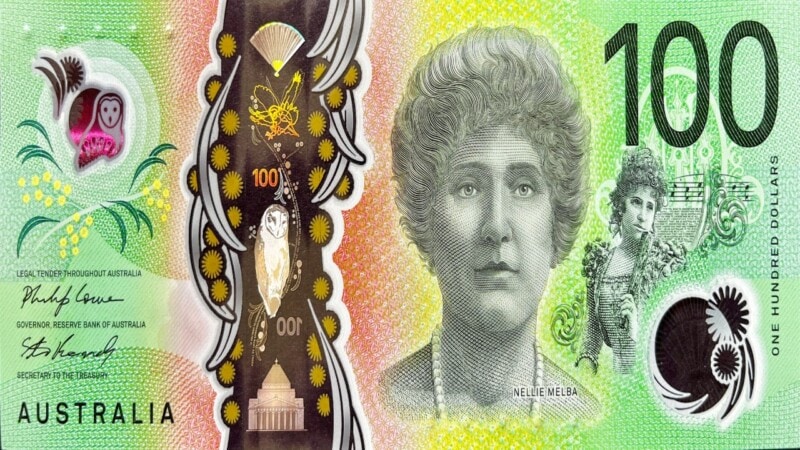
The Australian Dollar (AUD), traditionally known for its resilience and appeal as a proxy for global risk sentiment, has recently come under intense pressure. Multiple macroeconomic forces, including escalating global trade tensions, strategic shifts by the Reserve Bank of Australia (RBA), and an evolving investor perception of the AUD’s role in risk management, have contributed to this downward momentum.
This article explores these factors in detail, analyzes their implications on AUD’s performance, and discusses what investors, policymakers, and businesses can expect in the coming months.
Global Trade Tensions: The Return of Tariff Wars
Tariffs Reignite Fears of Global Slowdown
In early April 2025, the international financial markets were rocked by renewed trade tensions, particularly between the United States and China. President Donald Trump’s administration imposed sweeping tariffs on nearly all imports — a base rate of 10% across the board, with significantly higher rates for key trading partners: 20% on EU imports, 24% on Japanese imports, and a staggering 64% on Chinese goods when including cumulative penalties.
In retaliation, China announced reciprocal tariffs on major U.S. goods, targeting technology, agriculture, and manufacturing sectors — critical pillars of the American economy.
Why This Matters to the Australian Dollar
Australia, though not directly involved in this tit-for-tat tariff exchange, is deeply affected due to its economic ties with both China and the United States. China is Australia’s largest trading partner, and any contraction in Chinese industrial demand or export volume directly impacts Australian exports, especially commodities like iron ore, coal, and natural gas.
Historically, the Australian Dollar has been sensitive to changes in global trade flows. With fears of a slowdown in global trade and demand for commodities, investors have been pulling back from AUD, viewing it as increasingly vulnerable in this turbulent macro environment.
The Reserve Bank of Australia (RBA): A Wait-and-See Approach
Interest Rate Decision and Outlook
On April 2, 2025, the Reserve Bank of Australia opted to hold the official cash rate at 4.10%, a decision aligned with most market expectations. However, the central bank’s forward guidance caught investor attention.
RBA Governor Michele Bullock acknowledged “pronounced global risks,” notably the escalation in global trade tensions and a slowdown in consumer demand. She emphasized that any future monetary tightening or loosening would depend heavily on incoming data, particularly related to:
-
Domestic inflation trends
-
Wage growth and employment metrics
-
The evolving global economic landscape
“While inflation remains above target, there are growing concerns over external demand and global trade. We are carefully monitoring these developments before taking any action,” said Governor Bullock.
Why This Matters to the AUD
Monetary policy plays a central role in determining currency value. A hawkish central bank one inclined to raise interest rates, often supports currency strength. But the RBA’s recent cautious stance, coupled with no indication of rate hikes in the near term, has led to reduced AUD demand among global investors.
Australian Dollar’s Identity Crisis: Losing Its Status as a Risk Proxy
AUD No Longer a “Risk Sentiment Barometer”?
The AUD has long been seen as a “risk-on” currency investors flocked to it during times of global optimism and dumped it during risk-off scenarios. This is largely because of Australia’s commodity-exporting economy and close trade ties with volatile emerging markets.
However, recent analyses suggest this relationship is weakening.
According to Reuters, correlation between the AUD and traditional risk indicators like global equities and emerging market bonds has significantly declined. Several analysts believe the currency’s role as a risk barometer is outdated, owing to:
-
The growing influence of algorithmic and automated trading models that rely less on historical correlations.
-
Increased central bank interventions worldwide that mute typical market reactions.
-
Australia’s domestic structural changes, including declining housing affordability and a shift in export diversification.
“The Australian dollar is no longer the market’s compass for risk,” noted a foreign exchange strategist from ING. “The decoupling is real and becoming more pronounced.”
USD Resilience: Adding Pressure on the AUD
Strong Dollar Environment
Another key factor suppressing the AUD is the continued strength of the US Dollar (USD). Despite domestic political noise and slowing inflation, the US economy continues to show relative resilience, particularly in labor markets and corporate earnings.
The US Federal Reserve has also maintained its hawkish stance, keeping interest rates at elevated levels a stark contrast to the more cautious RBA.
This has led to a widening interest rate differential, making USD-denominated assets more attractive to global investors and pulling capital away from Australian markets.
Commodities: Soft Prices Add to AUD’s Woes
Australia’s economy is highly dependent on commodity exports, especially to China. But recent months have seen commodity prices struggle, particularly:
Iron ore: Prices have fallen due to weak Chinese construction data and steel output controls.
Coal: Global shift towards renewable energy and reduced winter demand.
LNG (Liquefied Natural Gas): Prices remain volatile with oversupply in Asian markets.
Falling commodity prices typically lead to lower export revenues, which in turn diminishes the demand for AUD.
Geopolitical Risk and Foreign Investment Outflows
Asia-Pacific Region Volatility
Rising tensions in the Asia-Pacific, including Taiwan-China relations, North Korea’s missile activities, and the South China Sea disputes, have caused regional uncertainty.
Australia’s geographical and political positioning in this region often makes it a collateral participant in regional instability, further discouraging foreign direct investment and safe-haven capital flows into the country.
Foreign Investment Trends
In 2025, data from the Australian Bureau of Statistics showed a 3.2% decline in net foreign investment in Q1. Sectors like property, energy, and agriculture saw modest divestments, attributed in part to currency volatility and regulatory uncertainty.
Technical Analysis and Market Sentiment
Technical charts of the AUD/USD pair suggest that the currency pair has broken below key support levels, particularly the 0.6500 and 0.6450 marks, triggering further bearish sentiment.
Market sentiment, as seen in futures positioning from the Chicago Mercantile Exchange (CME), shows that net short positions on the AUD have risen to a 6-month high, indicating growing expectations of further downside.
Future Outlook: Where Is the AUD Headed?
Short-term Outlook (Next 1-3 Months)
With no immediate resolution in sight for global trade tensions, and the RBA maintaining a data-dependent, cautious tone, the AUD is likely to remain under pressure. Investors will be watching closely:
-
US jobs data (non-farm payrolls)
-
China’s Q2 GDP and trade balance
-
Australia’s inflation and wage growth stats
Unless commodity prices rebound and global trade shows signs of normalization, the AUD may hover near its year-to-date lows.
Medium to Long-Term Outlook (6-12 Months)
Much will depend on how the RBA reacts to domestic inflation pressures and whether global demand for Australian commodities stabilizes. Key triggers that could support the AUD include:
-
A rebound in Chinese industrial activity
-
Stabilization in US-China trade relations
-
An unexpected RBA rate hike due to domestic inflation concerns
However, risks remain firmly to the downside.
Conclusion
The Australian Dollar’s recent decline reflects a complex web of domestic and global challenges. From trade wars to changing investor behavior, the AUD is facing pressures that go beyond typical economic cycles. While Australia’s fundamentals remain relatively sound, external volatility and strategic central bank caution are dampening confidence.
Investors, exporters, and policymakers should prepare for continued volatility and potential weakness in the AUD, unless macro conditions improve or unexpected bullish catalysts emerge.
As the global economic chessboard continues to evolve, the AUD’s trajectory will depend on Australia’s ability to adapt, the RBA’s strategic agility, and the stability of global trade.
Read Also: Outrage and Grief: Families Demand Answers After Israeli Forces Kill 15 Gaza Medics in Brutal Attack