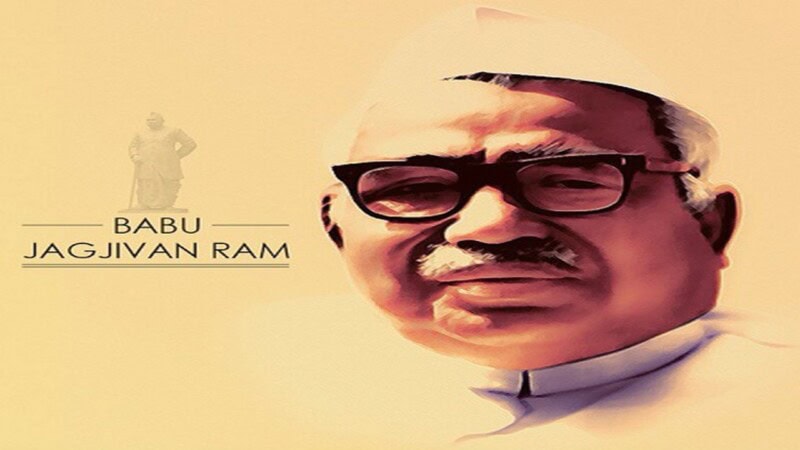
Jagjivan Ram, popularly known as Babuji, was a towering figure in India’s history. Born on April 5, 1908, in the small village of Chandwa, near Arrah in Bihar, he rose from humble beginnings to become one of India’s most influential politicians. A champion for the rights of Dalits (formerly untouchables) and a prominent freedom fighter, Babuji dedicated his life to social justice, equality, and the betterment of his people. His legacy as a freedom fighter, a distinguished parliamentarian, and a visionary leader continues to inspire generations.
Early Life and Education
Jagjivan Ram was born into a Dalit family, which faced considerable social discrimination. His father, Sobhi Ram, was a religious man and the Mahant (head) of the Shiv Narayani Sect. Despite the societal challenges, Babu Jagjivan Ram was encouraged by his mother to pursue education. He studied at Arrah Town School, where he excelled in his studies, passing his Matriculation examination with flying colors.
Ram’s educational journey continued at Banaras Hindu University (BHU), where he completed his Intermediate Science examination. He later graduated from Calcutta University in 1931, earning a bachelor’s degree. Babu Jagjivan Ram’s educational achievements were significant, as he was among the first in his Dalit community to receive higher education. His academic success gave him the tools to challenge the social norms of his time.
The Beginning of a Political Career
Jagjivan Ram’s political journey began early. In 1931, he became a member of the Indian National Congress (INC), a party led by Mahatma Gandhi that was working toward India’s independence from British rule. Inspired by Gandhi’s philosophy of non-violence, Babuji worked hard to involve the Depressed Classes in the freedom struggle.
In 1935, Ram played a pivotal role in establishing the All India Depressed Classes League, an organization that aimed to fight for the rights and equality of Dalits. He believed that Dalits should demand not only social reforms but also political representation. His activism made him a respected leader of the Dalit community.
Struggle for Dalit Rights
One of Babuji’s most significant contributions to the Dalit community was his tireless fight for their rights. In 1935, he appeared before the Hammond Commission in Ranchi and demanded voting rights for Dalits. This was a landmark moment in the history of India’s social reform. Babu Jagjivan Ram believed that political empowerment was crucial for the Dalit community to break free from centuries of discrimination.
He also organized several Ravidas Sammelans, a series of gatherings to honor Guru Ravidas, a prominent figure in the Bhakti movement who worked for social equality. Babu Jagjivan Ram’s involvement in these events helped strengthen the Dalit movement and raise awareness about their struggles.
Role in India’s Freedom Struggle
Jagjivan Ram’s commitment to India’s freedom struggle was unwavering. He was deeply inspired by Mahatma Gandhi and participated actively in the Civil Disobedience Movement and Quit India Movement. In 1940, he was arrested for his participation in the freedom struggle, and later, in 1942, he was again jailed for his role in the Quit India Movement, which sought to end British rule in India.
His sacrifices and leadership in the fight for independence earned him respect across the political spectrum. Despite being from a marginalized community, he emerged as one of the key leaders of the Indian National Congress and a voice for the oppressed.
Post-Independence Political Journey
After India gained independence in 1947, Babu Jagjivan Ram’s political career soared. In 1946, he became the youngest minister in Jawaharlal Nehru’s provisional government and was appointed the Minister of Labour. His role in the government was vital in shaping policies that aimed to uplift marginalized communities.
Babuji’s long career in the Indian government included holding several important ministerial positions. He served as the Minister for Communications (1952–56), Minister for Transport and Railways (1956–62), and Minister for Defence (1970-74). During his time as Minister of Defence, India played a crucial role in the creation of the independent state of Bangladesh in 1971.
Support for Indira Gandhi
Jagjivan Ram was a staunch supporter of Indira Gandhi, the daughter of Jawaharlal Nehru. When Indira Gandhi became the Prime Minister of India in 1966, Babuji was appointed the Minister for Labour, Employment, and Rehabilitation. He later served as Minister for Food and Agriculture (1967–70) and Minister of Defence (1970-74).
However, by 1977, after the declaration of the Emergency in 1975, Babuji began to distance himself from Indira Gandhi’s government. He and several other politicians resigned from her cabinet and formed the Janata Party (JP). The Janata Party became a powerful opposition force that successfully defeated Indira Gandhi’s Congress Party in the 1977 elections.
Legacy and Last Years
Jagjivan Ram’s political journey spanned over five decades. He was a true democrat and a leader who believed in the power of the people. His role in the Indian National Congress, particularly in the post-independence period, was crucial in shaping the country’s political landscape. He was a member of the Congress Working Committee and the Central Parliamentary Board for nearly three decades.
In the 1977 elections, after the formation of the Janata Party, Ram was appointed the Minister of Defence once again. His leadership during his tenure in the government helped shape India’s defense policies.
Ram continued to be an active member of the Lok Sabha (the lower house of India’s Parliament) until his death on July 6, 1986, at the age of 78. His passing marked the end of an era, but his legacy lives on.
Personal Life
Jagjivan Ram was married to Indrani Devi in 1935, a woman who herself was a freedom fighter and educationist. Together, they had two children: Suresh Kumar, born in 1938, and Meira Kumar, born in 1945. Meira Kumar later became an accomplished politician and served as the Speaker of the Lok Sabha. Tragically, their son, Suresh Kumar, passed away in 1985, leaving his parents devastated.
Conclusion
Jagjivan Ram’s life was a testament to resilience, commitment, and a relentless pursuit of social justice. He was not just a leader of the Dalits but a symbol of India’s democratic spirit. From his early years as a student fighting for Dalit rights to his role as a prominent leader in post-independence India, Babuji’s contributions to Indian politics and society are immeasurable. He fought not just for the political freedom of India but for the social and economic upliftment of its marginalized communities, leaving behind a legacy that will continue to inspire generations to come.