
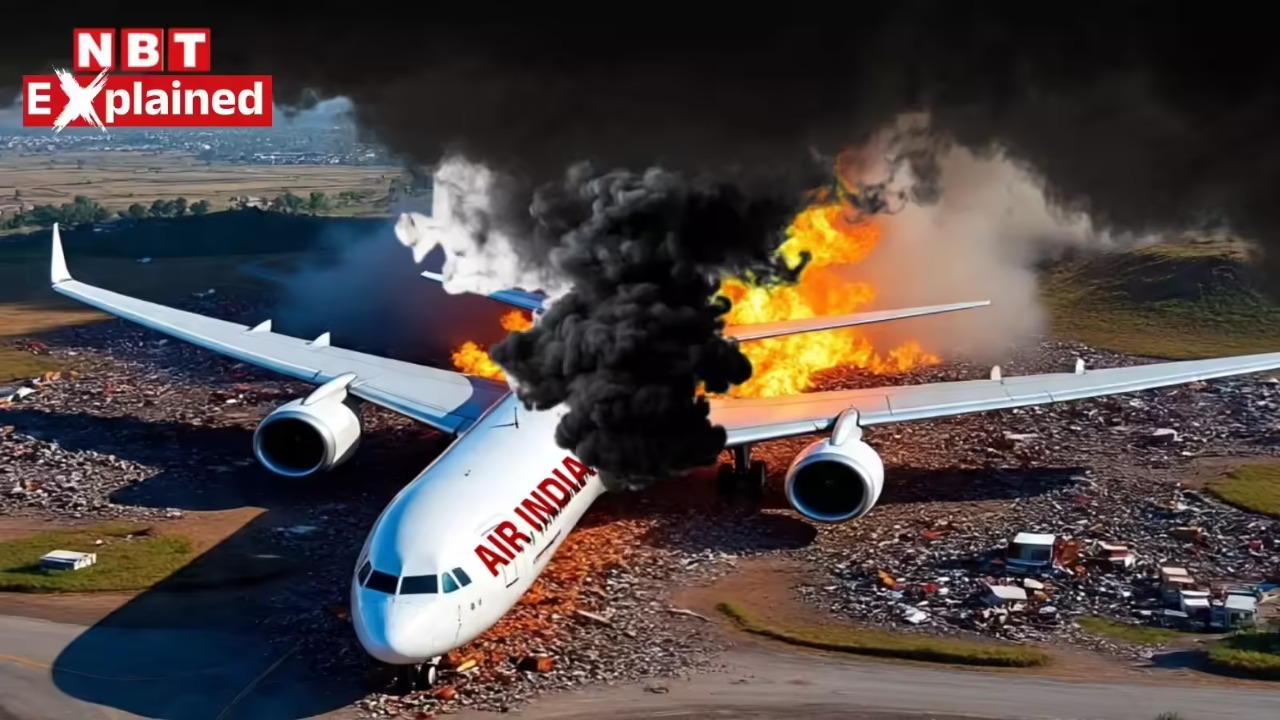


Boeing 787 Dreamliner Crash: What Really Happened?
The aviation world was shaken by the Boeing 787 Dreamliner crash that occurred in May 2025. Known for its fuel efficiency and cutting-edge design, the Dreamliner has long been considered a technological marvel. However, the recent incident involving Air India Flight AI-171 has raised critical questions about the aircraft’s reliability and safety features.
This tragic crash, which took 274 lives shortly after takeoff in Ahmedabad, has sparked global concern. The U.S. and Indian aviation authorities are now investigating the factors behind this shocking event, and a deeper look into Boeing 787 Dreamliner safety issues is well underway.
What Happened: Boeing 787 Crashes After Takeoff
On a clear May morning, Air India Flight AI-171, a Boeing 787, took off from Ahmedabad airport bound for London. Moments after takeoff, the aircraft lost altitude rapidly and crashed just miles from the airport, leaving no survivors. Eyewitnesses reported seeing smoke from one of the engines before the aircraft went down.
Although early reports were unclear, experts quickly began looking into potential causes ranging from engine failure to pilot error. However, a more alarming theory has since emerged, one that could have wider implications for the entire fleet of Dreamliners operating around the world.
Dreamliner Crash Update: Could Software Be to Blame?
One of the most significant developments in this investigation came from Mary Schiavo, a respected U.S. aviation attorney and former Inspector General of the U.S. Department of Transportation. In an interview with The Sunday Guardian, Schiavo suggested that a software malfunction in the Boeing 787 Dreamliner could be a leading cause of the Boeing 787 Dreamliner crash.
She pointed out a documented history of software-related engine malfunctions in previous Dreamliner incidents. Specifically, a computer-triggered engine thrust rollback, where the system automatically reduces engine power, might have been activated shortly after takeoff, contributing to the disaster.
This possibility raises troubling parallels with earlier cases. It appears that similar engine issues have affected other Dreamliner flights, though none have ended in such catastrophic results.
Boeing 787 Dreamliner Safety Issues: A Growing Concern
Since its debut in 2011, the Boeing 787 has experienced several mechanical and software issues. While Boeing has implemented multiple updates, concerns over system reliability persist. Pilots have previously reported auto-throttle glitches, sensor errors, and engine anomalies that seem to point toward ongoing Boeing 787 Dreamliner safety issues.
The recent crash only adds fuel to the debate. If Schiavo’s claims about software malfunction are proven correct, Boeing could face enormous scrutiny, not just from regulators, but from airlines and passengers alike.
How Many Boeing 787 Dreamliner Have Crashed?
Despite this recent tragedy, the Boeing 787 Dreamliner has had a relatively safe operational history. Before the Boeing 787 crashes after takeoff in Ahmedabad, only a few serious incidents were recorded, and none had resulted in mass casualties.
Here’s a quick breakdown:
-
Air India Flight AI-171 (2025): 274 fatalities, currently under investigation.
-
Ethiopian Airlines Incident (2013): Aircraft caught fire at Heathrow, no fatalities.
-
Japan Airlines Fuel Leak (2013): Emergency landing, no injuries.
So far, how many Boeing 787 Dreamliner have crashed fatally? As of now, only one, the Air India crash. However, this single incident could change the perception of the Dreamliner if further investigations confirm a systemic flaw.
A Wake-Up Call for Aviation Regulators
The U.S. Federal Aviation Administration (FAA) and India's Directorate General of Civil Aviation (DGCA) have both launched parallel investigations. Boeing, meanwhile, is cooperating with officials and has promised full transparency.
Aviation safety groups are now urging the grounding of certain Dreamliner variants until software inspections are complete. Airlines worldwide are conducting internal audits of their Dreamliner fleets, trying to prevent a repeat of what happened in Ahmedabad.
While Boeing maintains that the aircraft model remains safe to fly, the Dreamliner crash update has brought intense scrutiny to their engineering processes and quality control measures.
Boeing’s Response and Industry Impact
In a public statement, Boeing expressed condolences and reaffirmed its commitment to aviation safety. The company has initiated an internal investigation into software logic systems tied to engine performance.
This incident could significantly impact Boeing’s future. Aircraft orders might slow, airlines could demand new safety features, and regulators may enforce tighter certifications on software-controlled engine systems.
If proven responsible, Boeing may need to re-certify the Dreamliner under revised aviation protocols. A worldwide inspection could follow, delaying flights and disrupting international routes for months.
What This Means for Passengers
For passengers in the U.S. and globally, the crash has understandably raised fears about flying aboard a Dreamliner. Though statistically, flying remains the safest mode of transport, events like this shake public confidence.
Travelers are advised to stay informed. Airlines are legally required to maintain and update aircraft according to FAA regulations. Booking platforms now also allow travelers to view the aircraft model before booking, an option some flyers may wish to use more carefully going forward.
The Road Ahead: Rethinking Modern Aviation
The Boeing 787 Dreamliner crash is more than a tragic headline, it’s a wake-up call. In an era of increasing automation and AI-based control systems, software integrity is becoming just as crucial as mechanical strength.
While the full cause is yet to be officially confirmed, the combination of expert analysis, regulatory inquiry, and real-world evidence is painting a concerning picture. If history has taught anything, it's that major advancements in aviation often come on the heels of terrible losses.
A transparent investigation, public accountability, and software overhauls could be what’s needed to restore trust in Boeing’s crown jewel, the Dreamliner. For more details on the aircraft's maintenance history, see this fact-checked report on the Turkish company's involvement.
'%3e%3crect%20y='0.445312'%20width='48'%20height='48'%20rx='24'%20fill='white'%20fill-opacity='0.5'/%3e%3crect%20x='0.5'%20y='0.945312'%20width='47'%20height='47'%20rx='23.5'%20stroke='%23808080'/%3e%3cpath%20d='M34.625%2024.4453L14%2024.4453'%20stroke='%23808080'%20stroke-width='0.920053'/%3e%3cpath%20d='M23.375%2034.4453L13.375%2024.4453L23.375%2014.4453'%20stroke='%23808080'%20stroke-width='0.920053'/%3e%3c/g%3e%3cdefs%3e%3cfilter%20id='filter0_b_489_44344'%20x='-12'%20y='-11.5547'%20width='72'%20height='72'%20filterUnits='userSpaceOnUse'%20color-interpolation-filters='sRGB'%3e%3cfeFlood%20flood-opacity='0'%20result='BackgroundImageFix'/%3e%3cfeGaussianBlur%20in='BackgroundImageFix'%20stdDeviation='6'/%3e%3cfeComposite%20in2='SourceAlpha'%20operator='in'%20result='effect1_backgroundBlur_489_44344'/%3e%3cfeBlend%20mode='normal'%20in='SourceGraphic'%20in2='effect1_backgroundBlur_489_44344'%20result='shape'/%3e%3c/filter%3e%3c/defs%3e%3c/svg%3e)
'%3e%3crect%20y='0.445312'%20width='48'%20height='48'%20rx='24'%20fill='white'%20fill-opacity='0.5'/%3e%3crect%20x='0.5'%20y='0.945312'%20width='47'%20height='47'%20rx='23.5'%20stroke='%23808080'/%3e%3cpath%20d='M13.375%2024.4453L34%2024.4453'%20stroke='%23808080'%20stroke-width='0.920053'/%3e%3cpath%20d='M24.625%2014.4453L34.625%2024.4453L24.625%2034.4453'%20stroke='%23808080'%20stroke-width='0.920053'/%3e%3c/g%3e%3cdefs%3e%3cfilter%20id='filter0_b_489_44344'%20x='-12'%20y='-11.5547'%20width='72'%20height='72'%20filterUnits='userSpaceOnUse'%20color-interpolation-filters='sRGB'%3e%3cfeFlood%20flood-opacity='0'%20result='BackgroundImageFix'/%3e%3cfeGaussianBlur%20in='BackgroundImageFix'%20stdDeviation='6'/%3e%3cfeComposite%20in2='SourceAlpha'%20operator='in'%20result='effect1_backgroundBlur_489_44344'/%3e%3cfeBlend%20mode='normal'%20in='SourceGraphic'%20in2='effect1_backgroundBlur_489_44344'%20result='shape'/%3e%3c/filter%3e%3c/defs%3e%3c/svg%3e)