
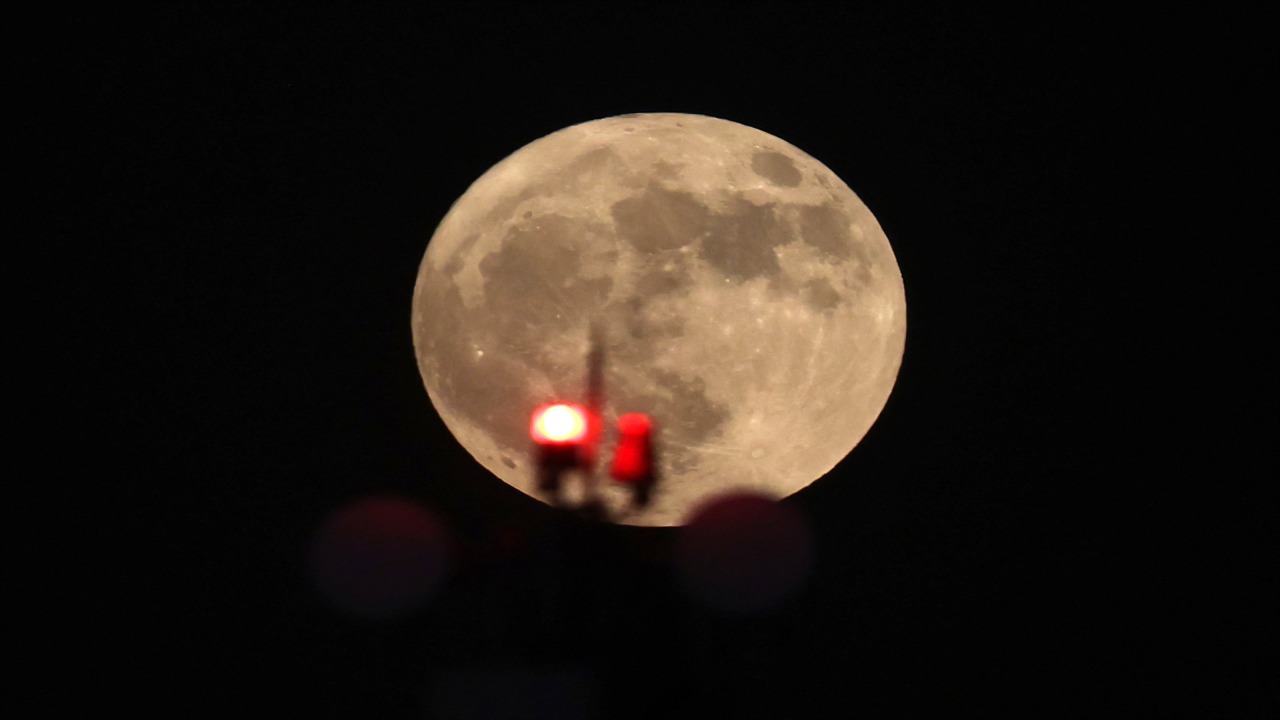


Eclipse Tonight: Don't Miss the Stunning Blood Moon!
Skygazers, get ready! A breathtaking lunar eclipse tonight will transform the Moon into a stunning reddish hue, commonly known as a Blood Moon. This celestial event will be visible across large parts of the world, providing a mesmerizing view for millions.
But what time is the lunar eclipse tonight? Where is the best place to watch it? And why does the Moon turn red? We’ve got all the answers for you!
A lunar eclipse is a rare phenomenon, making it a highly anticipated event for astronomers and space enthusiasts alike. Unlike solar eclipses, which require special eye protection, a lunar eclipse is completely safe to watch with the naked eye. This makes it an accessible and awe-inspiring event for everyone, from casual stargazers to seasoned skywatchers.
What is a Lunar Eclipse?
A lunar eclipse occurs when the Sun, Earth, and Moon align, with Earth casting its shadow on the Moon. This blocks the sunlight and causes the Moon to darken. However, instead of disappearing completely, the Moon takes on a reddish glow due to the way Earth's atmosphere bends and scatters sunlight.
There are two main types of lunar eclipses:
-
Partial Lunar Eclipse: Only part of the Moon enters Earth’s shadow.
-
Total Lunar Eclipse: The entire Moon is engulfed in Earth's shadow, creating the dramatic Blood Moon effect.
The red color of the Moon during a total eclipse is caused by a phenomenon called Rayleigh scattering, the same process that creates vibrant sunrises and sunsets. As sunlight passes through Earth’s atmosphere, shorter wavelengths of light (blue and violet) are scattered, while longer wavelengths (red and orange) pass through and illuminate the Moon. This is why the moon eclipse tonight will appear reddish instead of disappearing completely.
What Time is the Lunar Eclipse Tonight?
If you’re wondering "Is there a lunar eclipse tonight?", the answer is YES! Here are the key timings:
-
North America: The eclipse begins at 1:09 AM ET, with totality from 2:26 AM to 3:31 AM ET.
-
Europe: In western parts like France, totality will be visible from 7:26 AM to 8:31 AM local time.
-
South America & Africa: The eclipse will be visible in the early morning hours.
-
Australia & New Zealand: Partial visibility during moonrise.
This time for a total lunar eclipse tonight ensures a stunning celestial display for millions.
How to Watch the Moon Eclipse Tonight
To get the best view of the moon eclipse tonight, follow these tips:
Best Viewing Locations
-
Find a dark, open space away from city lights.
-
Higher altitudes offer clearer visibility.
-
Weather permitting, the eclipse will be visible without special equipment.
Capturing the Eclipse on Camera
Want to snap an unforgettable photo? Use these photography tips:
-
Use a tripod for stability.
-
Adjust camera settings: Set low ISO, slow shutter speed, and manual focus.
-
Use a telescope or telephoto lens for detailed shots.
If you don't have a professional camera, don’t worry! Even a smartphone can capture great images if you use night mode and stabilize the device.
Safety Tips & Best Equipment for Viewing
Unlike solar eclipses, lunar eclipses are safe to watch with the naked eye. However, for an enhanced viewing experience:
-
Use binoculars or a telescope for better clarity.
-
Download an astronomy app to track the eclipse in real-time.
-
Check weather forecasts to ensure clear skies.
Some popular stargazing apps include:
-
SkySafari – Provides real-time tracking and detailed astronomical information.
-
Star Walk 2 – Ideal for beginners, featuring an interactive sky map.
-
NASA App – Offers live updates and official eclipse data.
Cultural and Scientific Significance of the Eclipse
Throughout history, lunar eclipses have held deep cultural and scientific significance:
-
Some cultures see it as a sign of cosmic conflict or transformation.
-
Scientists use lunar eclipses to study Earth’s atmosphere.
-
This particular event is called the “Blood Worm Moon”, named after Native American traditions.
Many ancient civilizations believed lunar eclipses were omens of change. In some African traditions, a lunar eclipse was seen as a time of reconciliation, where feuding parties could put aside differences to restore harmony. Meanwhile, in some Asian cultures, people would make loud noises to “scare away” the darkness engulfing the Moon.
From a scientific standpoint, lunar eclipses help astronomers better understand Earth’s atmospheric composition. Observing how sunlight filters through our atmosphere during an eclipse provides insights into air quality and climate patterns.
What’s Next? A Solar Eclipse is Coming!
If you love celestial events, mark your calendars! A partial solar eclipse will take place on March 29, visible in eastern Canada, parts of Europe, northern Russia, and northwest Africa. Remember, never look at a solar eclipse without special protective glasses!
A total solar eclipse, which occurs when the Moon completely blocks out the Sun, is one of the most extraordinary astronomical phenomena. Unlike lunar eclipses, solar eclipses require special viewing equipment to prevent eye damage.
If you miss tonight’s total lunar eclipse, don’t worry! Another total lunar eclipse is expected later this year in September 2025.
Conclusion
Tonight’s total lunar eclipse is a must-see event. Whether you’re watching with the naked eye, through a telescope, or capturing photos, take a moment to enjoy this stunning phenomenon.
Want to explore more fascinating space events? Check out our article on The Last Solar Eclipse of 2023.
'%3e%3crect%20y='0.445312'%20width='48'%20height='48'%20rx='24'%20fill='white'%20fill-opacity='0.5'/%3e%3crect%20x='0.5'%20y='0.945312'%20width='47'%20height='47'%20rx='23.5'%20stroke='%23808080'/%3e%3cpath%20d='M34.625%2024.4453L14%2024.4453'%20stroke='%23808080'%20stroke-width='0.920053'/%3e%3cpath%20d='M23.375%2034.4453L13.375%2024.4453L23.375%2014.4453'%20stroke='%23808080'%20stroke-width='0.920053'/%3e%3c/g%3e%3cdefs%3e%3cfilter%20id='filter0_b_489_44344'%20x='-12'%20y='-11.5547'%20width='72'%20height='72'%20filterUnits='userSpaceOnUse'%20color-interpolation-filters='sRGB'%3e%3cfeFlood%20flood-opacity='0'%20result='BackgroundImageFix'/%3e%3cfeGaussianBlur%20in='BackgroundImageFix'%20stdDeviation='6'/%3e%3cfeComposite%20in2='SourceAlpha'%20operator='in'%20result='effect1_backgroundBlur_489_44344'/%3e%3cfeBlend%20mode='normal'%20in='SourceGraphic'%20in2='effect1_backgroundBlur_489_44344'%20result='shape'/%3e%3c/filter%3e%3c/defs%3e%3c/svg%3e)
'%3e%3crect%20y='0.445312'%20width='48'%20height='48'%20rx='24'%20fill='white'%20fill-opacity='0.5'/%3e%3crect%20x='0.5'%20y='0.945312'%20width='47'%20height='47'%20rx='23.5'%20stroke='%23808080'/%3e%3cpath%20d='M13.375%2024.4453L34%2024.4453'%20stroke='%23808080'%20stroke-width='0.920053'/%3e%3cpath%20d='M24.625%2014.4453L34.625%2024.4453L24.625%2034.4453'%20stroke='%23808080'%20stroke-width='0.920053'/%3e%3c/g%3e%3cdefs%3e%3cfilter%20id='filter0_b_489_44344'%20x='-12'%20y='-11.5547'%20width='72'%20height='72'%20filterUnits='userSpaceOnUse'%20color-interpolation-filters='sRGB'%3e%3cfeFlood%20flood-opacity='0'%20result='BackgroundImageFix'/%3e%3cfeGaussianBlur%20in='BackgroundImageFix'%20stdDeviation='6'/%3e%3cfeComposite%20in2='SourceAlpha'%20operator='in'%20result='effect1_backgroundBlur_489_44344'/%3e%3cfeBlend%20mode='normal'%20in='SourceGraphic'%20in2='effect1_backgroundBlur_489_44344'%20result='shape'/%3e%3c/filter%3e%3c/defs%3e%3c/svg%3e)