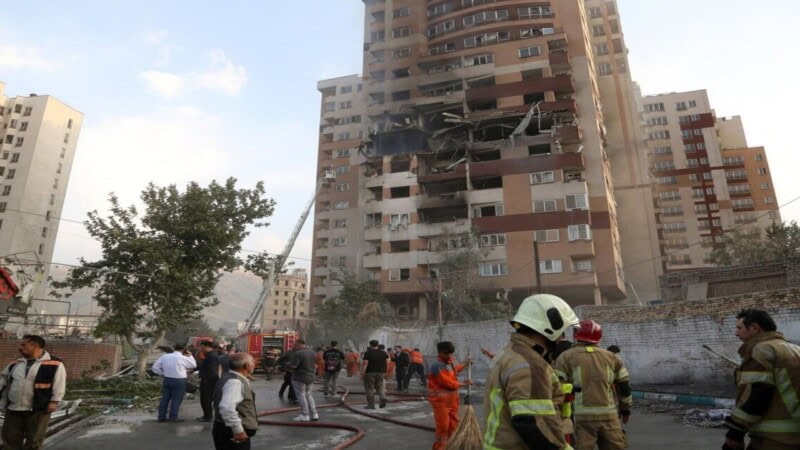
Recently, the geopolitical balance in the Middle East shifted dramatically after Israel launched a large-scale military assault on Iran. The operation, officially named “Rising Lion,” targeted Iran’s nuclear infrastructure, key military leaders, and top nuclear scientists. Israeli Prime Minister Benjamin Netanyahu described this bold move as a necessary action to prevent Iran from developing atomic weapons. It is a threat he claimed was imminent and existential.
This event is not just a regional conflict. It has global implications. For the United States, which has long been involved in Middle East diplomacy and military alliances, the situation raises urgent questions about war, peace, and nuclear proliferation. This article will examine what happened, why it happened, and what it means for the future of global security.
What Led to the Attack?
The core reason behind the Israeli strike lies in the growing belief within Israel’s leadership that Iran was only weeks or months away from building a nuclear weapon. Although Iran has always denied that its nuclear program is aimed at weapon development, Western intelligence agencies and Israeli sources claimed otherwise.
Prime Minister Netanyahu stated that Iran had significantly accelerated its enrichment of uranium and had begun actual steps toward building a bomb. He explained that waiting longer would pose a catastrophic risk not only to Israel but also to global security.
In addition to nuclear fears, Israel has long accused Iran of using proxy militias like Hezbollah and Hamas to destabilize the region. The prospect of Iran sharing nuclear capabilities with these groups added urgency to the decision to strike.
Another key factor was timing. Talks between the United States and Iran were scheduled to resume shortly in Oman. Netanyahu expressed doubt over Iran’s intentions in these negotiations, claiming Tehran was simply buying time while pushing ahead with its nuclear ambitions. This distrust made diplomatic patience harder to maintain in Israel.
The Scale and Scope of the Attack
Operation Rising Lion was one of the most complex and large-scale operations in Israel’s military history. According to official statements from the Israel Defense Forces (IDF), more than 200 fighter jets were involved in the strike. The mission targeted “dozens of military and nuclear sites” across Iran.
Among the confirmed targets were Iran’s primary uranium enrichment facility in Natanz, locations suspected of housing nuclear weaponization equipment, and missile production sites. In addition, Israel reportedly targeted and killed several high-ranking Iranian officials, including General Hossein Salami, the head of the Islamic Revolutionary Guard Corps (IRGC), and Major General Mohammad Bagheri, the Iranian army chief of staff.
The operation also resulted in the deaths of two top nuclear scientists, including Fereydoun Abbasi and Mohammad Mehdi Tehranchi. Both men were considered critical to Iran’s nuclear research. According to Iranian state media, they were killed in their homes, which has further fueled public outrage in Iran.
Iranian media reported that some of the Israeli strikes hit residential neighborhoods, leading to civilian casualties, including children. This has added to the international controversy surrounding the attack.
Iran’s Response and Global Fallout
In retaliation, Iran launched over 100 drones aimed at various locations in Israel. While Israel’s air defense systems intercepted many of them, the drone attack marked a clear indication that Iran intends to respond militarily.
Iranian officials, speaking to local and international press, promised that the retaliation would be “harsh and decisive.” At the time of this writing, Iranian leadership was reportedly holding high-level meetings to plan the next phase of their response. It remains unclear whether Iran will escalate through conventional warfare or its proxy networks in Lebanon, Syria, and Gaza.
Iran’s Foreign Ministry issued a strong statement accusing Israel of undermining international peace and stability. The ministry also blamed the United States, calling it complicit in what it described as Israeli “adventurism.” Although the U.S. government stated that it was not directly involved in the strike, the close alliance between the U.S. and Israel makes such accusations inevitable.
President Donald Trump, who has taken a cautious approach to Middle East tensions in recent months, said he was not surprised by the attack but emphasized that he did not authorize it. Trump had previously warned Israel against acting while diplomatic negotiations with Iran were still underway. Nevertheless, he acknowledged the seriousness of the Iranian nuclear threat and reiterated that the U.S. would defend its interests if targeted.
Impact on U.S.-Iran Relations and Diplomacy
The attack has almost certainly derailed the upcoming diplomatic talks between Iran and the United States. These discussions were aimed at reviving some form of the 2015 Joint Comprehensive Plan of Action (JCPOA), which was abandoned by the Trump administration in 2018. Since then, Iran has expanded its nuclear program dramatically, reducing cooperation with international inspectors and increasing uranium enrichment.
The International Atomic Energy Agency (IAEA) confirmed that the Natanz facility was damaged during the Israeli strike. However, no radiation leaks were reported. Despite this, the IAEA board concluded that Iran was not complying with its international obligations, citing its failure to provide access to inspectors and transparency about its enrichment activities.
With the collapse of potential negotiations, the risk of a broader military conflict increases. U.S. military bases in the region have been put on high alert, and oil prices have surged due to fears of instability in the Persian Gulf.
Political Reactions in the United States
Political response in the U.S. has been divided. Supporters of Israel praised Netanyahu’s decisive action, viewing it as a necessary step to stop a grave threat. They argue that Iran was never serious about peace and that Israel acted out of genuine national security concerns.
On the other hand, many American lawmakers, particularly from the Democratic Party, criticized both Netanyahu and Trump. Senator Chris Murphy stated that Israel’s unilateral action was a result of weak U.S. leadership and accused Netanyahu of intentionally sabotaging diplomatic efforts.
The broader concern among U.S. policymakers is that the situation could spiral out of control, dragging American forces into another Middle East conflict. The Biden and Trump administrations have both emphasized the importance of limiting U.S. involvement in the region, but events like this could override those intentions.
The Bigger Picture: Regional and Global Implications
This incident marks a major escalation in the long-standing tension between Israel and Iran. It has the potential to trigger a broader regional war involving multiple actors, including Hezbollah in Lebanon, Iranian-backed militias in Iraq and Syria, and potentially Gulf states that align themselves with U.S. interests.
If Iran chooses to retaliate against U.S. assets, Washington may be forced to respond, pulling the country back into a conflict zone that many Americans hoped to leave behind.
From a global perspective, this also reopens fears about nuclear proliferation. The idea that Iran could eventually pass atomic weapons to non-state actors like Hezbollah or Houthi rebels makes this not just a regional issue but a global security threat.
Netanyahu framed the attack as a warning not only to Iran but to the international community. He emphasized that Israel would never allow the world’s most dangerous regime to obtain the world’s most dangerous weapons.
Conclusion
The Israeli attack on Iran is a defining moment in international politics. While Israel claims it was a necessary act of self-defense, Iran sees it as an act of war. The truth lies somewhere in the complex middle, shaped by years of mistrust, failed diplomacy, and unresolved conflict.
For the United States, the situation presents a serious foreign policy challenge. The risk of war, the collapse of diplomatic channels, and the threat of nuclear weapons in the hands of a hostile regime make this a moment of high stakes and hard choices.
Whether the world moves toward greater conflict or renewed diplomacy in the days ahead remains uncertain. But one thing is clear: the consequences of this attack will be felt far beyond the borders of Iran and Israel.
Read More: Chethana Ramatheertha: A Story of Strength, Love, and Family