
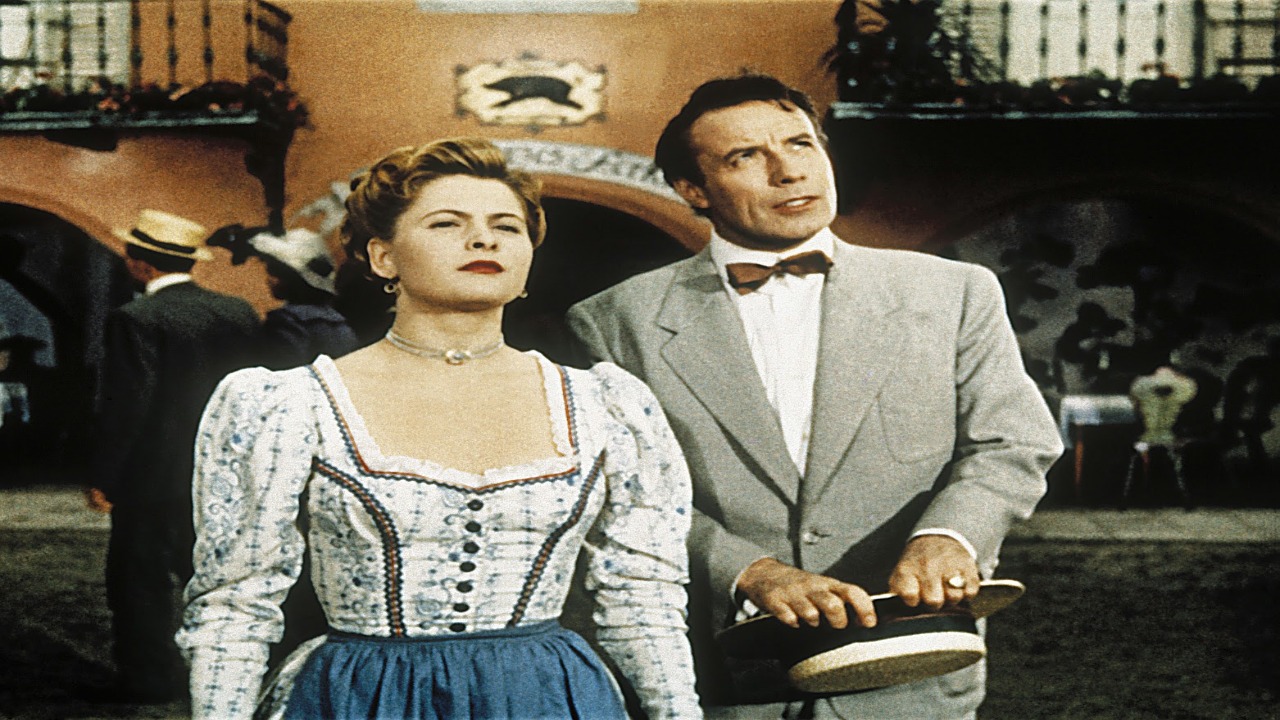


Johanna Matz, Austrian Chamber Actress, Dies at 92 on Easter Monday
The world of theater and film has lost a legendary figure. Johanna Matz, the renowned Austrian chamber actress, passed away on Easter Monday at the age of 92. Her death was announced by the Burgtheater, where she was a beloved member of the ensemble for over four decades. Matz’s contribution to Austrian theater and cinema left a lasting legacy, and her passing marks the end of an era.
Early Life and Career Beginnings
Johanna Matz was born on October 5, 1932, in Vienna, Austria. From a very young age, Matz displayed a passion for the arts. At the tender age of four, she began taking ballet lessons. She later attended the Academy of Music and Performing Arts in Vienna, where she studied under the guidance of Grete Wiesenthal. Matz also participated at the prestigious Max Reinhardt Seminar, where she honed her acting skills.
In 1950, Matz’s talent caught the eye of renowned director Berthold Viertel during her final performance at the seminar. This led to her first professional engagement at the famous Burgtheater in Vienna. She was cast in the play Frankie and the Wedding, marking the beginning of a long and successful career.
A Storied Career at the Burgtheater
Matz became a mainstay at the Burgtheater, joining the ensemble in 1950. Except for a brief break from 1952 to 1954, she remained a loyal member of the theater for over 40 years. In that time, she performed more than 390 times on stage. Her dedication to the Burgtheater and the craft of acting earned her widespread recognition.
In 1967, Matz was named a Kammerschauspielerin, the title of chamber actress, making her the youngest actress to receive this honor at the time. Throughout her career, she appeared in numerous classic plays by Shakespeare, Chekhov, and Schnitzler, as well as contemporary works by authors such as Peter Handke and Thomas Bernhard. Her performances were praised for their depth, emotional range, and versatility.
Transition to Film and Television
While Matz was primarily known for her theater work, she also enjoyed a successful career in film and television. In the post-war years, she became a familiar face in Austrian cinema, often playing the “sweet girl” role in films such as The House of the Three Girls, Hannerl, and The Forester’s Daughter. These roles helped establish her as a beloved figure in Austrian cinema during the 1950s and 1960s.
Matz’s image evolved in the 1960s as she moved away from her earlier roles in light-hearted films. She began taking on more serious and challenging parts in stage and television productions. She appeared in Anatol by Arthur Schnitzler, Minna von Barnhelm by Gotthold Ephraim Lessing, and Goethe’s Stella.
Her most significant television success came with the production of Tales from the Vienna Woods in the 1960s. In this iconic series, Matz starred alongside Helmut Qualtinger and Hans Moser. The series became a milestone in Austrian television history, solidifying Matz’s place in the hearts of audiences across Europe.
International Recognition and Later Career
Matz’s talents were not confined to Austria. She was invited to Hollywood by director Otto Preminger to appear in his film The Moon is Blue. This marked a significant moment in her international career. She also appeared in the popular movie The White Horse Inn alongside Johannes Heesters, which became a box office hit.
Later in her career, Matz focused more on readings and performances throughout Europe; however, she made a triumphant return to the stage in 1993 with the play "Dear Liar" by Jerome Kilty. Her final performance was a fitting farewell to the stage that had been her home for so many years.
In recognition of her significant contributions to the arts, Matz was awarded the Austrian Cross of Honor for Science and Art, First Class, in 2002. In 2004, she made one last television appearance in an episode of the popular series Schlosshotel Orth.
Legacy and Impact
Johanna Matz’s death marks the end of a remarkable career that spanned over seven decades. She was a versatile and beloved actress who was deeply committed to the Austrian theater. Her long tenure at the Burgtheater, where she performed hundreds of times, made her a cherished member of Austria’s cultural landscape.
Her career was characterized by a dedication to the craft of acting, whether on the stage, in films, or on television. She brought to life a wide range of characters, from sweet young women to complex, dramatic roles. Her work in both classic and contemporary plays continues to inspire new generations of actors.
Matz’s passing has left a void in the world of Austrian theater and cinema, but her legacy will live on through the countless performances she gave and the lives she touched with her artistry.
Conclusion
Johanna Matz was much more than just an actress; she was a cultural icon in Austria, a symbol of dedication to the arts. Her contributions to theater and film have left an indelible mark, and her passing is a significant loss to the cultural community. As we remember Johanna Matz, we celebrate the extraordinary life of a woman who gave so much to the world of theater and film.
For more news from the world of sports, check out this article: Shadab Khan makes history in PSL.
'%3e%3crect%20y='0.445312'%20width='48'%20height='48'%20rx='24'%20fill='white'%20fill-opacity='0.5'/%3e%3crect%20x='0.5'%20y='0.945312'%20width='47'%20height='47'%20rx='23.5'%20stroke='%23808080'/%3e%3cpath%20d='M34.625%2024.4453L14%2024.4453'%20stroke='%23808080'%20stroke-width='0.920053'/%3e%3cpath%20d='M23.375%2034.4453L13.375%2024.4453L23.375%2014.4453'%20stroke='%23808080'%20stroke-width='0.920053'/%3e%3c/g%3e%3cdefs%3e%3cfilter%20id='filter0_b_489_44344'%20x='-12'%20y='-11.5547'%20width='72'%20height='72'%20filterUnits='userSpaceOnUse'%20color-interpolation-filters='sRGB'%3e%3cfeFlood%20flood-opacity='0'%20result='BackgroundImageFix'/%3e%3cfeGaussianBlur%20in='BackgroundImageFix'%20stdDeviation='6'/%3e%3cfeComposite%20in2='SourceAlpha'%20operator='in'%20result='effect1_backgroundBlur_489_44344'/%3e%3cfeBlend%20mode='normal'%20in='SourceGraphic'%20in2='effect1_backgroundBlur_489_44344'%20result='shape'/%3e%3c/filter%3e%3c/defs%3e%3c/svg%3e)
'%3e%3crect%20y='0.445312'%20width='48'%20height='48'%20rx='24'%20fill='white'%20fill-opacity='0.5'/%3e%3crect%20x='0.5'%20y='0.945312'%20width='47'%20height='47'%20rx='23.5'%20stroke='%23808080'/%3e%3cpath%20d='M13.375%2024.4453L34%2024.4453'%20stroke='%23808080'%20stroke-width='0.920053'/%3e%3cpath%20d='M24.625%2014.4453L34.625%2024.4453L24.625%2034.4453'%20stroke='%23808080'%20stroke-width='0.920053'/%3e%3c/g%3e%3cdefs%3e%3cfilter%20id='filter0_b_489_44344'%20x='-12'%20y='-11.5547'%20width='72'%20height='72'%20filterUnits='userSpaceOnUse'%20color-interpolation-filters='sRGB'%3e%3cfeFlood%20flood-opacity='0'%20result='BackgroundImageFix'/%3e%3cfeGaussianBlur%20in='BackgroundImageFix'%20stdDeviation='6'/%3e%3cfeComposite%20in2='SourceAlpha'%20operator='in'%20result='effect1_backgroundBlur_489_44344'/%3e%3cfeBlend%20mode='normal'%20in='SourceGraphic'%20in2='effect1_backgroundBlur_489_44344'%20result='shape'/%3e%3c/filter%3e%3c/defs%3e%3c/svg%3e)