
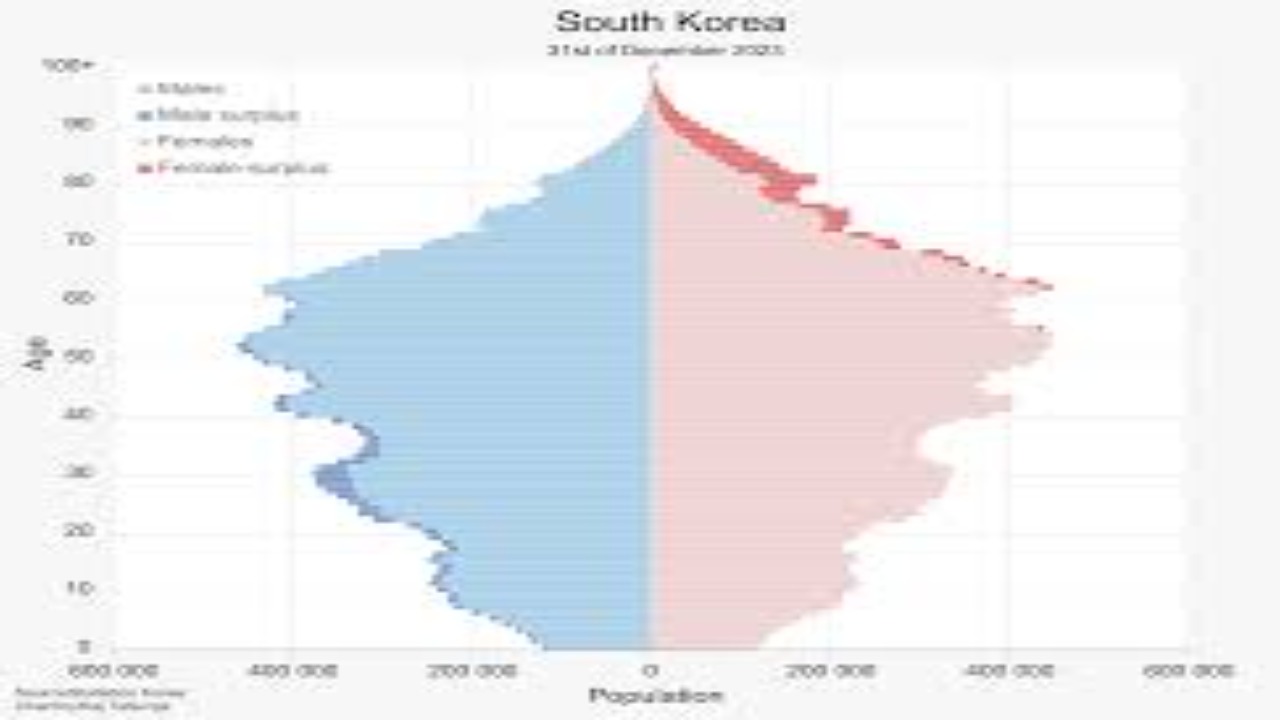


Korea Population: Insights into North and South Trends
The Korea Population story is far more dynamic than most realize. From record-low birth rates to religious diversity and geopolitical contrasts between North and South, Korea's population landscape holds lessons for economists, sociologists, and global citizens alike, especially in the United States, where demographic issues are increasingly on the agenda.
This article offers an easy-to-understand breakdown of the current trends, historical shifts, and hidden patterns that define the population of the Korean Peninsula.
Understanding the Korea Population Landscape
The Korea Population is split into two distinct demographic regions: North Korea and South Korea. While they share cultural roots, their population dynamics have evolved very differently due to divergent political, economic, and social systems.
As of 2025:
-
South Korea's population is around 51.2 million
-
North Korea’s population is approximately 26 million
This stark difference is more than a numbers game, it reflects deeper realities tied to birth rates, migration, life expectancy, and societal structure.
North Korea Population: Stability Amid Isolation
The North Korea population remains relatively stable due to strict government control, limited migration, and slower urbanization. Life expectancy hovers around 72 years, and while official data is limited, estimates suggest a gradual population increase of about 0.4% per year.
-
Urbanization is low: about 60% live in urban areas
-
Access to healthcare and food fluctuates, impacting infant mortality rates
-
Migration is tightly controlled, keeping the population largely static
North Korea’s demographic challenges include an aging workforce and ongoing food insecurity, both of which limit long-term population growth.
South Korea’s Birthrate Sees Historic Surge
One of the most surprising stories in recent months is the sudden rise in South Korea’s birthrate, a country long known for its declining fertility.
According to Statistics Korea, 20,717 babies were born in April 2025, marking an 8.7% increase from the same month last year. This is the fastest growth in over three decades and the strongest showing since April 1991.
Why the Sudden Baby Boom?
Several factors may be driving this unexpected rise:
-
Increased marriages: April recorded 18,921 new marriages, a 4.9% increase
-
More women in their 30s: Women aged 30–34, a key childbearing group, grew significantly from 1.51 million in 2020 to 1.65 million in 2025
-
Policy incentives: South Korea has introduced tax breaks, childcare subsidies, and housing benefits for young families
-
Echo boomers: Individuals born during the 1991–1995 mini-baby boom are now of parenting age
While these developments are promising, experts caution that the overall fertility rate remains at just 0.75, far below the replacement level of 2.1. The United Nations even warns there's only a 0.1% chance that South Korea will naturally return to replacement-level fertility in the next 30 years.
South Korea Population by Religion: A Changing Faith Landscape
A vital part of understanding the Korea Population is looking at the South Korea population by religion. Unlike North Korea, where religious activity is tightly regulated and largely underground, South Korea has a vibrant and diverse religious culture.
As of the latest census:
-
Christianity: 27.6% (Protestant and Catholic combined)
-
Buddhism: 15.5%
-
Unaffiliated: Nearly 56%
-
Other religions (including Islam and folk beliefs): About 1%
The high percentage of religiously unaffiliated citizens highlights a shift in cultural values, especially among younger generations who lean toward secularism and personal spirituality over organized religion.
This trend mirrors similar patterns in the United States, where the “nones” (people with no religious affiliation) have become the fastest-growing demographic in recent years.
Korea Population vs. Global Urban Trends
In a global context, Korea's population trajectory tells a cautionary tale. Urbanization, rising costs, and career-first mentalities are contributing to late marriages and fewer children. Yet unlike countries such as India or Nigeria, where population booms are common, Korea faces the opposite dilemma: too few young people to sustain future growth.
The U.S. can draw important lessons here:
-
Population management requires more than numbers, it demands policies that support families, child care, and mental health
-
Religious shifts often mirror larger cultural changes, particularly in urban settings
-
Fertility rates are not just biological, they’re economic, emotional, and cultural
Tying It Together with a Global Perspective
The Korea Population issue isn’t isolated to the Korean Peninsula. It represents a growing concern across the developed world, where aging populations and declining birth rates could reshape economies, healthcare systems, and social dynamics.
The recent baby boom in South Korea offers hope but also underscores the difficulty of reversing long-standing demographic trends. As policymakers continue to innovate with incentives and support structures, other countries, including the United States, will be watching closely.
Related Insights: Kolkata Metro & Urban Shifts
As urban centers continue to evolve globally, infrastructure projects like the Kolkata Metro in India offer valuable case studies. Urban transit systems are often key indicators of population density, urban planning efficiency, and quality of life.
Just as Seoul’s metro system plays a vital role in supporting South Korea’s urban population, the expansion of Kolkata Metro is helping shape population flows and employment patterns in one of India's largest cities. These parallels offer useful comparisons for understanding how city planning and transportation intersect with population dynamics.
Final Thoughts
The Korea Population reflects a mix of ancient traditions and modern challenges. While North Korea remains demographically steady under tight control, South Korea is entering uncharted territory. The recent rise in birth rates provides a glimmer of hope, but the long-term outlook remains uncertain.
Understanding Korea’s demographic landscape helps unpack broader global issues, from aging populations to secularism, and from urban planning to social policy. With such a rich and complex population story, Korea remains a key player in the global demographic conversation.
Explore more on how North Korea is enhancing tourism with a world-class resort featuring pools and slides.
'%3e%3crect%20y='0.445312'%20width='48'%20height='48'%20rx='24'%20fill='white'%20fill-opacity='0.5'/%3e%3crect%20x='0.5'%20y='0.945312'%20width='47'%20height='47'%20rx='23.5'%20stroke='%23808080'/%3e%3cpath%20d='M34.625%2024.4453L14%2024.4453'%20stroke='%23808080'%20stroke-width='0.920053'/%3e%3cpath%20d='M23.375%2034.4453L13.375%2024.4453L23.375%2014.4453'%20stroke='%23808080'%20stroke-width='0.920053'/%3e%3c/g%3e%3cdefs%3e%3cfilter%20id='filter0_b_489_44344'%20x='-12'%20y='-11.5547'%20width='72'%20height='72'%20filterUnits='userSpaceOnUse'%20color-interpolation-filters='sRGB'%3e%3cfeFlood%20flood-opacity='0'%20result='BackgroundImageFix'/%3e%3cfeGaussianBlur%20in='BackgroundImageFix'%20stdDeviation='6'/%3e%3cfeComposite%20in2='SourceAlpha'%20operator='in'%20result='effect1_backgroundBlur_489_44344'/%3e%3cfeBlend%20mode='normal'%20in='SourceGraphic'%20in2='effect1_backgroundBlur_489_44344'%20result='shape'/%3e%3c/filter%3e%3c/defs%3e%3c/svg%3e)
'%3e%3crect%20y='0.445312'%20width='48'%20height='48'%20rx='24'%20fill='white'%20fill-opacity='0.5'/%3e%3crect%20x='0.5'%20y='0.945312'%20width='47'%20height='47'%20rx='23.5'%20stroke='%23808080'/%3e%3cpath%20d='M13.375%2024.4453L34%2024.4453'%20stroke='%23808080'%20stroke-width='0.920053'/%3e%3cpath%20d='M24.625%2014.4453L34.625%2024.4453L24.625%2034.4453'%20stroke='%23808080'%20stroke-width='0.920053'/%3e%3c/g%3e%3cdefs%3e%3cfilter%20id='filter0_b_489_44344'%20x='-12'%20y='-11.5547'%20width='72'%20height='72'%20filterUnits='userSpaceOnUse'%20color-interpolation-filters='sRGB'%3e%3cfeFlood%20flood-opacity='0'%20result='BackgroundImageFix'/%3e%3cfeGaussianBlur%20in='BackgroundImageFix'%20stdDeviation='6'/%3e%3cfeComposite%20in2='SourceAlpha'%20operator='in'%20result='effect1_backgroundBlur_489_44344'/%3e%3cfeBlend%20mode='normal'%20in='SourceGraphic'%20in2='effect1_backgroundBlur_489_44344'%20result='shape'/%3e%3c/filter%3e%3c/defs%3e%3c/svg%3e)