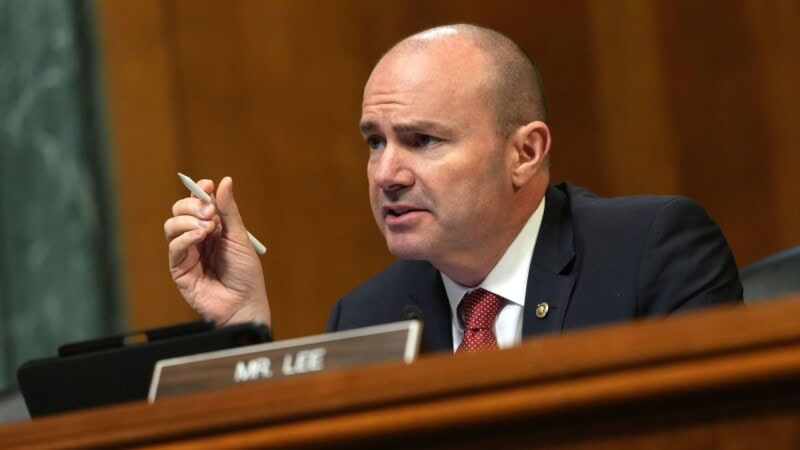
In American politics, a few names stand out not because they chase headlines, but because they stand firmly by their principles. Mike Lee is one of those names. As the senior United States Senator from Utah, Mike Lee has built his career defending the Constitution, promoting limited government, and fighting for individual liberty. His approach is serious, legally grounded, and deeply rooted in his personal values.
Since entering the Senate in 2011, Mike Lee has consistently resisted what he sees as government overreach. In a world of shifting political loyalties and fast-changing trends, Lee remains steady in his mission: to protect freedom by limiting federal power.
Early Life and Background
Michael Shumway Lee was born in Mesa, Arizona, on June 4, 1971. Though born in Arizona, Lee spent most of his childhood in Provo, Utah, where his father, Rex E. Lee, served as president of Brigham Young University (BYU) and had previously worked as the U.S. Solicitor General under President Ronald Reagan. This legal and political environment profoundly influenced Mike Lee from a young age.
Growing up in a household that valued law, ethics, and service gave Mike a strong foundation. His early exposure to national legal issues and constitutional debates would later define his public service career.
After graduating from high school in Utah, Lee attended Brigham Young University, where he earned a bachelor’s degree in political science. He then received a law degree from BYU’s J. Reuben Clark Law School, graduating in 1997.
A Legal Career Built on the Constitution
After law school, Mike Lee began working in the judicial system. He clerked for Judge Dee Benson of the U.S. District Court in Utah and later for then-Circuit Judge Samuel Alito. When Alito was appointed to the U.S. Supreme Court, Lee followed him to Washington, D.C., as a Supreme Court clerk. This prestigious and competitive role allowed him to work directly on major legal decisions.
These early legal experiences helped Lee develop a precise understanding of the Constitution, something he would later become known for in the Senate. After clerking, he worked at a law firm and later served as general counsel to Utah Governor Jon Huntsman. He also worked in the Office of Legal Counsel within the U.S. Department of Justice.
This strong legal background gave Mike Lee more than just knowledge. It gave him a lens through which he would view every law, policy, and proposal during his time in Congress.
Entry into Politics: A Tea Party Victory
In 2010, Mike Lee entered the political arena, challenging long-time incumbent Senator Bob Bennett in the Republican primary. His campaign was powered by grassroots support, especially from members of the emerging Tea Party movement, which called for smaller government, lower taxes, and a strict interpretation of the Constitution.
Lee’s message was clear: Washington had strayed from the Founding Fathers’ vision. He promised to fight against bloated budgets, endless federal programs, and laws that ignored constitutional limits. This message resonated with Utah voters. Lee won the Republican nomination and later the general election. He officially took office in January 2011.
Work in the U.S. Senate
As a senator, Mike Lee quickly became known for his sharp legal mind and willingness to challenge even his party. He is often described as a “constitutional conservative,” someone who believes every policy decision should be based on the text and original intent of the U.S. Constitution.
Lee often speaks about restoring the balance of power between the federal government and the states. He believes that Washington has taken on too many roles that should be handled at the local level. He emphasizes the importance of limited government and individual freedom in nearly every speech, bill, or interview.
He has introduced and supported a wide range of legislation, including a proposed amendment to require the federal government to maintain a balanced budget. He played a significant role in criminal justice reform, helping pass the First Step Act, which aims to reduce prison sentences for non-violent offenders and offer rehabilitation opportunities.
On technology and privacy, Lee has fought against excessive government surveillance. He wants to update laws to protect digital privacy better while still allowing law enforcement to do its job. Representing a Western state, Lee has also taken a strong stance on public lands, advocating for more state and local control over federal lands.
For more breaking international and regional updates, visit The Current.
Policy Views and Principles
Mike Lee’s positions on key issues reflect his strict constitutional approach. He has long opposed the Affordable Care Act, arguing that health care should be managed by states and the private sector, not Washington. On immigration, he supports legal entry and merit-based reforms, emphasizing the importance of border security.
His views on gun rights are in line with most conservative Republicans. He believes that the Second Amendment guarantees the right to bear arms, and he resists most efforts to place additional limits on gun ownership.
On education, Lee believes that decisions should be made by parents, teachers, and local communities, not federal officials. He has criticized national standards like Common Core.
He was among the voices calling for local decision-making during the COVID-19 pandemic, opposing blanket federal mandates in favor of state-level choices.
Relationships and Reputation in Washington
Mike Lee is considered a respected voice in conservative circles. He often works alongside like-minded senators like Rand Paul, Josh Hawley, and Ted Cruz. Though he has supported many Republican policies, he is not afraid to challenge his party when he believes it has drifted from its constitutional mission.
His support for Donald Trump during the Trump presidency was primarily based on shared policy goals. However, Lee also emphasized the need to maintain constitutional boundaries. After the 2020 election, Lee initially questioned the results but ultimately supported the peaceful power transfer, reminding Americans that political principles must come before party loyalty.
Personal Life and Values
Away from politics, Mike Lee is a dedicated family man. He is married to Sharon Lee, and they have three children together. He is a member of The Church of Jesus Christ of Latter-day Saints, and his faith plays an essential role in his personal and public life. His speeches often reference moral responsibility, personal discipline, and service to others.
He is known for his calm, scholarly approach to issues and rarely engages in political drama. His communication style is thoughtful, logical, and focused on substance rather than slogans.
Final Thoughts: Why Mike Lee Matters
In a political world that often favors flash over facts, Mike Lee brings something different: consistency, principle, and deep legal understanding. He doesn’t change his views based on polls or party pressure. Instead, he sticks to what he believes the Constitution says.
That makes him essential not just to Utah but to the nation. Whether you agree with his policies or not, Mike Lee challenges us to think about what the government should do, and more importantly, what it shouldn’t.
To understand the global response to the Gaza crisis, read our coverage on Pro-Gaza activists stopped in Libya, Egypt.