
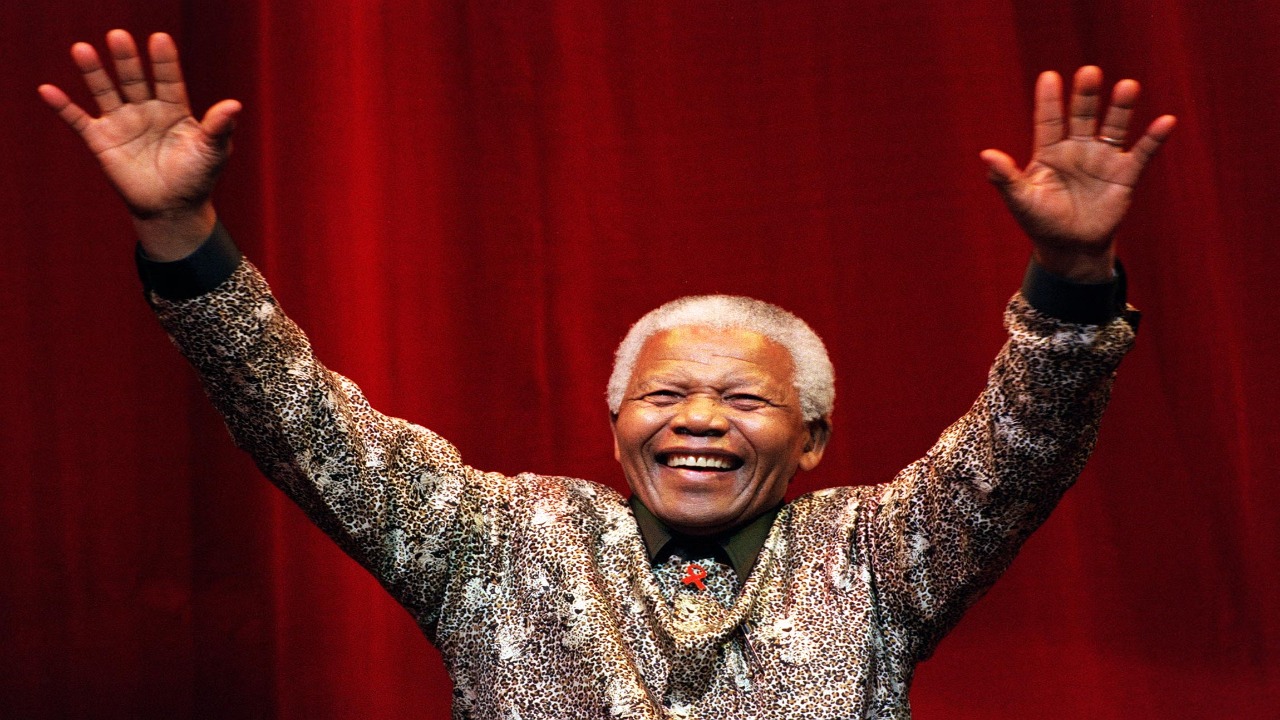


Nelson Mandela: The Legacy of a Global Icon for Justice and Freedom
Nelson Mandela is a name that resonates worldwide as a symbol of hope, courage, and perseverance. His journey from a rural village in South Africa to becoming the country’s first Black president is extraordinary. He is remembered as a political leader and a global icon for justice, equality, and human rights. In this article, we will dive deeper into his life, his contributions to South Africa, and his enduring legacy worldwide.
Early Life of Nelson Mandela: From Rural Roots to a Revolutionary Path
Nelson Rolihlahla Mandela was born on July 18, 1918, in the village of Mvezo in the Eastern Cape province of South Africa. His name, Rolihlahla, means "pulling the branch of a tree." It can be interpreted as "troublemaker"—a" fitting omen for a man who would later become one of the greatest troublemakers for apartheid.
Mandela was born into the Thembu royal family, a small community that lived under the grip of British colonial rule. His father was a chief, and young Nelson was expected to follow in his footsteps. However, Mandela’s journey to leadership would take a different route. After his father’s death, he was sent to live with a local regent, where he attended missionary schools and discovered the world of Western education. During these years, Mandela first encountered injustice and inequality, which shaped his political views.
Fighting Apartheid: The Rise of a Leader
South Africa was under apartheid during the early years of Mandela’s life. Apartheid was a government policy that enforced racial segregation and discrimination, primarily targeting black South Africans. It ensured that white people had superior rights while blacks were denied access to education, healthcare, and employment opportunities, creating a deeply divided society.
Nelson Mandela’s formal political journey began when he joined the African National Congress (ANC) in 1944. The ANC was a political party that sought to end apartheid and achieve racial equality. Mandela quickly rose through the ranks, becoming one of the party’s most prominent and influential members. He advocated for peaceful protests, but as the government’s violence increased, Mandela and the ANC began considering more radical measures.
In 1961, after years of peaceful resistance, Mandela co-founded Umkhonto we Sizwe (MK), the armed wing of the ANC. The decision to use force came after years of being ignored by the government. MK carried out acts of sabotage against government infrastructure, signaling a shift in strategy from peaceful protest to active resistance.
The Rivonia Trial and Imprisonment
In 1962, Mandela was arrested for his involvement in planning sabotage activities. His trial, known as the Rivonia Trial, took place in 1963. Mandela’s speech during the trial became legendary. He stated, “I have fought against white domination, and I have fought against black domination. I have cherished the ideal of a democratic and free society in which all persons live together in harmony and with equal opportunities.”
Despite his eloquence and calls for peace, Mandela was sentenced to life imprisonment in 1964, and he spent the next 27 years in prison, much of that time on the infamous Robben Island. His imprisonment became a rallying cry for anti-apartheid movements around the world, and many saw Mandela as a symbol of the fight for justice.
During his time in prison, Mandela’s reputation grew. His unwavering commitment to equality and refusal to abandon his principles inspired millions worldwide, even in the face of immense hardship. His ability to forgive his oppressors rather than seek revenge was key to shaping South Africa's transition to democracy.
The End of Apartheid: Mandela's Role in Peaceful Transition
In the 1980s, international pressure against apartheid reached new heights. Countries around the world, including the United States, imposed sanctions on South Africa, and protests against apartheid became a global movement. By the late 1980s, the South African government could no longer ignore the growing tide of opposition.
In 1990, Nelson Mandela was finally released from prison. His release was a pivotal moment in history, but it marked the beginning of his work toward dismantling apartheid. Mandela’s wisdom, patience, and willingness to negotiate with his former oppressors helped steer the country toward a peaceful transition. He played an instrumental role in the negotiations that led to the end of apartheid and the establishment of multiracial elections in 1994.
Nelson Mandela: South Africa’s First Black President
In 1994, South Africa held its first fully democratic elections. Black South Africans were allowed to vote for the first time, and Nelson Mandela was elected as the country’s first black president. His election was a personal victory and a triumph of justice and democracy over years of racial tyranny.
As president, Mandela’s leadership was characterized by a commitment to national reconciliation. Despite the deeply rooted racial divisions that had scarred South Africa, Mandela promoted forgiveness and unity, famously advocating for the idea of “Ubuntu,” which means “I am because we are.” He sought to heal the wounds of apartheid by creating a government that represented all South Africans, regardless of race.
Mandela’s presidency also focused on addressing the country’s economic challenges and improving the lives of the previously disenfranchised black majority. He worked with international leaders and organizations to bring South Africa back into the global fold, securing foreign investments and support.
The Global Legacy of Nelson Mandela
Nelson Mandela’s impact extended far beyond South Africa. His moral authority and dedication to human rights made him a beloved figure worldwide. In 1993, he was awarded the Nobel Peace Prize for his efforts to bring peace to South Africa, and he was recognized with numerous other accolades for his leadership.
Mandela became a global ambassador for peace and justice, using his platform to advocate for the rights of the oppressed in countries like Palestine, Sudan, and Colombia. His leadership set an example for peaceful conflict resolution and the power of dialogue over violence.
Even after stepping down from the presidency in 1999, Mandela became an active figure in global politics. The Nelson Mandela Foundation promotes human rights, education, and health, particularly in Africa. He also played a significant role in raising awareness about HIV/AIDS, a disease that had devastating effects on South Africa and the broader African continent.
Mandela’s death on December 5, 2013, marked the end of an era. However, his legacy remains alive in the hearts of millions. His life reminds us that change is possible, even in the face of the most entrenched systems of oppression.
Nelson Mandela: A Model for Leadership and Humanity
One of the most essential lessons from Mandela’s life is the power of forgiveness. Despite spending nearly three decades in prison, Mandela never allowed bitterness to define his life. His remarkable ability to reconcile with those who had oppressed him shows us that peace is not just about the absence of conflict but about building bridges and understanding.
Nelson Mandela also demonstrated the importance of perseverance. His journey was difficult and took years of struggle, sacrifice, and hardship. But he never gave up on the dream of a better, more just world.
Mandela’s story is a testament to the resilience of the human spirit and the idea that, with determination and a commitment to justice, we can overcome even the most formidable obstacles. His life continues to inspire not just the people of South Africa but individuals and movements worldwide.
Conclusion: Nelson Mandela’s Timeless Legacy
Nelson Mandela's legacy is timeless. His life teaches us that courage, integrity, and compassion are the most powerful tools for creating change. His journey from a rural village in South Africa to the world stage is a powerful reminder that even in the face of adversity, one person can make a difference.
As we reflect on his contributions to South Africa, humanity, and the world, we can be inspired to continue fighting for justice, equality, and peace. Mandela’s example shows us that no matter where we come from, we all have the power to change the world.
Ahsan Khan’s skincare secret might surprise you, but it's just one example of how personal habits can significantly impact. Check out his complete skincare routine reveal.
'%3e%3crect%20y='0.445312'%20width='48'%20height='48'%20rx='24'%20fill='white'%20fill-opacity='0.5'/%3e%3crect%20x='0.5'%20y='0.945312'%20width='47'%20height='47'%20rx='23.5'%20stroke='%23808080'/%3e%3cpath%20d='M34.625%2024.4453L14%2024.4453'%20stroke='%23808080'%20stroke-width='0.920053'/%3e%3cpath%20d='M23.375%2034.4453L13.375%2024.4453L23.375%2014.4453'%20stroke='%23808080'%20stroke-width='0.920053'/%3e%3c/g%3e%3cdefs%3e%3cfilter%20id='filter0_b_489_44344'%20x='-12'%20y='-11.5547'%20width='72'%20height='72'%20filterUnits='userSpaceOnUse'%20color-interpolation-filters='sRGB'%3e%3cfeFlood%20flood-opacity='0'%20result='BackgroundImageFix'/%3e%3cfeGaussianBlur%20in='BackgroundImageFix'%20stdDeviation='6'/%3e%3cfeComposite%20in2='SourceAlpha'%20operator='in'%20result='effect1_backgroundBlur_489_44344'/%3e%3cfeBlend%20mode='normal'%20in='SourceGraphic'%20in2='effect1_backgroundBlur_489_44344'%20result='shape'/%3e%3c/filter%3e%3c/defs%3e%3c/svg%3e)
'%3e%3crect%20y='0.445312'%20width='48'%20height='48'%20rx='24'%20fill='white'%20fill-opacity='0.5'/%3e%3crect%20x='0.5'%20y='0.945312'%20width='47'%20height='47'%20rx='23.5'%20stroke='%23808080'/%3e%3cpath%20d='M13.375%2024.4453L34%2024.4453'%20stroke='%23808080'%20stroke-width='0.920053'/%3e%3cpath%20d='M24.625%2014.4453L34.625%2024.4453L24.625%2034.4453'%20stroke='%23808080'%20stroke-width='0.920053'/%3e%3c/g%3e%3cdefs%3e%3cfilter%20id='filter0_b_489_44344'%20x='-12'%20y='-11.5547'%20width='72'%20height='72'%20filterUnits='userSpaceOnUse'%20color-interpolation-filters='sRGB'%3e%3cfeFlood%20flood-opacity='0'%20result='BackgroundImageFix'/%3e%3cfeGaussianBlur%20in='BackgroundImageFix'%20stdDeviation='6'/%3e%3cfeComposite%20in2='SourceAlpha'%20operator='in'%20result='effect1_backgroundBlur_489_44344'/%3e%3cfeBlend%20mode='normal'%20in='SourceGraphic'%20in2='effect1_backgroundBlur_489_44344'%20result='shape'/%3e%3c/filter%3e%3c/defs%3e%3c/svg%3e)