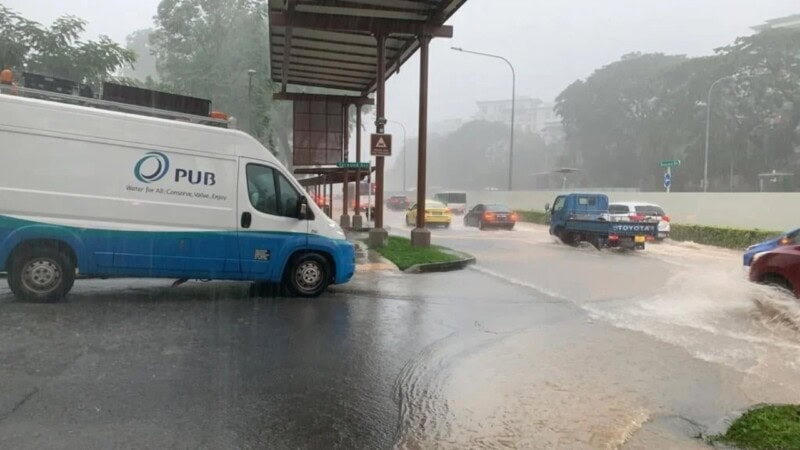
On 13 April 2025, Singapore flash floods caused significant disruptions across the island due to torrential downpours. The heavy rainfall triggered flash flooding in key areas like Yishun Avenue 7, the slip road from the Kallang–Paya Lebar Expressway (KPE), and Punggol Way, leading to the Tampines Expressway (TPE). This sudden flooding left residents stranded, and local authorities quickly mobilized to manage the situation and assist the public.
Heavy Rain Leads to Flash Flooding Across Singapore
The Singapore flash floods were caused by intense rainfall that began around 1:20 PM. The Public Utilities Board (PUB), Singapore’s national water agency, issued an early alert warning of the heavy rain expected to last until 3:00 PM. The flash floods affected several areas, particularly flood-prone regions in Singapore’s northern and eastern parts. The rapidly rising waters impacted key areas such as Yishun Avenue 2, Yishun Avenue 5, and Bukit Timah Road.
One of the most affected locations was Yishun Avenue 7, where Singapore flash floods quickly submerged the road. The Kallang–Paya Lebar Expressway (KPE) slip road and Punggol Way to TPE were also flooded, causing major commuter disruptions.
Swift Action by PUB and Local Authorities
As soon as the Singapore flash floods began, PUB responded immediately by dispatching field officers to the affected locations. These officers worked to assist residents and mitigate the impact of the flooding. Thanks to the quick action, water levels in most areas began to recede by 3:00 PM. Yishun Avenue 7 cleared by 2:30 PM, Punggol Way by 2:50 PM, and KPE by 3:00 PM. These rapid responses helped to reduce the severity of the disruptions caused by the flash floods.
PUB informed the public about the situation through real-time updates on their website and social media platforms, including X (formerly Twitter). These updates warned residents to avoid certain flood-prone roads and to remain cautious during the downpour. The Singapore flash floods highlighted the importance of timely and accurate information during weather events.
Flash Flood Risk Alerts Across the Island
As the rain continued, PUB issued Singapore flash floods risk alerts for various areas. These alerts were sent out for locations typically more vulnerable to flooding. Some of the affected areas included:
-
Yishun Avenue 2
-
Yishun Avenue 5
-
Bukit Timah Road (Wilby Road to Blackmore Drive)
-
Jalan Pokok Serunai
-
Upper Paya Lebar Service Road
-
Thrift Drive
-
Junction of Toa Payoh Lorong 1 and 2
These areas are regularly monitored due to their history of flooding, and PUB’s Smart Water Grid system allows them to track water levels in real time. The Singapore flash floods were closely observed using advanced drainage and water level sensors, which helped reduce the overall impact.
Residents Share Their Experiences on Social Media
As expected, the Singapore flash floods became a trending topic on social media. Many residents shared their experiences, capturing photos and videos of the storm’s effects.
Ms Naseera Begum, a resident in the affected area, posted a video of the heavy rain cascading past her window. She described the experience as “living behind a waterfall.” Another local, Mr Mohd Hakim Musa, shared images of a flooded carpark near his home. He wrote on Facebook, “After 12 years living here, today is the first time it’s flooded.” This experience brought back memories of his childhood when he played with paper boats during storms.
These personal stories helped paint a vivid picture of the suddenness and severity of the Singapore flash floods, underlining the unpredictability of such events.
Weather Forecast: More Rain and Rising Temperatures
According to the Meteorological Service Singapore (MSS), more heavy rainfall is expected throughout April 2025. The ongoing Singapore flash floods remind us that the monsoon season is in full swing, with thundery showers likely to continue across the island. The rainfall for the first half of the month is expected to be above average, especially in the northern and eastern regions.
In addition to the rainfall, temperatures are projected to remain high. Daily maximum temperatures will likely range from 33°C to 34°C, with some days seeing peaks of up to 35°C. This combination of extreme heat and heavy rainfall will contribute to the risk of further Singapore flash floods throughout the month.
Public Advisory and Preparedness Tips
As the Singapore flash floods become more frequent due to climate variability, PUB and other local authorities have urged residents to stay alert and prepared. Here are some tips to stay safe during such events:
-
Avoid flood-prone roads: If you live in an area vulnerable to flooding, consider taking alternative routes when heavy rain is expected.
-
Stay indoors when possible: During periods of heavy rainfall, it’s safer to avoid unnecessary travel.
-
Monitor real-time updates: Use the MyENV app to check weather and flood updates in your area.
-
Follow official updates: Stay informed by following PUB, MSS, and the National Environment Agency (NEA) alerts.
Residents must be proactive and stay informed, as the Singapore flash floods are a stark reminder of the unpredictable nature of the weather.
Conclusion
The Singapore flash floods on 13 April 2025 caused significant disruptions across the island and showcased the efficiency of Singapore’s flood management systems. While local authorities responded swiftly, the event highlights the growing impact of climate change on the island’s weather patterns. As flash floods become more frequent, the government and the public must stay vigilant and prepared.
For more updates on similar topics, check out this news article: Bangladesh reintroduces ‘except Israel’ phrase on passports.