
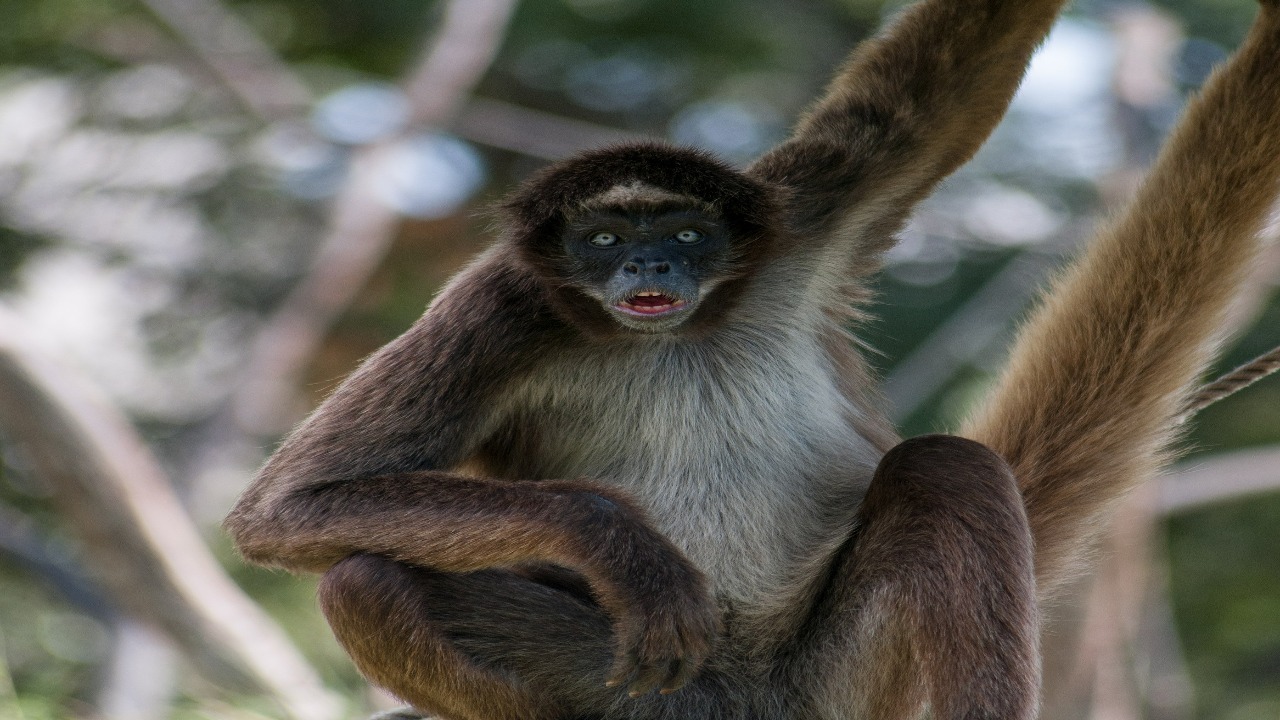


Spider Monkey: Facts, Habitat, Diet & Conservation
The Spider Monkey is one of the most fascinating primates in the world. Known for its long arms, strong tail, and playful nature, this monkey plays a key role in keeping rainforests alive. Sadly, it is also one of the most endangered primates. If you have ever wondered why Spider Monkeys matter, how they live, and why they need our help, this guide will answer your questions.
What Is a Spider Monkey?
The Monkey gets its name because of its body shape. With long, thin arms, legs, and tails, it looks like a spider when moving high in the treetops. They are medium to large primates, growing up to 2 feet tall with tails that can reach the same length or longer.
Unlike other monkeys, this type of Monkey uses its tail as a fifth hand. This strong, prehensile tail helps them grab branches, swing between trees, and even pick fruit. Their tail is often hairless on the underside, which works like a fingerprint for better grip.
Where Do They Live?
The are native to Central and South America. They are found in tropical rainforests from southern Mexico to Brazil. Most live in the upper layers of the forest canopy, rarely touching the ground.
The different types of Spider Monkeys include:
-
Brown Spider Monkey (Ateles hybridus) – Found in Colombia and Venezuela; critically endangered.
-
Black Spider Monkey (Ateles paniscus) – Common in the Amazon basin.
-
Geoffroy’s Spider Monkey (Ateles geoffroyi) – Lives in Central America.
-
White-bellied Spider Monkey (Ateles belzebuth) – Found in northern South America.
-
Brown-headed Spider Monkey (Ateles fusciceps) – Native to Ecuador and Colombia.
Each species is adapted to its forest environment, but all face threats from human activity.
What Do Spider Monkeys Eat?
They are frugivores, meaning they eat mostly fruit. However, they also consume seeds, flowers, young leaves, and sometimes insects.
Their diet makes them important seed dispersers. When they eat fruit and travel across the forest, they spread seeds through their waste. This natural process helps regrow trees and maintain healthy rainforests. Without Spider Monkeys, many tree species would struggle to survive.
Social Life of These Kind of Monkeys
These kinds of monkeys are highly social animals. They live in large groups, sometimes up to 40 members, but usually split into smaller sub-groups during the day. This is called a fission-fusion society.
-
Communication: They use loud calls, screeches, and body gestures to communicate.
-
Bonding: Grooming is rare compared to other primates. Instead, they strengthen bonds by hanging out and sharing food.
-
Movement: They are among the best climbers in the animal kingdom. With fast, agile swings, they can move through the forest canopy almost without sound.
Reproduction and Lifespan
Spider Monkeys reproduce slowly. Females give birth only once every two to three years. This low birth rate makes it difficult for populations to recover when numbers fall.
-
Gestation period: About 7.5 months.
-
Infant care: Babies cling to their mother’s belly for the first few months and later ride on her back.
-
Lifespan: In the wild, they live around 20 years. In captivity, they can live more than 30 years.
Why Are Spider Monkeys Endangered?
Several of these kinds of species are listed as endangered or critically endangered by the IUCN Red List. Their biggest threats are:
-
Deforestation – Large areas of rainforest are cleared for cattle ranching, palm oil plantations, and logging. Since Spider Monkeys rely on a continuous canopy, forest loss isolates their populations.
-
Hunting – In some regions, they are hunted for bushmeat.
-
Pet trade – Baby monkeys are often captured and sold illegally. This usually means the mother is killed.
-
Low reproduction – Because females reproduce slowly, even small losses can push populations toward extinction.
The Case of the Brown Spider Monkey in Colombia
The brown spider monkey is one of the most endangered primates on Earth. More than 85% of its habitat has been lost in Colombia’s Middle Magdalena region.
Conservationists are fighting back by planting forest corridors. These strips of trees connect isolated patches of forest, allowing monkeys to move, feed, and breed with other groups. This helps increase genetic diversity and reduces the risk of inbreeding.
The project, led by Fundación Proyecto Primates, has already restored more than 600 hectares with 15 corridors. They aim to expand to 2,000 hectares. Other species, such as howler monkeys, opossums, and porcupines, are also using these corridors, proving the value of this approach.
Why These Kinds of Monkeys Are Important
These kinds of species are more than just animals swinging in trees. They are ecosystem engineers. By spreading seeds and keeping the rainforest healthy, they indirectly support humans.
Rainforests regulate the Earth’s climate, produce oxygen, and provide water resources. Protecting Spider Monkeys means protecting the entire rainforest system.
How You Can Help Save Them
You don’t need to live in South America to make a difference. Here are simple ways you can help:
-
Support conservation groups like Proyecto Primates or Project Washu.
-
Choose sustainable products. Avoid goods linked to deforestation, like unsustainable palm oil.
-
Raise awareness. Share articles, documentaries, and campaigns about Spider Monkeys.
-
Eco-tourism. If visiting Latin America, choose eco-friendly tours that support local conservation.
Fun Facts About These Kinds of Species
-
They have no thumbs. Instead, their hands are hook-shaped, perfect for swinging.
-
They can leap up to 30 feet between trees.
-
Their tails are so strong that they can hang from them for long periods while using their hands to eat.
-
They are often called “acrobat monkeys” because of their agility.
Final Thoughts
These kinds of species are not just another rainforest animal. It is a symbol of balance, resilience, and connection between humans and nature. Protecting this species means saving entire forests and countless other animals that depend on them.
As deforestation and hunting continue to threaten their survival, global awareness and local action are more important than ever. By valuing the Spider Monkey, we protect a vital piece of our planet’s biodiversity.
In other news, Pakistan’s Ashab Irfan wins Johns Creek Open squash tournament, making headlines in the sports world.
'%3e%3crect%20y='0.445312'%20width='48'%20height='48'%20rx='24'%20fill='white'%20fill-opacity='0.5'/%3e%3crect%20x='0.5'%20y='0.945312'%20width='47'%20height='47'%20rx='23.5'%20stroke='%23808080'/%3e%3cpath%20d='M34.625%2024.4453L14%2024.4453'%20stroke='%23808080'%20stroke-width='0.920053'/%3e%3cpath%20d='M23.375%2034.4453L13.375%2024.4453L23.375%2014.4453'%20stroke='%23808080'%20stroke-width='0.920053'/%3e%3c/g%3e%3cdefs%3e%3cfilter%20id='filter0_b_489_44344'%20x='-12'%20y='-11.5547'%20width='72'%20height='72'%20filterUnits='userSpaceOnUse'%20color-interpolation-filters='sRGB'%3e%3cfeFlood%20flood-opacity='0'%20result='BackgroundImageFix'/%3e%3cfeGaussianBlur%20in='BackgroundImageFix'%20stdDeviation='6'/%3e%3cfeComposite%20in2='SourceAlpha'%20operator='in'%20result='effect1_backgroundBlur_489_44344'/%3e%3cfeBlend%20mode='normal'%20in='SourceGraphic'%20in2='effect1_backgroundBlur_489_44344'%20result='shape'/%3e%3c/filter%3e%3c/defs%3e%3c/svg%3e)
'%3e%3crect%20y='0.445312'%20width='48'%20height='48'%20rx='24'%20fill='white'%20fill-opacity='0.5'/%3e%3crect%20x='0.5'%20y='0.945312'%20width='47'%20height='47'%20rx='23.5'%20stroke='%23808080'/%3e%3cpath%20d='M13.375%2024.4453L34%2024.4453'%20stroke='%23808080'%20stroke-width='0.920053'/%3e%3cpath%20d='M24.625%2014.4453L34.625%2024.4453L24.625%2034.4453'%20stroke='%23808080'%20stroke-width='0.920053'/%3e%3c/g%3e%3cdefs%3e%3cfilter%20id='filter0_b_489_44344'%20x='-12'%20y='-11.5547'%20width='72'%20height='72'%20filterUnits='userSpaceOnUse'%20color-interpolation-filters='sRGB'%3e%3cfeFlood%20flood-opacity='0'%20result='BackgroundImageFix'/%3e%3cfeGaussianBlur%20in='BackgroundImageFix'%20stdDeviation='6'/%3e%3cfeComposite%20in2='SourceAlpha'%20operator='in'%20result='effect1_backgroundBlur_489_44344'/%3e%3cfeBlend%20mode='normal'%20in='SourceGraphic'%20in2='effect1_backgroundBlur_489_44344'%20result='shape'/%3e%3c/filter%3e%3c/defs%3e%3c/svg%3e)