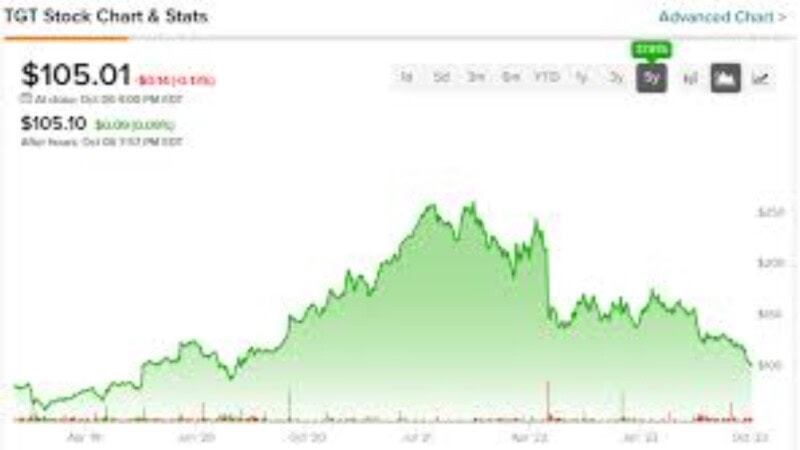
The Target stock journey has taken a sharp turn in 2025. Once considered a stable investment in the retail sector, Target Corporation (NYSE: TGT) is now at the center of market discussions. From falling prices to shifting investor sentiment, the Target stock market is facing a turbulent time. This article digs into why the stock is falling, what the current market chart shows, how current news affects investor decisions, and what lies ahead, especially in contrast to stocks like Tesla or Apple.
Why Is Target Stock Falling?
One of the top Google searches lately is this question? The answer lies in a combination of economic, political, and social shifts.
In 2025, Target faced backlash for rolling back its diversity, equity, and inclusion (DEI) programs. This move sparked criticism from community groups, especially those supporting LGBTQ+ rights. As a result, Target lost favor with key segments of its customer base, sparking concern among investors.
At the same time, economic uncertainty, rising interest rates, high inflation, and a more cautious consumer, has pushed retail stocks lower. With discretionary spending tightening, big-box retailers like Target are under pressure to deliver stronger-than-expected earnings just to maintain valuation levels.
Target Stock News Today: Pride Controversy and Market Impact
A big driver of recent headlines is Target stock news surrounding the Twin Cities Pride Festival. In January 2025, Target declined to support the event financially, reversing its long-standing support.
Festival organizers had anticipated a $50,000 contribution from Target. But due to the rollback of its DEI initiatives, that funding was withdrawn. Local businesses quickly stepped up to fill the void, raising over $93,000, up from just $25,000 the previous year.
This shift isn’t isolated. Across the U.S., companies like Anheuser-Busch have pulled back from sponsoring LGBTQ+ events due to political backlash. While this might seem like a PR move, it’s affecting Target stock directly. Investors are watching closely as public sentiment becomes a financial risk. It’s not just about product sales, it’s about brand loyalty and long-term trust.
Analyzing the Target Stock Chart
The Target stock chart on platforms like Yahoo Finance and TradingView paints a clear picture. Over the past 12 months, the stock has dropped by more than 18%. Volume spikes around controversial news stories suggest short-term panic selling, while longer-term trend lines show weakening momentum.
On Target stock TradingView, analysts have noted bearish patterns forming. The 50-day moving average has dipped below the 200-day average, a classic “death cross” signal suggesting more downside risk ahead.
Investors using TradingView are monitoring RSI (Relative Strength Index) levels, which have hovered below 40, signaling that the stock might be oversold, but not necessarily undervalued, especially if fundamentals don’t improve.
Tesla Target Stock Price vs Target Corporation
The contrast between Tesla and Target is striking. While Tesla’s target stock price has recently been revised upwards by some Wall Street analysts due to momentum in AI and energy segments, Target’s outlook has been revised downwards.
Tesla’s stock may experience volatility, but it benefits from strong tech-driven growth narratives. Target, on the other hand, is tied more closely to the real-world economy and consumer confidence, making it more sensitive to inflation, wages, and household debt.
For deeper insight into how innovation drives investor interest, explore Tesla’s future and Elon Musk’s industry-shaping vision.
What About the Target Price for Apple Stock?
It’s also useful to compare Target stock with blue-chip peers like Apple. The target price for Apple stock in 2025 remains strong, supported by new product lines, service revenues, and AI integration. Analysts have Apple at a “Buy” or “Strong Buy,” whereas Target is seeing downgrades.
This comparison shows that while consumer brands can hold up during uncertain times, innovation-driven companies like Apple or Tesla have more tools to excite investors, even in volatile markets.
Target Stock Market Sentiment and Forecast
In the broader Target stock market sentiment, institutional investors are cautious. Hedge funds have reduced positions, and some retail investors are looking elsewhere for growth. That doesn’t mean Target is a lost cause, but it does mean that recovery will depend on more than just quarterly earnings. It will require a reset in brand image, stronger DEI engagement, and clearer messaging to regain investor confidence.
Opportunities for Long-Term Investors
Despite the short-term negative headlines, some value investors see Target stock as a buying opportunity. The company has a strong balance sheet, consistent dividend payouts, and a loyal customer base, though shaken recently. If the company recalibrates its public stance and adapts to changing consumer expectations, there may be long-term upside.
Investors should closely watch upcoming earnings calls, DEI updates, and strategic brand partnerships. If Target manages to stabilize its image while maintaining profitability, it could bounce back.
Final Thoughts: Navigating Target Stock in a Shifting Market
The story of Target stock in 2025 is about more than just share prices. It’s about the intersection of business, politics, and social responsibility. As small businesses replace corporate sponsors at events like Twin Cities Pride, the question for investors becomes: What kind of brand will Target be moving forward?
Will it regain public trust and investor interest, or continue to face headwinds? For now, analysts suggest holding off on aggressive buying until there’s a clear reversal in both stock performance and public sentiment.
If you’re following the Target stock chart or watching this news today, stay informed and look beyond the surface. The deeper story may hold clues to what’s next for this once-reliable retail powerhouse.
To stay updated on broader market movements, read how the stock market rallied after the Iran-Israel ceasefire.