
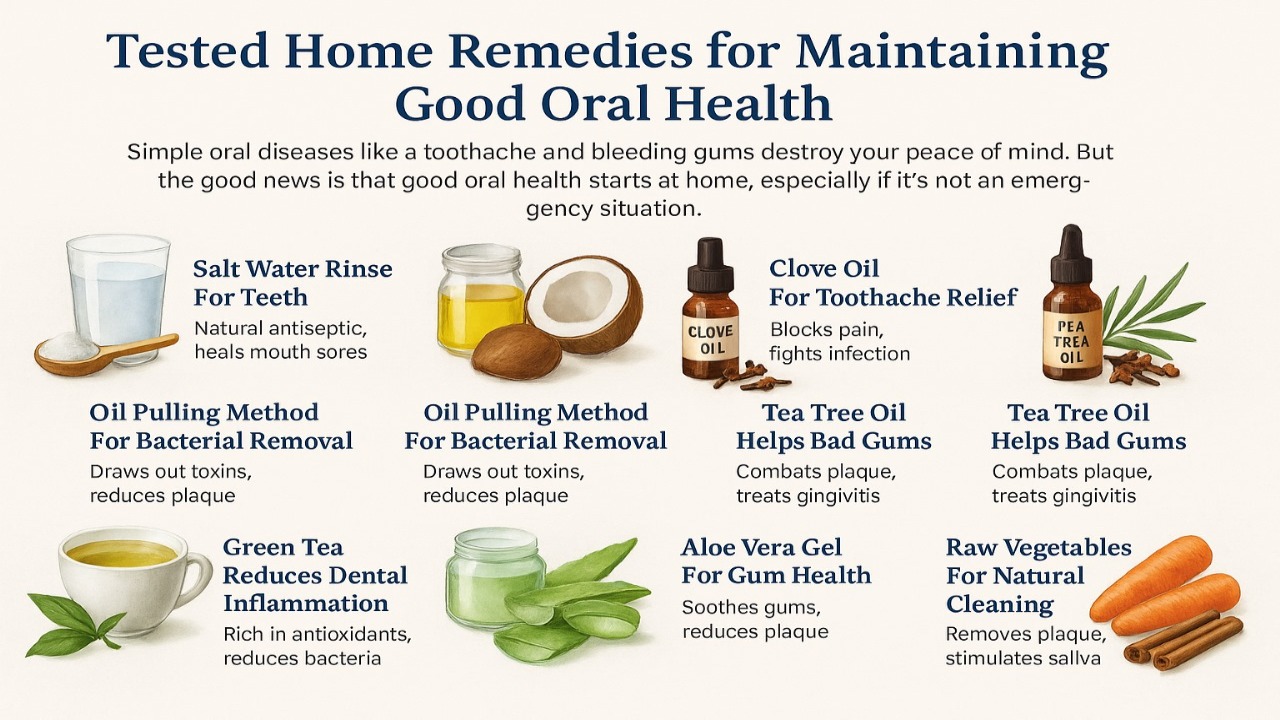


Tested Home Remedies for Maintaining Good Oral Health
Simple oral diseases like a toothache and bleeding gums destroy your peace of mind. But the good news is that good oral health starts at home, especially if it’s not an emergency situation. Home remedies for teeth and gums include natural ingredients like green tea, tea tree oils, green vegetables, etc. Get your hands on these tried and tested home solutions for your oral health and reduce the risk of serious medical emergencies.
Natural Remedies to Improve Oral Health At Home
A dental clinic visit every 6 months is always the preferred choice to treat and prevent all mouth and gum diseases. As an add-on, some home remedies passed through generations as they proved to be effective against simple inflammations and toothaches.
Salt Water Rinse For Teeth
Salt water reduces inflammation and fights bacteria with natural antiseptic properties. This remedy dates back to ancient Egyptian practices. Salt water heals mouth sores, treats gingivitis, and provides relief after dental procedures by drawing out bacteria through osmosis.
How to use:
-
Mix half teaspoon of sea salt or table salt in 8 ounces of warm water until dissolved.
-
Swish solution around mouth for 30 seconds, focusing on problem areas.
-
Spit out completely and rinse with plain water.
-
Use morning and evening after brushing teeth.
-
Never swallow the solution.
Tip: Adding a drop of peppermint oil can enhance freshness while maintaining effectiveness.
Oil Pulling Method For Bacterial Removal
The oil pulling method originated in Ayurvedic medicine 3,000+ years ago. It was known to draw toxins from the body, including the mouth. This technique reduces plaque-causing bacteria, improves breath freshness, and gradually whitens teeth. Studies show that oil pulling significantly reduces Streptococcus mutans bacteria, the primary cause of tooth decay.
How to use:
-
Place one tablespoon of coconut oil (or sesame oil) in the mouth.
-
Swish between teeth for 15-20 minutes each morning before brushing.
-
Oil becomes milky and thinner as it mixes with saliva.
-
Rinse thoroughly with warm water, then brush normally.
-
Practice daily for best results (improvements often appear within two weeks).
Tip: Starting with just 5 minutes and working up to 20 minutes makes this practice more manageable for beginners.
Clove Oil for Toothache Relief
Clove oil contains eugenol, a natural anesthetic and antibacterial compound providing rapid pain relief for toothaches. Dentists historically relied on cloves before modern anesthetics. The numbing effect works by blocking nerve transmission, while antimicrobial properties fight infection in dental caries or around damaged teeth.
How to use:
-
Purchase food-grade clove essential oil from a reputable market.
-
Apply one drop to a clean cotton ball and place on the painful tooth/gum. You can also dilute it with 2-3 drops of olive or coconut oil.
-
Apply up to three times daily as needed.
-
Discontinue if irritation occurs and avoid swallowing.
Tip: For more visible results, combine with a tiny pinch of ground ginger and increase circulation to the affected area.
Baking Soda For a Pearly Smile
Baking soda (sodium bicarbonate) works best if you want that pearly white smile. It is a gentle abrasive that neutralizes mouth acids and polishes the stains. It is alkaline in nature, so it adjusts the oral PH accordingly, while the majority of the bacteria are acidic in nature so they are unable to survive.
A study in the Journal of Clinical Dentistry found that toothpastes containing baking soda remove plaque more effectively than those without it.
How to use:
-
Wet toothbrush, dip in a small amount of baking soda, brush gently in circular motions for two minutes.
-
Rinse thoroughly (use no more than twice weekly).
-
You can also make a mouthwash by dissolving 1/2 teaspoon of baking soda in 4 ounces of warm water. Swish for 30 seconds after brushing.
Tip: Adding a drop of peppermint extract to baking soda creates a more pleasant taste.
Tea Tree Oil Helps Bad Gums
Tea tree oil possesses strong antimicrobial properties combating oral bacteria responsible for bad breath, plaque, and gum disease. Australian Aboriginal communities used this remedy for centuries before scientific recognition. Studies show tea tree oil effectively fights Candida albicans (oral thrush) and reduces gingivitis inflammation.
How to use:
-
For mouthwash: Add 3 drops pure tea tree oil to 1 cup warm water, mix thoroughly, swish 30 seconds before spitting (never swallow).
-
For toothpaste addition: Add 1 drop of tea tree oil to a pea-sized amount of toothpaste before brushing.
-
For gum application: Dilute one drop of tea tree oil with 1 teaspoon of coconut oil, apply to inflamed gums using a cotton swab, leave 5 minutes, rinse thoroughly.
-
Use once daily, preferably before bed.
Note: The strong medicinal taste indicates potent active compounds working effectively.
Green Tea Reduces Dental Inflammation
Green tea contains polyphenols and catechins reducing inflammation and inhibiting bacteria that cause tooth decay and gum disease. Research in the Journal of Periodontology found regular green tea drinkers had healthier gums than non-tea drinkers. The antioxidants may also reduce oral cancer risk.
How to use:
-
Brewing method: Use one tea bag or 1 teaspoon loose-leaf green tea per 8 ounces of water heated to 175°F (not boiling), steep 3-5 minutes.
-
For oral benefits: Drink 2-3 cups of unsweetened green tea daily, swish each sip briefly before swallowing.
-
Used tea bags: Cool used bags in the refrigerator for 20 minutes. Place directly on canker sores or inflamed gums for 5 minutes.
Tip: Matcha green tea provides even more concentrated benefits than regular green tea.
Aloe Vera Gel for Gum Health
Aloe vera contains anti-inflammatory compounds and 75+ potentially active ingredients. The key players include vitamins, enzymes, and amino acids, promoting oral healing.
Clinical studies show that aloe vera gel reduces plaque formation as effectively as chlorhexidine mouthwash. It also provides a soothing effect to the inflamed gum tissues. Aloe’s natural antibacterial properties fight gingivitis without harsh chemicals.
How to use:
-
Cut open the leaf, scoop clear gel with a clean spoon (avoid yellow latex beneath the skin).
-
Apply a small amount directly to gums using a clean finger or cotton swab, massage gently 1-2 minutes, leave for an additional 10 minutes, and rinse with warm water.
-
For mouth ulcers: Apply directly 3-4 times daily for pain relief and faster healing.
-
For general gum health: Use once daily after evening brushing.
-
For store-bought options, choose 100% pure, food-grade products without preservatives. Refrigerate between uses.
Tip: Growing aloe vera at home ensures a constant supply of fresh gel for oral treatments.
Apple Cider Vinegar as Oral Health Remedy
Apple cider vinegar contains acetic acid, creating an environment where odor-causing bacteria cannot thrive. Natural acidic properties help break down plaque and whiten teeth. Colonial American medical journals from the 1700s document this remedy for oral care.
How to use:
-
For mouthwash: Mix 1 tablespoon raw, unfiltered apple cider vinegar with 1 cup water, swish no more than 30 seconds, rinse thoroughly.
-
For teeth whitening: Dip toothbrush in diluted solution before adding regular toothpaste, or brush with diluted solution once weekly.
-
For gargling: Use the same dilution to gargle for 10-15 seconds to reach the throat bacteria causing bad breath.
Important safety note: Always dilute properly. High acidity of undiluted vinegar damages tooth enamel permanently. Limit to once daily, preferably after evening meal.
Raw Vegetables for Natural Cleaning
Raw, crunchy and green vegetables act as natural tooth cleaners by mechanically removing plaque and food particles. Carrots, celery, cucumbers, bell peppers, broccoli, cauliflower, etc act as a natural cleansers and work by stimulating healthy saliva production.
Some ancient evidence suggests that Europeans from the Middle Ages who consumed more raw vegetables maintained healthier teeth. High fiber in these vegetables, which provide gentle abrasion without damaging tooth enamel. The nutrients provide calcium, folate, vitamin D, and other important components that maintain good oral health.
How to use:
-
Wash vegetables thoroughly, cut into convenient sticks (3-4 inches long, 1/2 inch thick).
-
Chew thoroughly and deliberately, "scrubbing" all tooth surfaces, focus on molars and areas where food gets trapped.
-
Eat for 5-10 minutes after meals when brushing isn't possible, or as mid-afternoon snack.
Tip: Red bell peppers offer additional vitamin C, crucial for gum tissue integrity.
Honey and Cinnamon Paste for Gum Disease
Honey contains hydrogen peroxide with a naturally acidic pH inhibiting bacterial growth. Combined with cinnamon (containing antimicrobial cinnamaldehyde), it creates a potent remedy for gum inflammation and early-stage gingivitis. Persian physicians documented this treatment in 10th-century medical texts for oral infections and gum bleeding.
How to use:
-
Take 1 teaspoon raw organic honey (preferably Manuka) and one teaspoon Ceylon cinnamon powder.
-
Mix thoroughly until a smooth paste forms, add 1-2 drops of clove oil for additional pain relief if needed.
-
Apply directly to gums using a clean finger or cotton swab, leave 10 minutes, rinse with lukewarm water.
-
Apply once every 3-4 days rather than daily (allows gum tissue recovery between applications).
-
One week of consistent treatment typically shows significant improvement.
Tip: Ceylon cinnamon contains more active compounds than common Cassia cinnamon for better results.
Summarizing the Oral Health Remedies
Consult a dentist in Lahore for professional advice based on specific oral health needs. Medical conditions like pregnancy require direct medical consultation but generally some common kitchen ingredients are capable of maintaining your good oral health. Practice these for treating bleeding gums, tooth pain, and other oral diseases but visit your nearest dental clinic if the situation worsens.
'%3e%3crect%20y='0.445312'%20width='48'%20height='48'%20rx='24'%20fill='white'%20fill-opacity='0.5'/%3e%3crect%20x='0.5'%20y='0.945312'%20width='47'%20height='47'%20rx='23.5'%20stroke='%23808080'/%3e%3cpath%20d='M34.625%2024.4453L14%2024.4453'%20stroke='%23808080'%20stroke-width='0.920053'/%3e%3cpath%20d='M23.375%2034.4453L13.375%2024.4453L23.375%2014.4453'%20stroke='%23808080'%20stroke-width='0.920053'/%3e%3c/g%3e%3cdefs%3e%3cfilter%20id='filter0_b_489_44344'%20x='-12'%20y='-11.5547'%20width='72'%20height='72'%20filterUnits='userSpaceOnUse'%20color-interpolation-filters='sRGB'%3e%3cfeFlood%20flood-opacity='0'%20result='BackgroundImageFix'/%3e%3cfeGaussianBlur%20in='BackgroundImageFix'%20stdDeviation='6'/%3e%3cfeComposite%20in2='SourceAlpha'%20operator='in'%20result='effect1_backgroundBlur_489_44344'/%3e%3cfeBlend%20mode='normal'%20in='SourceGraphic'%20in2='effect1_backgroundBlur_489_44344'%20result='shape'/%3e%3c/filter%3e%3c/defs%3e%3c/svg%3e)
'%3e%3crect%20y='0.445312'%20width='48'%20height='48'%20rx='24'%20fill='white'%20fill-opacity='0.5'/%3e%3crect%20x='0.5'%20y='0.945312'%20width='47'%20height='47'%20rx='23.5'%20stroke='%23808080'/%3e%3cpath%20d='M13.375%2024.4453L34%2024.4453'%20stroke='%23808080'%20stroke-width='0.920053'/%3e%3cpath%20d='M24.625%2014.4453L34.625%2024.4453L24.625%2034.4453'%20stroke='%23808080'%20stroke-width='0.920053'/%3e%3c/g%3e%3cdefs%3e%3cfilter%20id='filter0_b_489_44344'%20x='-12'%20y='-11.5547'%20width='72'%20height='72'%20filterUnits='userSpaceOnUse'%20color-interpolation-filters='sRGB'%3e%3cfeFlood%20flood-opacity='0'%20result='BackgroundImageFix'/%3e%3cfeGaussianBlur%20in='BackgroundImageFix'%20stdDeviation='6'/%3e%3cfeComposite%20in2='SourceAlpha'%20operator='in'%20result='effect1_backgroundBlur_489_44344'/%3e%3cfeBlend%20mode='normal'%20in='SourceGraphic'%20in2='effect1_backgroundBlur_489_44344'%20result='shape'/%3e%3c/filter%3e%3c/defs%3e%3c/svg%3e)