
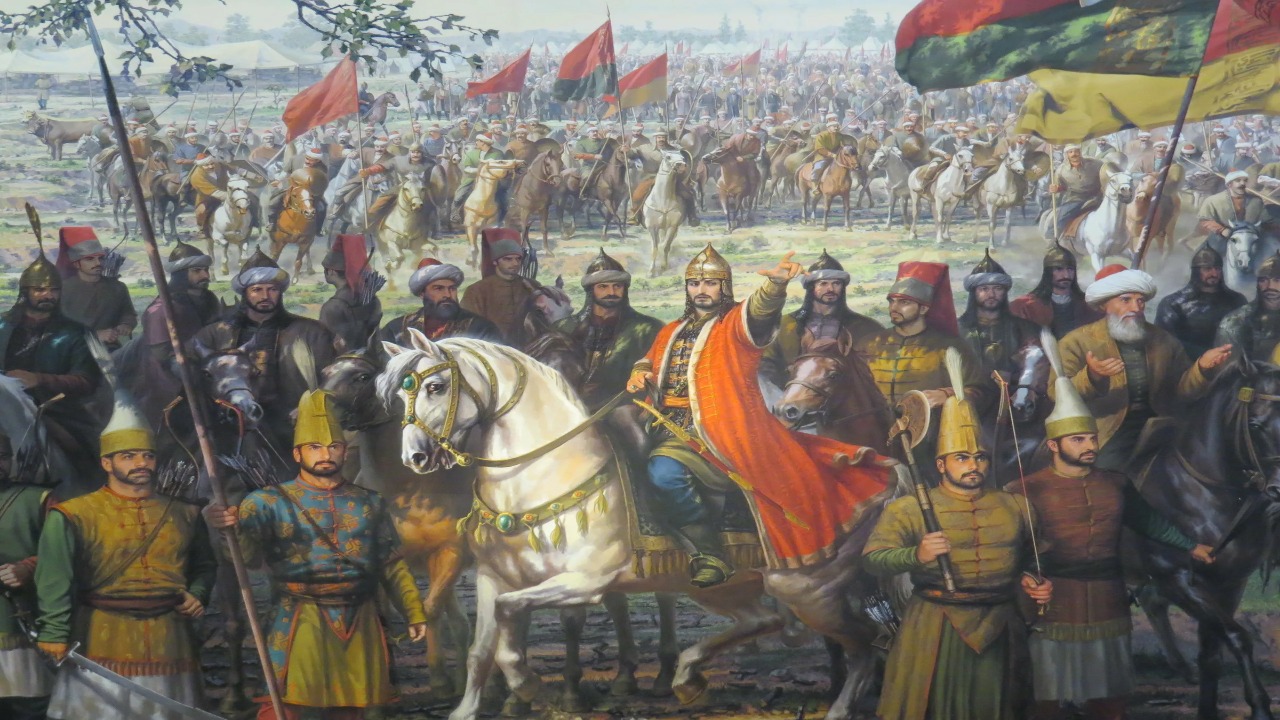


The Ottoman Empire: A Powerful Legacy That Shaped History
The Ottoman Empire is one of history's most influential and long-lasting empires. Spanning over 600 years, it controlled vast territories across three continents: Southeast Europe, Western Asia, and North Africa. From its humble beginnings in the late 13th century to its eventual fall in the early 20th century, the Ottoman Empire left an indelible mark on global politics, culture, and society. This article delves into the Empire's rise, power, and eventual decline, exploring the key factors contributing to its success and eventual collapse.
The Origins of the Ottoman Empire
The Ottoman Empire was founded in 1299 by Osman I, a leader of the Turkish tribes in Anatolia (modern-day Turkey). Osman’s small principality slowly expanded through military conquest and strategic alliances. His descendants continued to grow the empire, laying the foundation for one of the largest empires in history.
The name "Ottoman" comes from Osman’s name, and over time, the empire expanded significantly, stretching from the Balkans in the west to the Arabian Peninsula in the east. By the 15th century, the Ottomans had conquered Constantinople, the capital of the Byzantine Empire, marking the end of a thousand-year-old civilization and solidifying the Ottomans as a significant world power.
The Golden Age of the Ottoman Empire
The 16th and 17th centuries marked the height of the Empire’s power. Under the leadership of Sultan Suleiman the Magnificent, the empire reached its peak both territorially and culturally. Suleiman expanded the empire’s boundaries into Europe, North Africa, and Asia, making it one of the world's largest and most influential empires.
The Ottomans created a highly organized government with a centralized administration. They implemented an advanced legal system known as the Kanun, which governed not just religious matters but also civil, military, and criminal law. This allowed the empire to maintain order and stability across its vast and diverse lands.
Culturally, the Ottoman Empire was a melting pot of different religions, languages, and ethnicities. It was home to Christians, Jews, Muslims, and others, all of whom lived together under the Ottomans' rule. The empire was also known for its architectural marvels, such as the Blue Mosque in Istanbul, which still stands today as a symbol of Ottoman grandeur.
The Military Prowess of the Ottomans
One key factor behind the Empire's success was its military strength. The Ottomans had a highly skilled and disciplined military, emphasizing elite troops like the Janissaries—an army of highly trained soldiers often recruited from Christian communities through the devshirme system.
The Ottomans were also masters of siege warfare. Their conquest of Constantinople in 1453 is a prime example of their military expertise. The Ottomans used massive cannons and innovative tactics to breach the city's walls, eventually ending the Byzantine Empire and establishing Istanbul as the new capital of the Ottoman Empire.
The Ottoman Empire’s Multi-Ethnic and Multi-Religious Society
The Ottoman Empire was unique in embracing a multiethnic, multireligious society. At its height, the empire included Turks, Arabs, Greeks, Serbs, Armenians, Jews, and many other ethnic groups. The Ottomans had a tolerance policy, allowing various religious communities to govern themselves under the system known as millets. This allowed each group to follow their customs and laws while still loyal to the empire.
However, the empire’s ability to manage such diversity was not without its challenges. Over time, tensions between different groups emerged, particularly in the Balkans and other border regions. These tensions would eventually contribute to the empire’s decline.
Decline and Fall of the Ottoman Empire
The decline of the Empire began in the late 17th century and continued for several centuries. The empire faced numerous challenges, including military defeats, economic problems, and political instability. Losing territory, particularly in Europe, weakened the empire’s power.
Several factors contributed to the decline of the Ottoman Empire:
-
Military Defeats: The empire lost battles against European powers, such as Austria, Russia, and France, which chipped away at its territorial holdings.
-
Economic Troubles: The empire’s economy stagnated, partly due to the rise of European trade routes that bypassed Ottoman-controlled territories. Additionally, the empire struggled to keep up with technological advances in Europe.
-
Internal Corruption: As the empire expanded, it became increasingly difficult to govern effectively. The sultans became less involved in day-to-day governance, and corruption spread throughout the bureaucracy.
-
Nationalism: In the 19th century, rising nationalist movements in the Balkans and other parts of the empire began to demand independence. These movements, combined with the empire's weakening power, led to the loss of significant territories.
By the early 20th century, the Empire was called the "sick man of Europe." The empire’s participation in World War I on the side of the Central Powers further accelerated its decline. Following the war, the empire was partitioned, and the modern-day nation of Turkey emerged from its ashes under the leadership of Mustafa Kemal Atatürk.
The Legacy of the Empire
Although the Ottoman Empire fell in 1922, its legacy still influences today's world. The empire shaped the once-controlled regions' cultures, politics, and economies. Blending cultures, religions, and traditions created a unique Ottoman identity that still resonates in many countries, especially in the Middle East, the Balkans, and North Africa.
In Turkey, Atatürk’s reforms modernized the country and moved it away from its Ottoman past. However, many aspects of Ottoman culture, including art, architecture, and cuisine, remain integral to Turkish identity. Across the former Ottoman territories, the impact of Ottoman rule can still be seen in the architecture, legal systems, and even in the languages spoken.
Read More: Emily Blunt: A Comprehensive Look at the Acclaimed Actress
Conclusion
The Ottoman Empire, which spanned over six centuries, was remarkable and complex. It was an empire of military power, cultural richness, and political ingenuity. Despite its eventual decline, the Empire’s impact on history is undeniable. From the architectural wonders of Istanbul to the multi-ethnic societies it nurtured, the Empire remains one of the most fascinating empires in world history. Its legacy continues to shape the modern world in ways that are still felt today, particularly in the Middle East, the Balkans, and North Africa.
The history of the Ottoman Empire is a testament to the dynamic forces of change, resilience, and adaptation in human civilization. Looking back on its rise and fall, we can better understand the complexities of empires and their lasting legacies in the modern world.
'%3e%3crect%20y='0.445312'%20width='48'%20height='48'%20rx='24'%20fill='white'%20fill-opacity='0.5'/%3e%3crect%20x='0.5'%20y='0.945312'%20width='47'%20height='47'%20rx='23.5'%20stroke='%23808080'/%3e%3cpath%20d='M34.625%2024.4453L14%2024.4453'%20stroke='%23808080'%20stroke-width='0.920053'/%3e%3cpath%20d='M23.375%2034.4453L13.375%2024.4453L23.375%2014.4453'%20stroke='%23808080'%20stroke-width='0.920053'/%3e%3c/g%3e%3cdefs%3e%3cfilter%20id='filter0_b_489_44344'%20x='-12'%20y='-11.5547'%20width='72'%20height='72'%20filterUnits='userSpaceOnUse'%20color-interpolation-filters='sRGB'%3e%3cfeFlood%20flood-opacity='0'%20result='BackgroundImageFix'/%3e%3cfeGaussianBlur%20in='BackgroundImageFix'%20stdDeviation='6'/%3e%3cfeComposite%20in2='SourceAlpha'%20operator='in'%20result='effect1_backgroundBlur_489_44344'/%3e%3cfeBlend%20mode='normal'%20in='SourceGraphic'%20in2='effect1_backgroundBlur_489_44344'%20result='shape'/%3e%3c/filter%3e%3c/defs%3e%3c/svg%3e)
'%3e%3crect%20y='0.445312'%20width='48'%20height='48'%20rx='24'%20fill='white'%20fill-opacity='0.5'/%3e%3crect%20x='0.5'%20y='0.945312'%20width='47'%20height='47'%20rx='23.5'%20stroke='%23808080'/%3e%3cpath%20d='M13.375%2024.4453L34%2024.4453'%20stroke='%23808080'%20stroke-width='0.920053'/%3e%3cpath%20d='M24.625%2014.4453L34.625%2024.4453L24.625%2034.4453'%20stroke='%23808080'%20stroke-width='0.920053'/%3e%3c/g%3e%3cdefs%3e%3cfilter%20id='filter0_b_489_44344'%20x='-12'%20y='-11.5547'%20width='72'%20height='72'%20filterUnits='userSpaceOnUse'%20color-interpolation-filters='sRGB'%3e%3cfeFlood%20flood-opacity='0'%20result='BackgroundImageFix'/%3e%3cfeGaussianBlur%20in='BackgroundImageFix'%20stdDeviation='6'/%3e%3cfeComposite%20in2='SourceAlpha'%20operator='in'%20result='effect1_backgroundBlur_489_44344'/%3e%3cfeBlend%20mode='normal'%20in='SourceGraphic'%20in2='effect1_backgroundBlur_489_44344'%20result='shape'/%3e%3c/filter%3e%3c/defs%3e%3c/svg%3e)