
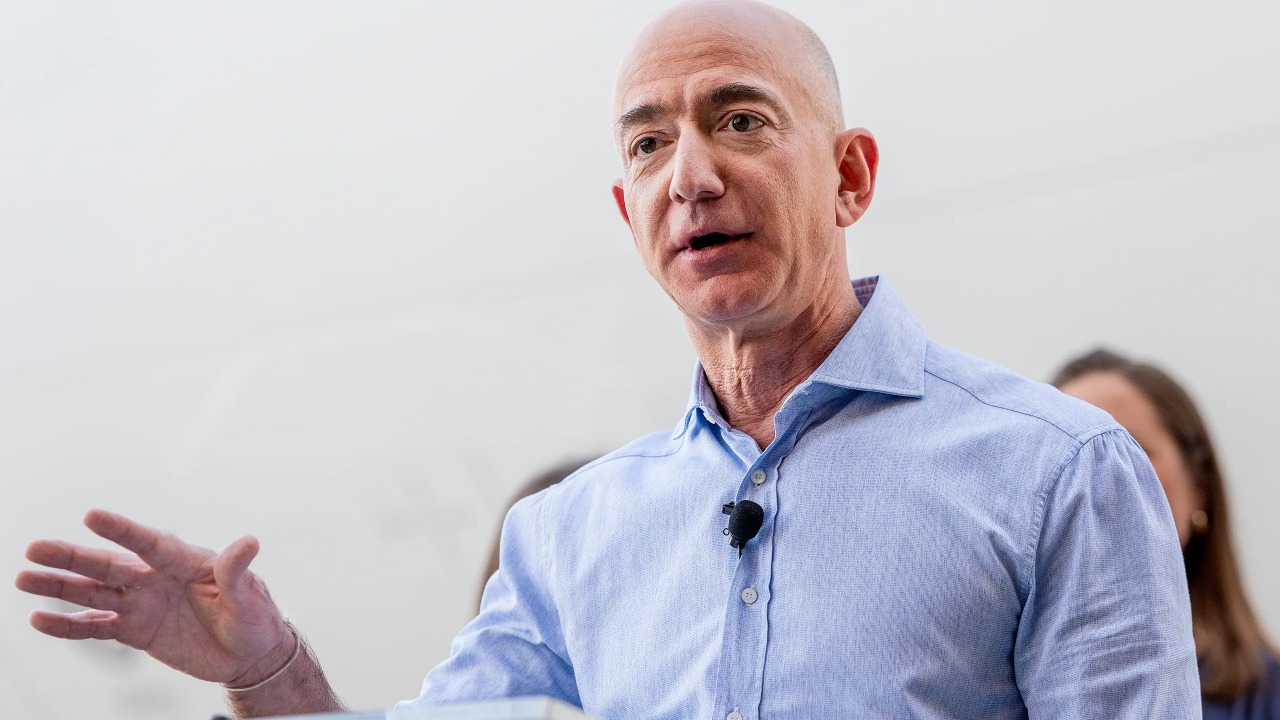


Trump Complains to Jeff Bezos Over Amazon’s Tariff Cost Display Plan: A Political Showdown
In an unexpected move, President Donald Trump personally called Amazon founder Jeff Bezos on Tuesday morning, expressing his frustration about a report suggesting that Amazon was planning to display the costs associated with U.S. tariffs on its product listings. The report triggered a strong reaction from the White House, which denounced the idea as a "hostile and political act." Within hours of the phone call, Amazon walked back the decision, stating that it had never officially approved such a move.
The White House’s condemnation centered around the fact that Amazon, one of the largest online retail companies in the world, was considering a policy that would show consumers exactly how much of a product’s cost was due to President Trump’s tariffs. This would have meant that next to the listed price, Amazon would have displayed the surcharge caused by tariffs. While this might seem like a simple disclosure of costs, it quickly turned into a heated political issue, with Trump’s team accusing Amazon of using its platform for political gain.
The Initial Controversy: Amazon and Tariff Transparency
The controversy began when Punchbowl News reported that Amazon was planning to implement a system that displayed tariff surcharges directly on its product pages. According to the report, this would have been done across Amazon’s platform, ensuring that consumers could see how much of their purchases were affected by the ongoing trade war between the U.S. and China.
Amazon has significant exposure to Chinese goods, with up to 70% of its products being sourced from China, according to some analysts. This made the company particularly vulnerable to Trump's tariffs, which have been sweeping and often punitive in nature, with some products facing tariffs as high as 145%. To account for these costs, many sellers on Amazon began raising their prices, and some even considered listing the added tariff cost separately.
However, once news of Amazon’s plan broke, it didn’t take long for the White House to react. Karoline Leavitt, the White House press secretary, slammed Amazon for what she called a "hostile and political act." She further questioned why Amazon had not taken similar action during the Biden administration when inflation reached its highest levels in four decades. In her response, Leavitt positioned Amazon’s actions as a political maneuver designed to damage the Trump administration.
Jeff Bezos Responds to the Pressure
Within hours of the White House’s public criticism, Amazon responded with a clarification. The company issued a statement downplaying the extent of its plan, claiming that the idea of displaying tariff surcharges was only ever considered for a specific section of the Amazon platform—Amazon Haul, a budget-focused shopping section. Amazon stressed that this move was never approved and would not be happening.
In a follow-up statement, Amazon confirmed that the idea had been scrapped entirely. Despite this rapid backtracking, the damage was already done. The White House had already positioned the potential tariff disclosure as a politically motivated attack on the president’s trade policies.
The back-and-forth over this issue raised questions about the relationship between Jeff Bezos and President Trump. Although Bezos has been known for his occasional public disagreements with Trump in the past, there have been signs in recent months that Bezos has softened his stance. For example, in December 2024, Bezos expressed optimism about Trump's second term, noting that the president had grown "calmer and more confident." This more conciliatory tone was echoed in Amazon’s response to the tariff issue, suggesting that Bezos may have been more cautious about directly confronting the Trump administration.
The White House’s Reaction and Further Criticism
The White House was quick to label the proposal as part of a broader political strategy. Leavitt, during a press briefing, suggested that Amazon was trying to highlight the burden of tariffs on American consumers in a way that painted Trump’s policies negatively. She even went so far as to criticize Amazon’s past behavior, referencing a Reuters report from December 2021 that alleged Amazon complied with orders from the Chinese government to remove certain customer reviews. Leavitt’s comments drew a direct connection between Bezos’ company and Chinese influence, further escalating the political nature of the dispute.
While other companies, such as Shein and Temu, have introduced similar surcharge policies, Amazon’s attempt to display tariff costs on their website was the most high-profile case. For Amazon, this became a fraught political issue. By highlighting the tariff burden, Jeff Bezos and Amazon were seen by some as implicitly criticizing the U.S. government's approach to trade with China. This was especially sensitive, given the broader economic landscape and the political ramifications of Trump’s trade war with China.
The Bigger Picture: Business, Politics, and Global Trade
What makes this conflict particularly interesting is the intersection of business and politics. Jeff Bezos, as the founder of Amazon, is a central figure in a company that has revolutionized retail. Yet, as Amazon continues to grow, its decisions become more intertwined with political issues, especially as they relate to international trade policies and tariff costs. The company has become a global player, and its policies often have far-reaching consequences, both for consumers and for international relations.
Despite Amazon’s claim that the tariff surcharge idea was never officially approved, the incident revealed a growing tension between large tech companies and the U.S. government. In the past, Bezos and Trump had a very antagonistic relationship, with Trump frequently criticizing Amazon and its business practices. However, as Trump settles into his second term, Bezos has expressed a more moderate stance, signaling that the lines between business and politics are increasingly blurred.
Looking Ahead: Amazon's Role in the Political Debate
The impact of tariffs on Amazon's business model is undeniable, but the way Amazon handles political issues will continue to influence its public perception. The controversy over tariff surcharges could have been a turning point in how Jeff Bezos and his company interact with the political landscape. As the 2024 election draws nearer, we can expect more scrutiny of Amazon’s role in both U.S. trade policy and its political affiliations.
For now, Amazon has avoided a public clash with the Trump administration, but it remains to be seen how this episode will affect Jeff Bezos' relationship with both Trump and the broader political establishment. In an era where business decisions are increasingly viewed through a political lens, Bezos’ company will need to carefully navigate its role in global trade and its relationship with the government.
For more insights into the role of Jeff Bezos in the business world and its wider impact, check out more articles on Creator Hub.
'%3e%3crect%20y='0.445312'%20width='48'%20height='48'%20rx='24'%20fill='white'%20fill-opacity='0.5'/%3e%3crect%20x='0.5'%20y='0.945312'%20width='47'%20height='47'%20rx='23.5'%20stroke='%23808080'/%3e%3cpath%20d='M34.625%2024.4453L14%2024.4453'%20stroke='%23808080'%20stroke-width='0.920053'/%3e%3cpath%20d='M23.375%2034.4453L13.375%2024.4453L23.375%2014.4453'%20stroke='%23808080'%20stroke-width='0.920053'/%3e%3c/g%3e%3cdefs%3e%3cfilter%20id='filter0_b_489_44344'%20x='-12'%20y='-11.5547'%20width='72'%20height='72'%20filterUnits='userSpaceOnUse'%20color-interpolation-filters='sRGB'%3e%3cfeFlood%20flood-opacity='0'%20result='BackgroundImageFix'/%3e%3cfeGaussianBlur%20in='BackgroundImageFix'%20stdDeviation='6'/%3e%3cfeComposite%20in2='SourceAlpha'%20operator='in'%20result='effect1_backgroundBlur_489_44344'/%3e%3cfeBlend%20mode='normal'%20in='SourceGraphic'%20in2='effect1_backgroundBlur_489_44344'%20result='shape'/%3e%3c/filter%3e%3c/defs%3e%3c/svg%3e)
'%3e%3crect%20y='0.445312'%20width='48'%20height='48'%20rx='24'%20fill='white'%20fill-opacity='0.5'/%3e%3crect%20x='0.5'%20y='0.945312'%20width='47'%20height='47'%20rx='23.5'%20stroke='%23808080'/%3e%3cpath%20d='M13.375%2024.4453L34%2024.4453'%20stroke='%23808080'%20stroke-width='0.920053'/%3e%3cpath%20d='M24.625%2014.4453L34.625%2024.4453L24.625%2034.4453'%20stroke='%23808080'%20stroke-width='0.920053'/%3e%3c/g%3e%3cdefs%3e%3cfilter%20id='filter0_b_489_44344'%20x='-12'%20y='-11.5547'%20width='72'%20height='72'%20filterUnits='userSpaceOnUse'%20color-interpolation-filters='sRGB'%3e%3cfeFlood%20flood-opacity='0'%20result='BackgroundImageFix'/%3e%3cfeGaussianBlur%20in='BackgroundImageFix'%20stdDeviation='6'/%3e%3cfeComposite%20in2='SourceAlpha'%20operator='in'%20result='effect1_backgroundBlur_489_44344'/%3e%3cfeBlend%20mode='normal'%20in='SourceGraphic'%20in2='effect1_backgroundBlur_489_44344'%20result='shape'/%3e%3c/filter%3e%3c/defs%3e%3c/svg%3e)