
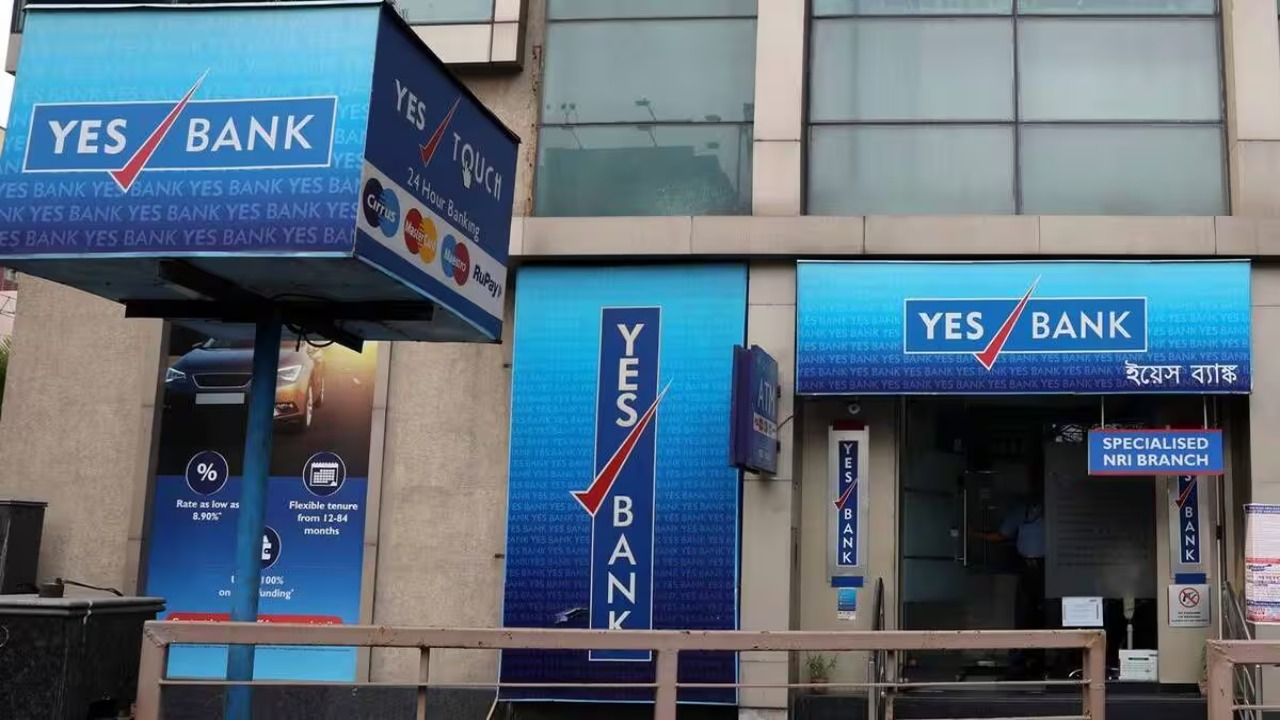


YES Bank Share: A Comprehensive Investment Guide for 2025
YES Bank, one of India's prominent private-sector banks, has been at the forefront of India's banking sector since its inception in 2004. Headquartered in Mumbai, the bank offers a wide range of services, including retail banking, corporate banking, and investment banking. Over the years, YES Bank has undergone significant transformations, especially after the restructuring in 2020. This article delves into the current state of YES Bank shares, providing insights into its financial performance, market trends, and strategic developments.
Understanding YES Bank
YES Bank was co-founded by Rana Kapoor and Ashok Kapur in 2004. The bank quickly established itself as a leading private-sector bank in India, known for its innovative banking solutions and customer-centric approach. However, in early 2020, the bank faced a financial crisis due to rising non-performing assets (NPAs) and governance issues. This led the Reserve Bank of India (RBI) to intervene, resulting in a restructuring plan that involved capital infusion from several public and private sector banks. Since then, YES Bank has been on a recovery path, focusing on improving asset quality, profitability, and operational efficiency.
YES Bank Share Performance: Recent Trends
Stock Price Movement
YES Bank's stock has experienced significant volatility over the past few years. In the fiscal year 2025, the stock price has shown resilience, with notable surges attributed to positive developments and investor sentiments. For instance, in early May 2025, the stock price reached an intraday high of ₹19.44, marking a 9.6% increase from its previous close. This uptick was driven by reports of advanced negotiations with Japan's Sumitomo Mitsui Banking Corporation (SMBC) for a potential stake acquisition.
Historical Volatility
Over the past five years, YES Bank's stock has fluctuated between ₹11 and ₹25. This volatility reflects the challenges the bank has faced, including the 2020 financial crisis and subsequent restructuring. However, recent trends indicate a stabilization, with the stock attempting to trade above its 100-day Simple Moving Average (SMA), a positive technical indicator.
Financial Performance Highlights
Q3 FY2025 Results
In the third quarter of FY2025, YES Bank reported a significant increase in net profit, rising 164% year-on-year to ₹612 crore. This growth was driven by a 10.2% increase in net interest income (NII) and a 26.6% rise in non-interest income. The bank's asset quality also improved, with the Gross Non-Performing Asset (GNPA) ratio declining to 1.6% from 2.0% in the same quarter of the previous year. Provisions decreased by 53.4% year-on-year to ₹259 crore, indicating better risk management.
Deposit and Loan Growth
YES Bank's total deposits grew by 14.6% year-on-year to ₹277,224 crore, supported by a 15.7% rise in average deposit balances. The Current Account Savings Account (CASA) ratio improved to 33.1% from 29.7% a year ago, reflecting a more stable and low-cost deposit base. Advances increased by 12.6% year-on-year to ₹2,44,834 crore, with strong growth in small and medium enterprises (SME) and mid-corporate lending segments.
Strategic Developments
Potential Stake Acquisition by SMBC
Reports indicate that Sumitomo Mitsui Banking Corporation (SMBC) is in advanced talks to acquire a significant stake in YES Bank. A 51% stake sale would give SMBC effective control of the bank, pending regulatory approvals. Such a move could bring in fresh capital and strategic expertise, potentially enhancing YES Bank's market position and operational efficiency.
Focus on Mid-Sized Firms
YES Bank plans to increase its lending to small- and mid-sized companies to enhance its return on assets (RoA). The bank aims to achieve an RoA of 1% within two years and 1.5% within 3-5 years, up from 0.2% in the October-December quarter. Currently, loans to SMEs and mid-sized corporates comprise nearly 30% of the bank's loan book, with expectations to rise to 35%.
Investment Considerations
Valuation Metrics
As of the latest data, YES Bank's price-to-earnings (P/E) ratio stood at 23.83, and the price-to-book (P/B) ratio was 1.10. The earnings per share (EPS) over the trailing 12 months were ₹0.69. These metrics suggest that the stock is trading at a moderate valuation compared to industry peers.
Technical Analysis
Technical analysis indicates that YES Bank's stock faces resistance around ₹19.90 to ₹20.80. A sustained trade above these levels could signal a bullish trend, with the potential to revisit the higher end of the existing trading band around ₹25. Conversely, failure to maintain levels above ₹18.31 could lead to a decline towards support zones around ₹17.20.
Conclusion: Should You Invest in YES Bank Shares?
YES Bank presents a compelling case for investors seeking exposure to the Indian banking sector. The bank's recent financial performance, strategic developments, and improved credit ratings indicate a positive trajectory. However, potential investors should consider the inherent market volatility and conduct thorough research or consult with financial advisors before making investment decisions.
In other news, India has restricted water flow to Pakistan via the Baglihar Dam on the Chenab River, raising geopolitical tensions.
'%3e%3crect%20y='0.445312'%20width='48'%20height='48'%20rx='24'%20fill='white'%20fill-opacity='0.5'/%3e%3crect%20x='0.5'%20y='0.945312'%20width='47'%20height='47'%20rx='23.5'%20stroke='%23808080'/%3e%3cpath%20d='M34.625%2024.4453L14%2024.4453'%20stroke='%23808080'%20stroke-width='0.920053'/%3e%3cpath%20d='M23.375%2034.4453L13.375%2024.4453L23.375%2014.4453'%20stroke='%23808080'%20stroke-width='0.920053'/%3e%3c/g%3e%3cdefs%3e%3cfilter%20id='filter0_b_489_44344'%20x='-12'%20y='-11.5547'%20width='72'%20height='72'%20filterUnits='userSpaceOnUse'%20color-interpolation-filters='sRGB'%3e%3cfeFlood%20flood-opacity='0'%20result='BackgroundImageFix'/%3e%3cfeGaussianBlur%20in='BackgroundImageFix'%20stdDeviation='6'/%3e%3cfeComposite%20in2='SourceAlpha'%20operator='in'%20result='effect1_backgroundBlur_489_44344'/%3e%3cfeBlend%20mode='normal'%20in='SourceGraphic'%20in2='effect1_backgroundBlur_489_44344'%20result='shape'/%3e%3c/filter%3e%3c/defs%3e%3c/svg%3e)
'%3e%3crect%20y='0.445312'%20width='48'%20height='48'%20rx='24'%20fill='white'%20fill-opacity='0.5'/%3e%3crect%20x='0.5'%20y='0.945312'%20width='47'%20height='47'%20rx='23.5'%20stroke='%23808080'/%3e%3cpath%20d='M13.375%2024.4453L34%2024.4453'%20stroke='%23808080'%20stroke-width='0.920053'/%3e%3cpath%20d='M24.625%2014.4453L34.625%2024.4453L24.625%2034.4453'%20stroke='%23808080'%20stroke-width='0.920053'/%3e%3c/g%3e%3cdefs%3e%3cfilter%20id='filter0_b_489_44344'%20x='-12'%20y='-11.5547'%20width='72'%20height='72'%20filterUnits='userSpaceOnUse'%20color-interpolation-filters='sRGB'%3e%3cfeFlood%20flood-opacity='0'%20result='BackgroundImageFix'/%3e%3cfeGaussianBlur%20in='BackgroundImageFix'%20stdDeviation='6'/%3e%3cfeComposite%20in2='SourceAlpha'%20operator='in'%20result='effect1_backgroundBlur_489_44344'/%3e%3cfeBlend%20mode='normal'%20in='SourceGraphic'%20in2='effect1_backgroundBlur_489_44344'%20result='shape'/%3e%3c/filter%3e%3c/defs%3e%3c/svg%3e)