
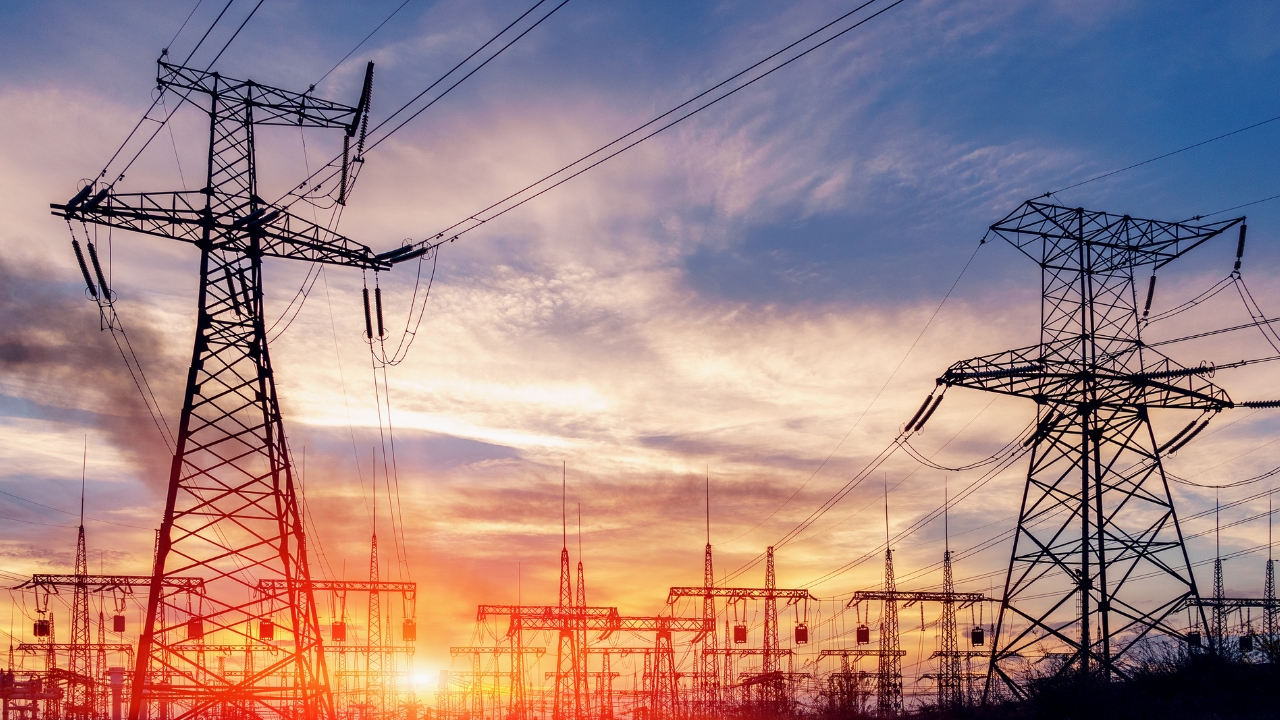


Users of the national grid are once again under financial strain, with Pakistan’s excess power capacity resulting in idle power plants continuing to receive capacity payments. According to the latest Economic Survey, Pakistan’s total power generation capacity could increase to a staggering 46,605 megawatts (MW) by the end of fiscal year (FY) 2024-25.
Data from reports indicate that the current capacity payment burden stands at an extortionate Rs12 to Rs15 per unit. Energy experts, however, believe that the strain of capacity payments is likely to decline in the coming years as the federal government has ended multiple power purchase agreements (PPAs) with independent power producers (IPPs). The burden may decline further as Islamabad has stopped new power-related projects.
Details from reports suggest that the financial strain of capacity payments increases during winter months as electricity demand plummets to as low as 12,000 MW. However, users of the national grid cannot use up excess power even in the summer months.
During the first nine months of FY 2024-25, power consumption remained at 80,111 GWh, whereas electricity generation dwarfed consumption, standing at 90,145 GWh. The breakup of power consumption reveals that households, industries, commercial users and the agriculture sector use up 49.6 percent, 26.3 percent, 8.6 percent and 5.7 percent, respectively.
As per estimates, the national grid pays capacity charges up to 2,000MW in the summer, with the burden increasing in winter as users are then responsible for capacity charges for 5,000MW. Reports have outlined that terminating additional PPAs could alleviate the financial strain as tariffs would likely fall. Alternatively, an increase in consumption could result in lower tariffs as the financial burden would be divided over a larger number of users.
It merits a mention that the federal government has attempted to boost power consumption levels by getting a waiver that would allow surplus power capacity to be provided at a lower rate. As per reports, the waiver would have created provisions for 7000 megawatts (MW) of electricity.
Islamabad’s motivation behind the provision of power at lower rates lay in increasing economic output. This is because lower power rates for new entrants would yield higher industrial output.
However, the International Monetary Fund (IMF) did not support the scheme as it believed that the current state of the economy is a direct consequence of the distribution of similar allowances in the past.
'%3e%3crect%20y='0.445312'%20width='48'%20height='48'%20rx='24'%20fill='white'%20fill-opacity='0.5'/%3e%3crect%20x='0.5'%20y='0.945312'%20width='47'%20height='47'%20rx='23.5'%20stroke='%23808080'/%3e%3cpath%20d='M34.625%2024.4453L14%2024.4453'%20stroke='%23808080'%20stroke-width='0.920053'/%3e%3cpath%20d='M23.375%2034.4453L13.375%2024.4453L23.375%2014.4453'%20stroke='%23808080'%20stroke-width='0.920053'/%3e%3c/g%3e%3cdefs%3e%3cfilter%20id='filter0_b_489_44344'%20x='-12'%20y='-11.5547'%20width='72'%20height='72'%20filterUnits='userSpaceOnUse'%20color-interpolation-filters='sRGB'%3e%3cfeFlood%20flood-opacity='0'%20result='BackgroundImageFix'/%3e%3cfeGaussianBlur%20in='BackgroundImageFix'%20stdDeviation='6'/%3e%3cfeComposite%20in2='SourceAlpha'%20operator='in'%20result='effect1_backgroundBlur_489_44344'/%3e%3cfeBlend%20mode='normal'%20in='SourceGraphic'%20in2='effect1_backgroundBlur_489_44344'%20result='shape'/%3e%3c/filter%3e%3c/defs%3e%3c/svg%3e)
'%3e%3crect%20y='0.445312'%20width='48'%20height='48'%20rx='24'%20fill='white'%20fill-opacity='0.5'/%3e%3crect%20x='0.5'%20y='0.945312'%20width='47'%20height='47'%20rx='23.5'%20stroke='%23808080'/%3e%3cpath%20d='M13.375%2024.4453L34%2024.4453'%20stroke='%23808080'%20stroke-width='0.920053'/%3e%3cpath%20d='M24.625%2014.4453L34.625%2024.4453L24.625%2034.4453'%20stroke='%23808080'%20stroke-width='0.920053'/%3e%3c/g%3e%3cdefs%3e%3cfilter%20id='filter0_b_489_44344'%20x='-12'%20y='-11.5547'%20width='72'%20height='72'%20filterUnits='userSpaceOnUse'%20color-interpolation-filters='sRGB'%3e%3cfeFlood%20flood-opacity='0'%20result='BackgroundImageFix'/%3e%3cfeGaussianBlur%20in='BackgroundImageFix'%20stdDeviation='6'/%3e%3cfeComposite%20in2='SourceAlpha'%20operator='in'%20result='effect1_backgroundBlur_489_44344'/%3e%3cfeBlend%20mode='normal'%20in='SourceGraphic'%20in2='effect1_backgroundBlur_489_44344'%20result='shape'/%3e%3c/filter%3e%3c/defs%3e%3c/svg%3e)