
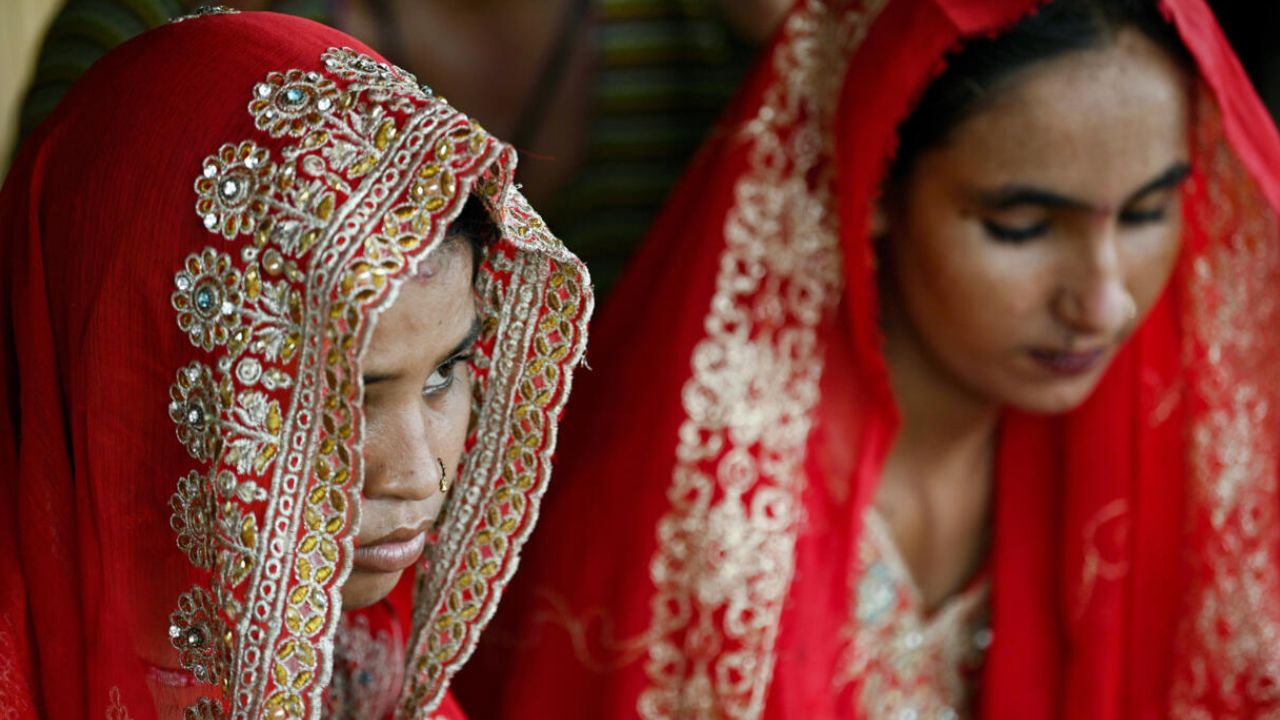


The National Assembly of Pakistan has passed the Islamabad Capital Territory Child Marriage Restriction Bill, 2025, in a historic step towards safeguarding children's rights and bringing national legislation into compliance with international human rights standards.
The National Assembly unanimously passed the bill introduced by PPP MNA Sharmila Faruqui. It was then sent to the president for assent, but the Senate opposed it, with several senators demanding that it be sent to the CII first.
It seeks to set the minimum marriage age at 18 for both boys and girls in Islamabad and federal territories, replacing legislation that dates back to British colonial rule.
Under the proposed law, facilitating or conducting a child marriage will be considered a criminal offense, carrying penalties of up to seven years’ imprisonment.
The bill also classifies sexual relations with a minor within marriage as statutory rape. After the CII's 243rd session, which took place on May 27–28, the Council released a statement criticizing several of the bill's clauses.
These include setting a legal age for marriage and criminalizing marriage below 18 years as abuse, which the council said are not in accordance with Islamic injunctions.
“The bill introduced by Madam Sharmila Faruqui … has been declared un-Islamic,” read a statement from the council’s media wing. CII member Maulana Jalaluddin of JUI-F added that the bill contradicts Shariah, traditions, and societal values, and claimed it was passed without the council’s prior review.
Clerics from various religious schools of thought have appealed to President Asif Ali Zardari not to sign the bill, urging him to prevent what they termed “anarchy in society.”
Maulana Fazlur Rehman, the leader of JUI-F, criticized the bill during a parliamentary debate and requested that it be sent to the CII prior to receiving presidential assent.
MNA Faruqui responded to the criticism by saying that the bill's main objectives are human rights and child welfare.
Girls under the age of 18 are not allowed to vote, obtain a driver's license, or obtain a CNIC. "How is it just to let them get married," she asked.
Faruqui also mentioned a Federal Shariat Court ruling from 2022 that supported the state's authority to establish the legal minimum age of marriage.
In Pakistan, 29 percent of girls are married by 18 , according to a 2018 demographic survey, and four percent marry before the age of 15 compared with five percent for boys, according to Girls Not Brides, a global coalition aiming to end child marriage.
The country is among the top 10 worldwide with the highest absolute number of women who were married or in a union before the age of 18. Girls who marry are less likely to finish school and are more likely to face domestic violence, abuse and health problems.
Pregnancies become higher risk for child brides, with a greater chance of fistulas, sexually transmitted infections or even death. Teenagers are more likely to die from complications during childbirth than women in their 20s.
The Child Marriage Restraint Act of 1929 was amended in Punjab in 2015, keeping the minimum marriage age at 16 for girls and 18 for boys but increasing penalties.
Offenders risk a fine of Rs. 50,000 and six months in jail. Civil society groups have recommended raising the age for girls to 18, but the proposal awaits a decision from the CII.
The Sindh Child Marriage Restraint Act, which was implemented in 2013, makes Sindh the only province where the legal marriage age for both men and women is 18.
President Asif Ali Zardari on Friday gave his assent to the Islamabad Capital Territory Child Marriage Restraint Bill, finalising its enactment despite continued criticism from religious groups.
'%3e%3crect%20y='0.445312'%20width='48'%20height='48'%20rx='24'%20fill='white'%20fill-opacity='0.5'/%3e%3crect%20x='0.5'%20y='0.945312'%20width='47'%20height='47'%20rx='23.5'%20stroke='%23808080'/%3e%3cpath%20d='M34.625%2024.4453L14%2024.4453'%20stroke='%23808080'%20stroke-width='0.920053'/%3e%3cpath%20d='M23.375%2034.4453L13.375%2024.4453L23.375%2014.4453'%20stroke='%23808080'%20stroke-width='0.920053'/%3e%3c/g%3e%3cdefs%3e%3cfilter%20id='filter0_b_489_44344'%20x='-12'%20y='-11.5547'%20width='72'%20height='72'%20filterUnits='userSpaceOnUse'%20color-interpolation-filters='sRGB'%3e%3cfeFlood%20flood-opacity='0'%20result='BackgroundImageFix'/%3e%3cfeGaussianBlur%20in='BackgroundImageFix'%20stdDeviation='6'/%3e%3cfeComposite%20in2='SourceAlpha'%20operator='in'%20result='effect1_backgroundBlur_489_44344'/%3e%3cfeBlend%20mode='normal'%20in='SourceGraphic'%20in2='effect1_backgroundBlur_489_44344'%20result='shape'/%3e%3c/filter%3e%3c/defs%3e%3c/svg%3e)
'%3e%3crect%20y='0.445312'%20width='48'%20height='48'%20rx='24'%20fill='white'%20fill-opacity='0.5'/%3e%3crect%20x='0.5'%20y='0.945312'%20width='47'%20height='47'%20rx='23.5'%20stroke='%23808080'/%3e%3cpath%20d='M13.375%2024.4453L34%2024.4453'%20stroke='%23808080'%20stroke-width='0.920053'/%3e%3cpath%20d='M24.625%2014.4453L34.625%2024.4453L24.625%2034.4453'%20stroke='%23808080'%20stroke-width='0.920053'/%3e%3c/g%3e%3cdefs%3e%3cfilter%20id='filter0_b_489_44344'%20x='-12'%20y='-11.5547'%20width='72'%20height='72'%20filterUnits='userSpaceOnUse'%20color-interpolation-filters='sRGB'%3e%3cfeFlood%20flood-opacity='0'%20result='BackgroundImageFix'/%3e%3cfeGaussianBlur%20in='BackgroundImageFix'%20stdDeviation='6'/%3e%3cfeComposite%20in2='SourceAlpha'%20operator='in'%20result='effect1_backgroundBlur_489_44344'/%3e%3cfeBlend%20mode='normal'%20in='SourceGraphic'%20in2='effect1_backgroundBlur_489_44344'%20result='shape'/%3e%3c/filter%3e%3c/defs%3e%3c/svg%3e)