
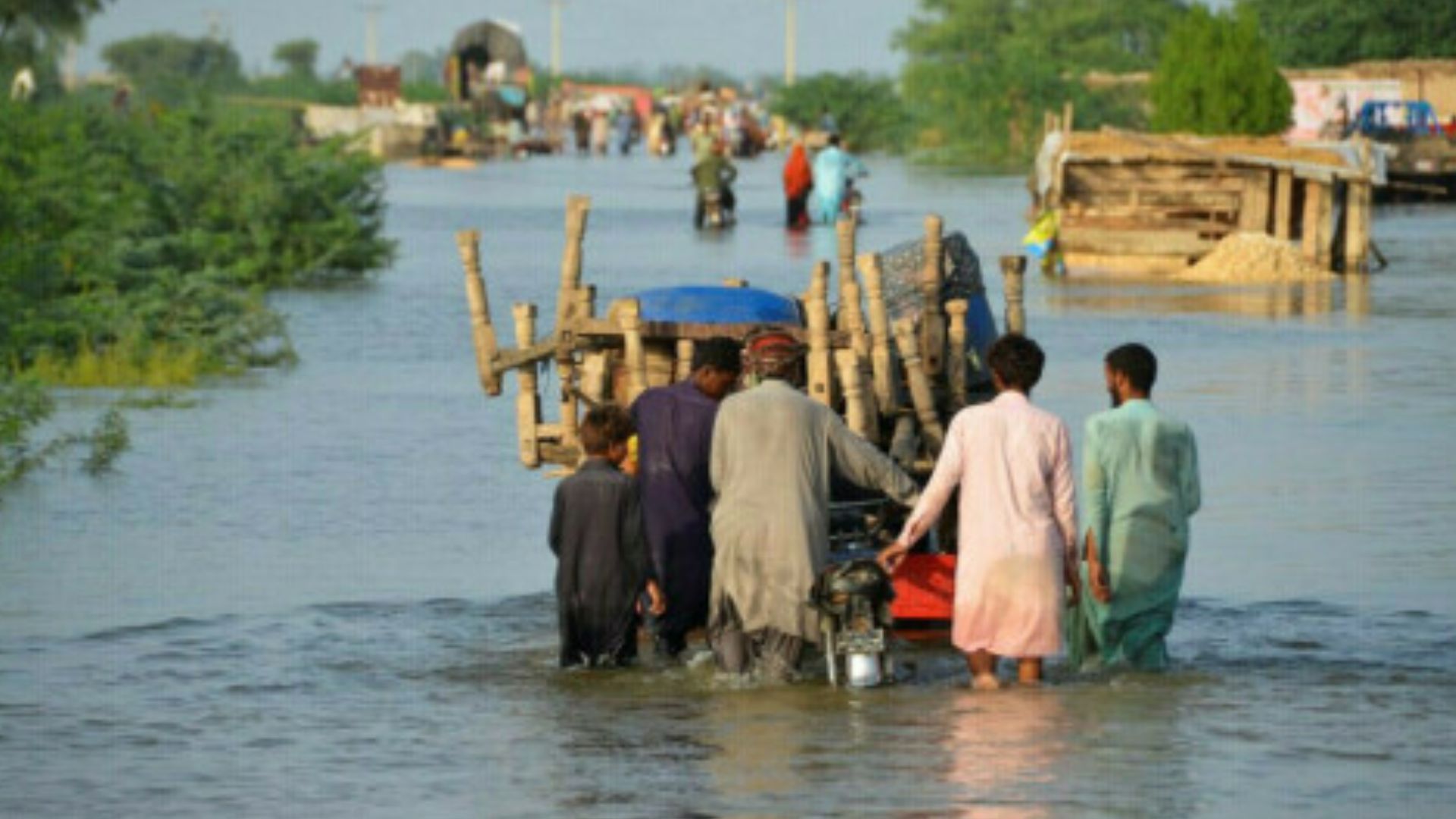


Gilgit-Baltistan's record-breaking temperatures are accelerating glacier melt, triggering devastating floods in several regions, cutting off communities, and damaging infrastructure.
Glacial lake outburst floods (GLOFs) have destroyed homes, washed away roads, and put locals in dangerous situations.
The Gilgit-Baltistan Disaster Management Authority (GBDMA) reports that temperatures in the region have reached dangerously high levels over the past week.
According to GBDMA Director General Zakir Hussain, the situation is “unusual” this year. He noted that rivers and streams, especially in Diamer and Gilgit, are at a higher risk of flooding owing to the rapid glacier melt.
Last week, Chilas recorded a maximum temperature of 48.5°C, the highest since July 17, 1997, when it reached 47.7°C. In Bunji, the temperature jumped to 46.1°C, the highest since July 1971.
A flash flood hit the Gandlu-Muladad Padi area in Chilas on Tuesday, leading to the closure of the Karakoram Highway (KKH). Meanwhile, the Supultar nullah blocked access to Hoper Valley, and flooding in the Nagar area damaged the road to Nagar Khas Valley.
The Chipurson Valley road in Upper Hunza was also rendered inaccessible due to overflowing rivers. In Ghanche, river erosion severely damaged Siachen Road in the Thugs and Bangilongba areas.
Makeshift bridges were swept away by water in the Botogah nullah in Chilas, cutting off nearby villages. Both the Hamari and Supultar nullahs inflicted severe damage on roads, waterways, agricultural land, and public and private infrastructure in Nagar.
Water and power supplies were disrupted in multiple areas.
In the Hamorkhay area of Nagar Khas, ongoing erosion submerged trees and farmland, putting more than a dozen homes at risk.
Similar destruction was reported in Chilas and Chipurson, where floods swept through homes and public property.
A fresh GLOF event linked to the Shishper Glacier in Hunza’s Hassanabad nullah has again put the KKH and surrounding settlements at risk. As a precaution, four homes were evacuated.
The local administration has issued a public warning against travel to affected areas due to the ongoing threat of flooding and land erosion.
Relief and rescue operations:
Authorities have mobilised machinery to clear blocked routes. “Our first responsibility is to save the lives of people,” said GBDMA chief Zakir Hussain, adding that displaced families are being relocated to safer areas.
Additionally, efforts are being made to repair critical irrigation systems that many residents depend on for farming.
GBDMA has requested monitoring equipment from the Space and Upper Atmosphere Research Commission (SUPARCO) to investigate glacier behaviour and determine the reasons for the increased rate of melting.
The chief minister of Gilgit-Baltistan has asked district officials and relevant departments to remain vigilant and respond quickly in order to prevent further losses.
Punjab's urban flooding:
While GB grapples with glacier-driven flooding, urban Punjab is battling a different crisis: waterlogged streets, blocked roads, and choked drainage following heavy monsoon rains.
In Lahore, downpours left roads like Jail Road, Qurtaba Chowk, Liberty Chowk, and Lakshmi Chowk submerged.
Jail Road received 46mm of rain while Qurtaba Chowk saw 43mm, according to the Met Office, with the city averaging 40mm overall.
Water and Sanitation Agency (WASA) teams rushed in with pumps to manage flooding in low-lying areas. WASA Managing Director Ghufran Ahmad called for non-stop drainage operations, instructing teams to protect vulnerable neighbourhoods with full force.
The province's highest rainfall was 48 mm in Sheikhupura, while the city's highest rainfall was 52 mm in Nishtar Town, Lahore.
Following the intense downpour, the provincial government placed all disaster response agencies on high alert.
PDMA Meeting:
In Sialkot, the Provincial Disaster Management Authority (PDMA) held an emergency meeting, with DG Irfan Ali Kathia warning that the province could see 40–60% above-normal rainfall in the coming days.
Riverbank areas near Head Marala are especially vulnerable, where the water flow has already reached 70,000 cusecs.
Essential supplies have been sent to relief camps, and in anticipation of further rains, electrical poles are being reinforced.
Special teams have also been dispatched to rural zones to safeguard livestock.
Commissioner Naveed Haider Shirazi of the Gujranwala Division issued an order for the evacuation of structurally weak buildings, emphasising that no lives should be lost due to preventable collapses. Nearly 16 million residents in his division are considered at risk.
Residents have been advised to limit travel and promptly report any signs of flooding or infrastructure damage.
CM Maryam’s directives:
All government agencies have been instructed by Chief Minister Maryam Nawaz Sharif to maintain vigilance throughout the monsoon season.
Traffic police, WASA, PDMA, Rescue 1122, and local government have been instructed to stay on the ground and help local residents.
Commissioners and deputy commissioners have been instructed to monitor water drainage closely, and traffic police have been tasked with developing contingency plans to prevent gridlocks in waterlogged areas.
'%3e%3crect%20y='0.445312'%20width='48'%20height='48'%20rx='24'%20fill='white'%20fill-opacity='0.5'/%3e%3crect%20x='0.5'%20y='0.945312'%20width='47'%20height='47'%20rx='23.5'%20stroke='%23808080'/%3e%3cpath%20d='M34.625%2024.4453L14%2024.4453'%20stroke='%23808080'%20stroke-width='0.920053'/%3e%3cpath%20d='M23.375%2034.4453L13.375%2024.4453L23.375%2014.4453'%20stroke='%23808080'%20stroke-width='0.920053'/%3e%3c/g%3e%3cdefs%3e%3cfilter%20id='filter0_b_489_44344'%20x='-12'%20y='-11.5547'%20width='72'%20height='72'%20filterUnits='userSpaceOnUse'%20color-interpolation-filters='sRGB'%3e%3cfeFlood%20flood-opacity='0'%20result='BackgroundImageFix'/%3e%3cfeGaussianBlur%20in='BackgroundImageFix'%20stdDeviation='6'/%3e%3cfeComposite%20in2='SourceAlpha'%20operator='in'%20result='effect1_backgroundBlur_489_44344'/%3e%3cfeBlend%20mode='normal'%20in='SourceGraphic'%20in2='effect1_backgroundBlur_489_44344'%20result='shape'/%3e%3c/filter%3e%3c/defs%3e%3c/svg%3e)
'%3e%3crect%20y='0.445312'%20width='48'%20height='48'%20rx='24'%20fill='white'%20fill-opacity='0.5'/%3e%3crect%20x='0.5'%20y='0.945312'%20width='47'%20height='47'%20rx='23.5'%20stroke='%23808080'/%3e%3cpath%20d='M13.375%2024.4453L34%2024.4453'%20stroke='%23808080'%20stroke-width='0.920053'/%3e%3cpath%20d='M24.625%2014.4453L34.625%2024.4453L24.625%2034.4453'%20stroke='%23808080'%20stroke-width='0.920053'/%3e%3c/g%3e%3cdefs%3e%3cfilter%20id='filter0_b_489_44344'%20x='-12'%20y='-11.5547'%20width='72'%20height='72'%20filterUnits='userSpaceOnUse'%20color-interpolation-filters='sRGB'%3e%3cfeFlood%20flood-opacity='0'%20result='BackgroundImageFix'/%3e%3cfeGaussianBlur%20in='BackgroundImageFix'%20stdDeviation='6'/%3e%3cfeComposite%20in2='SourceAlpha'%20operator='in'%20result='effect1_backgroundBlur_489_44344'/%3e%3cfeBlend%20mode='normal'%20in='SourceGraphic'%20in2='effect1_backgroundBlur_489_44344'%20result='shape'/%3e%3c/filter%3e%3c/defs%3e%3c/svg%3e)