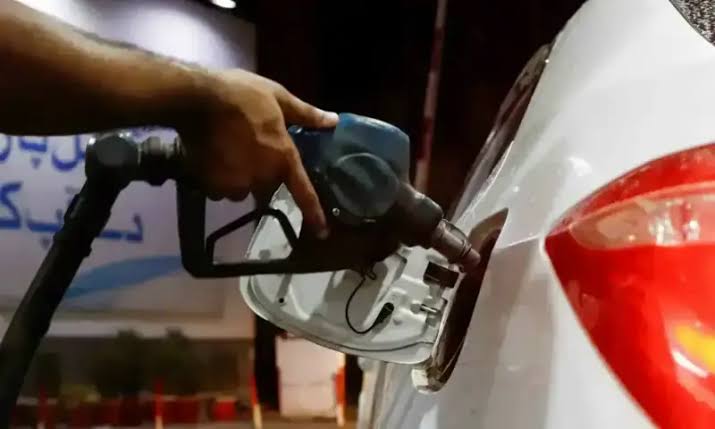
The federal government has raised petrol prices by Rs1.85 per litre and High-Speed Diesel (HSD) rates by Rs1.75 on Thursday, bringing diesel close to Rs400 per litre, even as international oil prices fell on hopes of peace talks in the Middle East.
Following the increase, petrol will sell at Rs377.91 per litre and HSD at Rs399.82 per litre, according to the Petroleum Division’s notification.
International oil prices declined on Thursday, reversing part of the previous day’s gains as hopes for peace talks eased concerns over supply disruptions amid the escalating conflict in the Middle East.
Brent crude futures fell by $1.22, or 1.1 percent, to $114.10 per barrel, while United States (US) West Texas Intermediate (WTI) crude futures dropped by $1.33, or 1.3, to $101.45 per barrel.
Despite the latest increase in domestic fuel prices, the government continues to charge Rs114 per litre in taxes and duties on petrol and Rs100 per litre on diesel.
Jamaat-i-Islami (JI) chief Hafiz Naeemur Rehman has asked the government to abolish the petroleum levy and provide relief to consumers. Rehman met Prime Minister (PM) Shehbaz Sharif in Islamabad on Tuesday to discuss the demand.
Following the meeting, the government and JI agreed to form a joint committee to examine ways to expand the existing fuel relief scheme, which has covered motorcycles, rickshaws and vehicles with engine capacities of up to 800cc since September 17.
Rehman also announced that JI will march to Islamabad in mid-November to protest the petroleum levy if the government fails to announce major relief by then.
On Friday, the Pakistan Petroleum Dealers Association urged consumers to avoid panic buying, warning that excessive purchases could distort the market
HSD prices have fallen from a peak of Rs520.35 per litre recorded on April 3. Diesel had started rising from Rs281 per litre after the US-Iran war broke out on February 28. Petrol prices also peaked on April 3, reaching Rs458.41 per litre after climbing from Rs266 in the first week of March.
In response to rising fuel costs amid the Middle East conflict, the government reintroduced austerity measures requiring markets to close by 9pm and cutting fuel allocations for official vehicles by 50 percent for three months.
Petrol remains a key fuel for private transport, small vehicles, rickshaws and motorcycles, making price changes particularly relevant to middle- and lower-middle-income households. Diesel, meanwhile, serves the heavy transport sector, power plants and large generators, linking its price to transport and energy costs.