
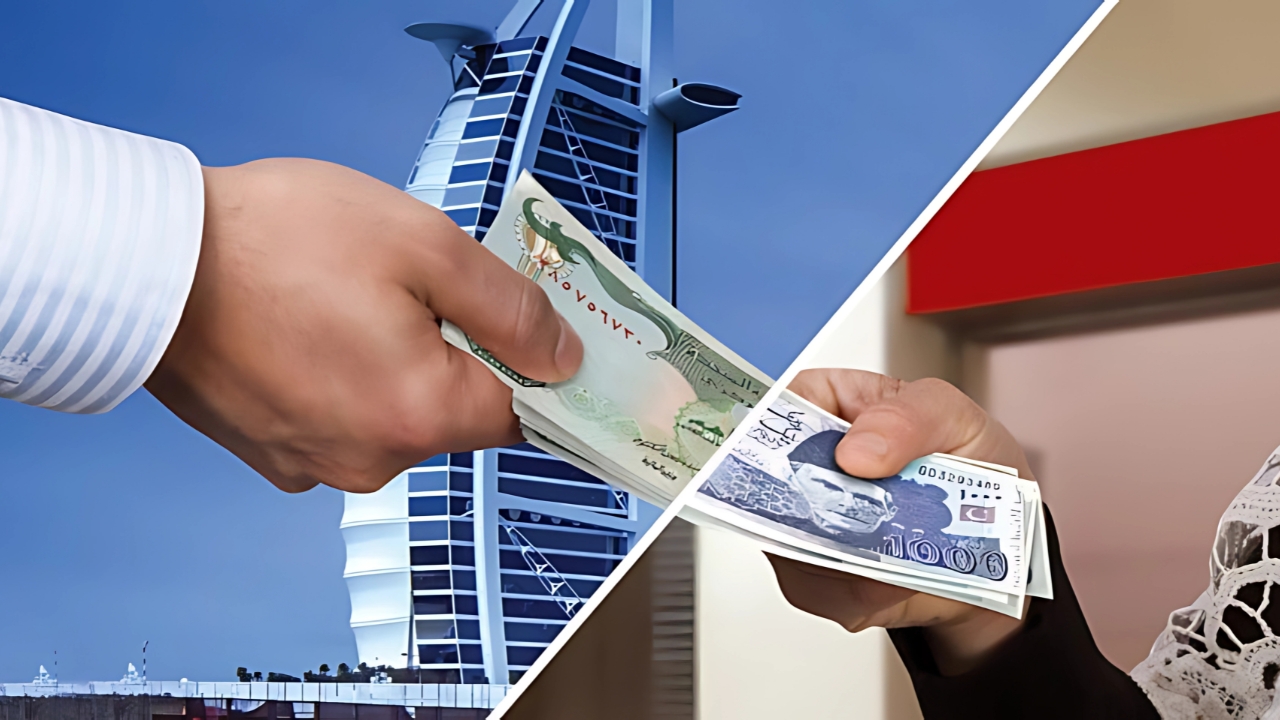


The flow of remittances into the country remained strong during the third quarter of FY 2024-25. According to Dawn, a whopping two billion dollars have been sold to banks, with an additional two billion sold in the open market.
Experts predict that remittance inflows through banks alone may reach $35 billion by the end of FY 25. Compared to the same quarter last year, these inflows increased 33 percent in Q3 2024-25.
Analysts are attributing the increase to Islamabad’s crusade against illegal currency exchange activities and an attempt to control the flow of funds through the ‘Hawala/Hundi’ system. This has allowed banks and exchange companies to benefit immensely as an increased number of people have turned towards official channels to transfer and exchange their funds.
Rising remittance inflows strengthen the rupee. However, since Pakistan has historically run a trade deficit, these inflows serve to plug the gap between the overall outflows and inflows of foreign exchange.
Exports have increased considerably in the current fiscal year, largely as a result of Commerce Minister Jam Kemal Khan’s tireless efforts. However, according to Dawn, exports are projected to lag significantly behind remittances this year.
For Islamabad, rising remittances serve to improve economic figures as the impact of the trade deficit is not as pronounced. This is one of the primary reasons why the exchange rate has remained relatively stable in the past few months.
This has allowed the business community to benefit, with importers being the primary beneficiaries. The reason behind this phenomenon is that a depreciating rupee erodes the profit margins of importers, who find it more expensive to import goods into the economy.
Remittances are also beneficial for local businesses that have no ties with the importation of goods. This is because remittances augment household incomes, significantly boosting consumer purchasing power.
For businesses, the outcome is an increase in revenues as they are able to attract more consumers who can purchase their goods and services. Business owners will be pleased to know that Zafar Paracha, the General Secretary of the Exchange Companies Association of Pakistan (ECAP), has predicted that inflows will rise once the State Bank provides more incentives to exchange companies to attract remittances.
Currently, banks are enjoying preferential treatment over exchange companies in attracting remittances. Exchange companies earn just one rupee per dollar, while banks earn double the amount. With a possible parity in incentives on the table, remittances might witness a significant boost.
'%3e%3crect%20y='0.445312'%20width='48'%20height='48'%20rx='24'%20fill='white'%20fill-opacity='0.5'/%3e%3crect%20x='0.5'%20y='0.945312'%20width='47'%20height='47'%20rx='23.5'%20stroke='%23808080'/%3e%3cpath%20d='M34.625%2024.4453L14%2024.4453'%20stroke='%23808080'%20stroke-width='0.920053'/%3e%3cpath%20d='M23.375%2034.4453L13.375%2024.4453L23.375%2014.4453'%20stroke='%23808080'%20stroke-width='0.920053'/%3e%3c/g%3e%3cdefs%3e%3cfilter%20id='filter0_b_489_44344'%20x='-12'%20y='-11.5547'%20width='72'%20height='72'%20filterUnits='userSpaceOnUse'%20color-interpolation-filters='sRGB'%3e%3cfeFlood%20flood-opacity='0'%20result='BackgroundImageFix'/%3e%3cfeGaussianBlur%20in='BackgroundImageFix'%20stdDeviation='6'/%3e%3cfeComposite%20in2='SourceAlpha'%20operator='in'%20result='effect1_backgroundBlur_489_44344'/%3e%3cfeBlend%20mode='normal'%20in='SourceGraphic'%20in2='effect1_backgroundBlur_489_44344'%20result='shape'/%3e%3c/filter%3e%3c/defs%3e%3c/svg%3e)
'%3e%3crect%20y='0.445312'%20width='48'%20height='48'%20rx='24'%20fill='white'%20fill-opacity='0.5'/%3e%3crect%20x='0.5'%20y='0.945312'%20width='47'%20height='47'%20rx='23.5'%20stroke='%23808080'/%3e%3cpath%20d='M13.375%2024.4453L34%2024.4453'%20stroke='%23808080'%20stroke-width='0.920053'/%3e%3cpath%20d='M24.625%2014.4453L34.625%2024.4453L24.625%2034.4453'%20stroke='%23808080'%20stroke-width='0.920053'/%3e%3c/g%3e%3cdefs%3e%3cfilter%20id='filter0_b_489_44344'%20x='-12'%20y='-11.5547'%20width='72'%20height='72'%20filterUnits='userSpaceOnUse'%20color-interpolation-filters='sRGB'%3e%3cfeFlood%20flood-opacity='0'%20result='BackgroundImageFix'/%3e%3cfeGaussianBlur%20in='BackgroundImageFix'%20stdDeviation='6'/%3e%3cfeComposite%20in2='SourceAlpha'%20operator='in'%20result='effect1_backgroundBlur_489_44344'/%3e%3cfeBlend%20mode='normal'%20in='SourceGraphic'%20in2='effect1_backgroundBlur_489_44344'%20result='shape'/%3e%3c/filter%3e%3c/defs%3e%3c/svg%3e)