
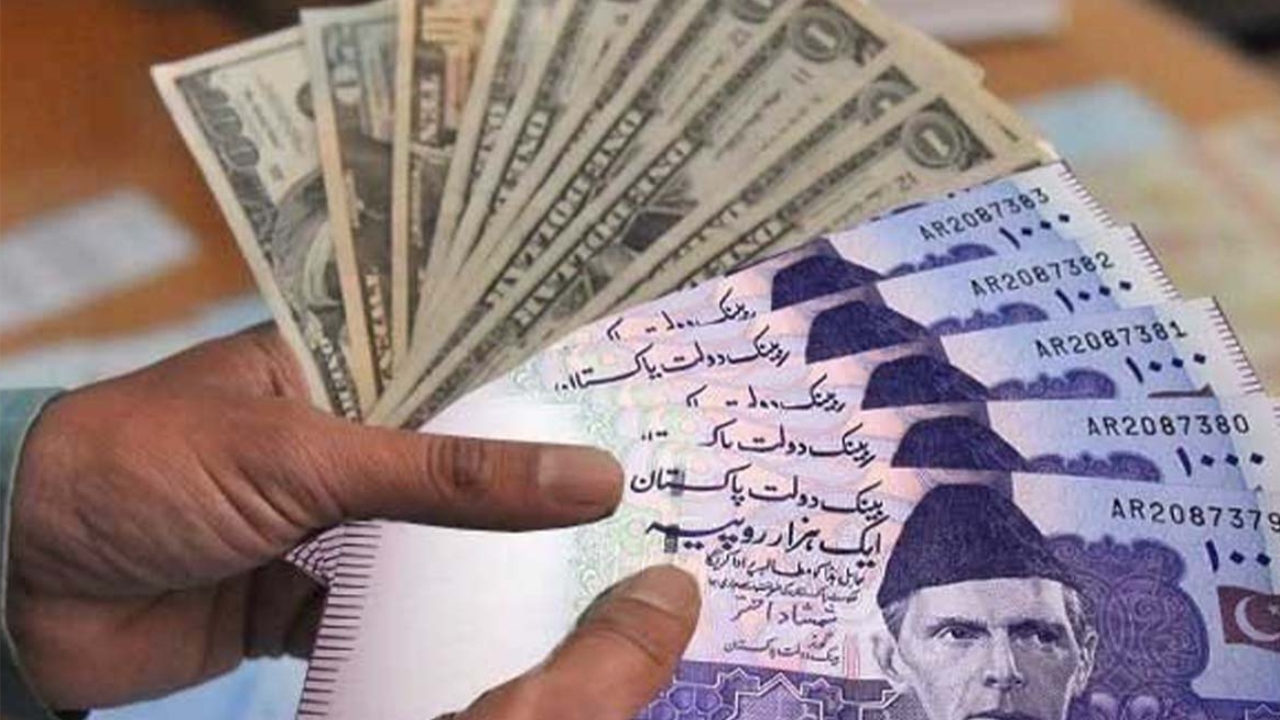


A social media post on X (formerly Twitter) by a private media outlet regarding “Pakistan’s currency crisis” has been gaining traction, outlining the country’s precarious economic position. Data, however, indicates that the entire post is riddled with misinformation and statistical inconsistencies.
According to the outlet, Pakistan’s total external debt is $219 billion when “hidden exposures” are included. Moreover, the post claims that external debt amounts to 73 percent of Pakistan’s GDP, as opposed to the “official” figure of 42 percent. The language suggests that the authorities are actively attempting to conceal the true extent of the country’s foreign debt by manipulating data.
However, the State Bank of Pakistan (SBP) or the Finance Division has never denied the aforementioned foreign debt-to-GDP ratio. In fact, the only instance of data manipulation appears to be by the media outlet itself, as the 42 percent figure actually refers to the domestic debt-to-GDP ratio.
The media outlet’s post also claims that the SBP has sold $5 billion to defend the rupee from depreciation pressures in 2024 and that the SBP spends “$5+ billion annually” to artificially stabilise the value of the rupee. However, a press release from the SBP from earlier this month indicates an increase in year-on-year (YoY) reserves of $5.12 billion.
The outlet’s post mentions how Pakistan is running a trade deficit against its trading partners, a situation akin to spending $32,000 while only earning $58,400. However, the post does not mention the large $2.1 billion current account surplus Pakistan has achieved during fiscal year (FY) 2024-25.
For reference, the current account value is determined by adding up the trade balance, Net Income from Abroad, and Net Current Transfers (remittances). A positive current account value means that inflows exceed outflows. Since Pakistan has posted a current account surplus, this rubbishes the outlet’s example stated above.
The outlet’s post garnered over 257 thousand views, misleading many readers. However, netizens outlined how the statistics were incorrect and that it was a clear attempt to make Pakistan’s economic condition look much worse than it actually was.
An X user commented: “This entire thread is outright lie and total fabrication”. Another user highlighted that the post was “Data manipulation at its peak”.
It merits a mention that running the outlet’s entire thread through multiple AI detectors yields an average AI probability score of 79 percent, which may explain the inconsistencies in the data
'%3e%3crect%20y='0.445312'%20width='48'%20height='48'%20rx='24'%20fill='white'%20fill-opacity='0.5'/%3e%3crect%20x='0.5'%20y='0.945312'%20width='47'%20height='47'%20rx='23.5'%20stroke='%23808080'/%3e%3cpath%20d='M34.625%2024.4453L14%2024.4453'%20stroke='%23808080'%20stroke-width='0.920053'/%3e%3cpath%20d='M23.375%2034.4453L13.375%2024.4453L23.375%2014.4453'%20stroke='%23808080'%20stroke-width='0.920053'/%3e%3c/g%3e%3cdefs%3e%3cfilter%20id='filter0_b_489_44344'%20x='-12'%20y='-11.5547'%20width='72'%20height='72'%20filterUnits='userSpaceOnUse'%20color-interpolation-filters='sRGB'%3e%3cfeFlood%20flood-opacity='0'%20result='BackgroundImageFix'/%3e%3cfeGaussianBlur%20in='BackgroundImageFix'%20stdDeviation='6'/%3e%3cfeComposite%20in2='SourceAlpha'%20operator='in'%20result='effect1_backgroundBlur_489_44344'/%3e%3cfeBlend%20mode='normal'%20in='SourceGraphic'%20in2='effect1_backgroundBlur_489_44344'%20result='shape'/%3e%3c/filter%3e%3c/defs%3e%3c/svg%3e)
'%3e%3crect%20y='0.445312'%20width='48'%20height='48'%20rx='24'%20fill='white'%20fill-opacity='0.5'/%3e%3crect%20x='0.5'%20y='0.945312'%20width='47'%20height='47'%20rx='23.5'%20stroke='%23808080'/%3e%3cpath%20d='M13.375%2024.4453L34%2024.4453'%20stroke='%23808080'%20stroke-width='0.920053'/%3e%3cpath%20d='M24.625%2014.4453L34.625%2024.4453L24.625%2034.4453'%20stroke='%23808080'%20stroke-width='0.920053'/%3e%3c/g%3e%3cdefs%3e%3cfilter%20id='filter0_b_489_44344'%20x='-12'%20y='-11.5547'%20width='72'%20height='72'%20filterUnits='userSpaceOnUse'%20color-interpolation-filters='sRGB'%3e%3cfeFlood%20flood-opacity='0'%20result='BackgroundImageFix'/%3e%3cfeGaussianBlur%20in='BackgroundImageFix'%20stdDeviation='6'/%3e%3cfeComposite%20in2='SourceAlpha'%20operator='in'%20result='effect1_backgroundBlur_489_44344'/%3e%3cfeBlend%20mode='normal'%20in='SourceGraphic'%20in2='effect1_backgroundBlur_489_44344'%20result='shape'/%3e%3c/filter%3e%3c/defs%3e%3c/svg%3e)
