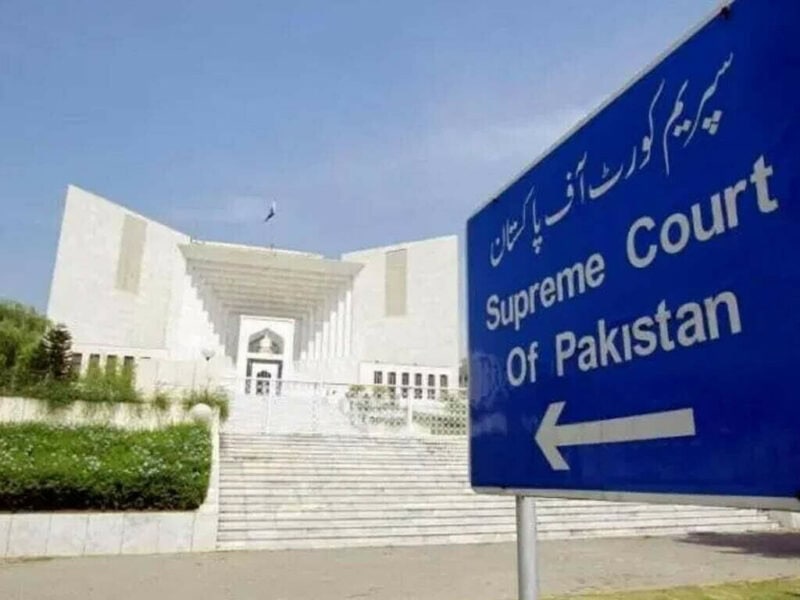
The Supreme Court of Pakistan has restricted family courts from granting a decree of khula without the explicit consent of the wife in cases where she has filed for divorce on grounds of cruelty.
A three-judge bench, led by Chief Justice of Pakistan Yahya Afridi and authored by Justice Shahid Bilal, issued a 12-page judgment clarifying the legal thresholds for matrimonial disputes and financial rights.
The ruling originated from a case where a woman sought the dissolution of her marriage based on allegations of cruelty.
Her claims included the recovery of 30 tolas of gold as dower and maintenance allowance. The marriage took place on September 19, 2016, and the legal suit was filed on October 8, 2016, indicating that the couple cohabited for only a few days before entering litigation.
The bench observed that the petitioner failed to prove cruelty under the required civil legal standard.
However, the court noted that the marriage had broken down at its inception, with no cohabitation taking place after the legal proceedings started, and the woman remaining unwilling to return to the marriage.
The judgment outlined that when a claim of cruelty is not proven but the marriage has collapsed, courts cannot impose khula automatically, nor can they dismiss the case while ignoring the breakdown.
“We hold that khula should not ordinarily be granted without the wife’s consent or clear election where she has sued on cruelty and valuable financial rights are implicated,” the judgment stated.
The SC explained that judges must present the choices clearly to the woman. If she continues with an unproven claim of cruelty, the suit may fail, but if she chooses not to remain in the marriage, she can opt for khula with its specific financial consequences.
“We are nevertheless of the considered opinion that the decree of khula ought not to have been granted without first affording the petitioner a conscious, informed, and unequivocal election, particularly when valuable financial rights were directly involved,” the court added.
The ruling distinguished between civil matrimonial wrongs and criminal domestic violence.
In family courts, cruelty is evaluated as a civil wrong using the standard of “preponderance of probabilities” to determine marital status and civil rights. In contrast, cases prosecuted under penal law or domestic violence statutes carry criminal consequences and require the stricter standard of proof “beyond reasonable doubt”.
The court warned family courts against importing criminal-law evidentiary demands into civil litigation, stating it could defeat the purpose of protecting individuals from oppressive domestic situations.
The apex court expanded the definition of cruelty beyond physical assault, stating it includes “sustained humiliation, coercive control, emotional abuse, deprivation, indignity, and conduct rendering cohabitation unsafe or intolerable”.
It also recognized mental cruelty as “emotional torment, studied neglect, and conduct causing deep anguish”.
The judgment acknowledged that cruelty can occur within a short period of cohabitation, noting, “no inflexible rule can be laid down that cruelty must necessarily be preceded by prolonged matrimonial life”.
The SC set aside the lower courts’ judgments regarding the mode of dissolution and financial adjustments, remanding the matter back to the relevant family court.
The family court must record the woman’s statement within 30 days to ascertain whether she elects for khula under lawful terms or chooses to persist with her claim of cruelty, drawing a fresh decree based on her choice.