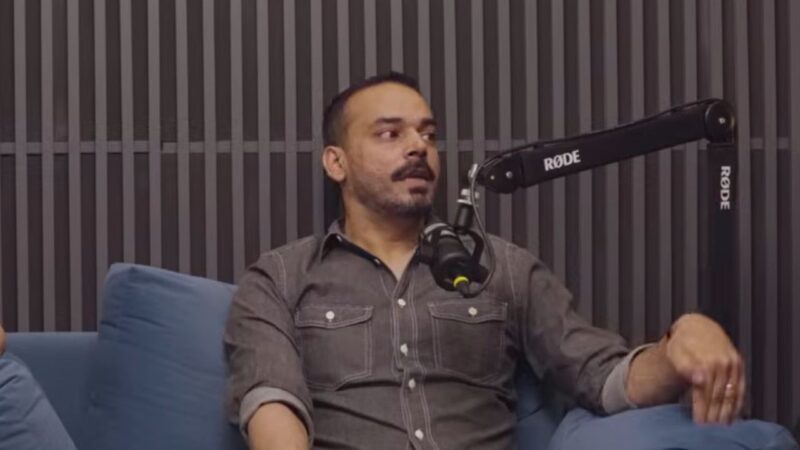
Actor Gohar Rasheed is facing backlash on social media after calling certain Aurat March placards “disrespectful”.
During his appearance on the podcast Hotpod with Taimoor Akhtar, Zarrar Khan and Khaqan Shahnawaz, Rasheed said that to him a section of Aurat March was “disrespectful and lacked courtesy”.
He referenced certain controversial placards and called them “extremely hideous”.
Rasheed argued that discussions around causes like Aurat March need to follow decorum, stating that “every discussion requires propriety” and compared it to how one would “address an elder”.
He said that a movement addressing equal rights and empowerment deserves to be represented properly, adding “you have such a noble cause, and within that, is this how you are going to present it?”
The host asked if Rasheed meant that speakers need to consider their audience when addressing a large issue, to which he responded that the concern extended beyond audience, since every conversation carried its own standard of conduct.
The comments, however, did not sit well with social media users who pushed back. One user wrote that “when someone wants to be relevant in Pakistan they will start talking about Aurat March signs”.
Another user pointed to the origin of one of the placards Rasheed criticised, saying that “apna khana khud garam karo [heat up your own food]” came after a man set his wife on fire because his food was not hot enough.
They also urged people to look into the placards’ backstory before commenting.
A third user questioned why Rasheed was given a podcast platform at all, adding that there was almost always a horrific real-life story behind the slogans. These, the user added, ranged from women being killed for not warming up their husband’s food to a woman getting killed for refusing to have sex with her husband.
The user said that these were only a few examples among many extremely haunting stories of male violence against women on trivial matters, and added that none of the signboards were hideous to those who understood the context behind them.
Another comment compared the criticism to demanding politeness from those who have endured mistreatment for generations, writing, “It’s like saying if u don’t ask politely we’ll not let u live, u must be super nice and kind to us even if we’ve violated u for centuries, u can’t let ur frustration out BE NICE [sic].”
They also questioned when rights were ever granted to those who asked politely.