


The audit report of the National Disaster Management Authority (NDMA) for FY 2023-24 reveals unauthorised expenditure of Rs. 23.254 million from the National Disaster Management Fund (NDMF) on ‘unauthorized’ event management services, with large payments processed on a single day. The money was reportedly spent on ceremonial events such as inaugurations, post-rescue events, and simulation exercises, including payments for refreshments, souvenirs, printing, and related services.
According to reporters, these expenses were not aligned with the NDMA Act, which restricts the fund’s use to “emergency preparedness, response, mitigation, relief, and reconstruction”. NDMA management defended the spending as part of a shift from “reactive” to “proactive” disaster management, but the audit rejected this explanation. The matter was not regularised as no DAC meeting was held.
But this is not the only area where authorities fell short.
Similarly, locals and analysts have criticised the government for having poor radar systems that would not timely forecast heavy rains. In 2018, $210 million were allotted for the Pakistan Hydromet and Climate Services Project, including $188 million worth of World Bank credit, to improve weather forecasting and disaster management with new radar systems. However, the funds have not been utilised effectively to date, with experts reportedly citing bureaucratic failures.
After the 2022 floods, Pakistan got over $10 billion in pledges at a Geneva donor conference for recovery and climate resilience. But by mid-2024, most of that money still had not reportedly reached communities.
This year, in 2025, eastern Pakistan is on high alert as floodwaters from Punjab are flowing down towards Sindh and are expected to hit by September 2 to 3, according to Senior Minister Sharjeel Inam Memon.
Floods 2025
On June 26 began the spells of torrential rains and flash floods. By August 15, heavy rains and increased flash floods in Khyber Pakhtunkhwa wreaked havoc, killing at least 460 people and injuring over 245 others, according to the Provincial Disaster Management Authority (PDMA).
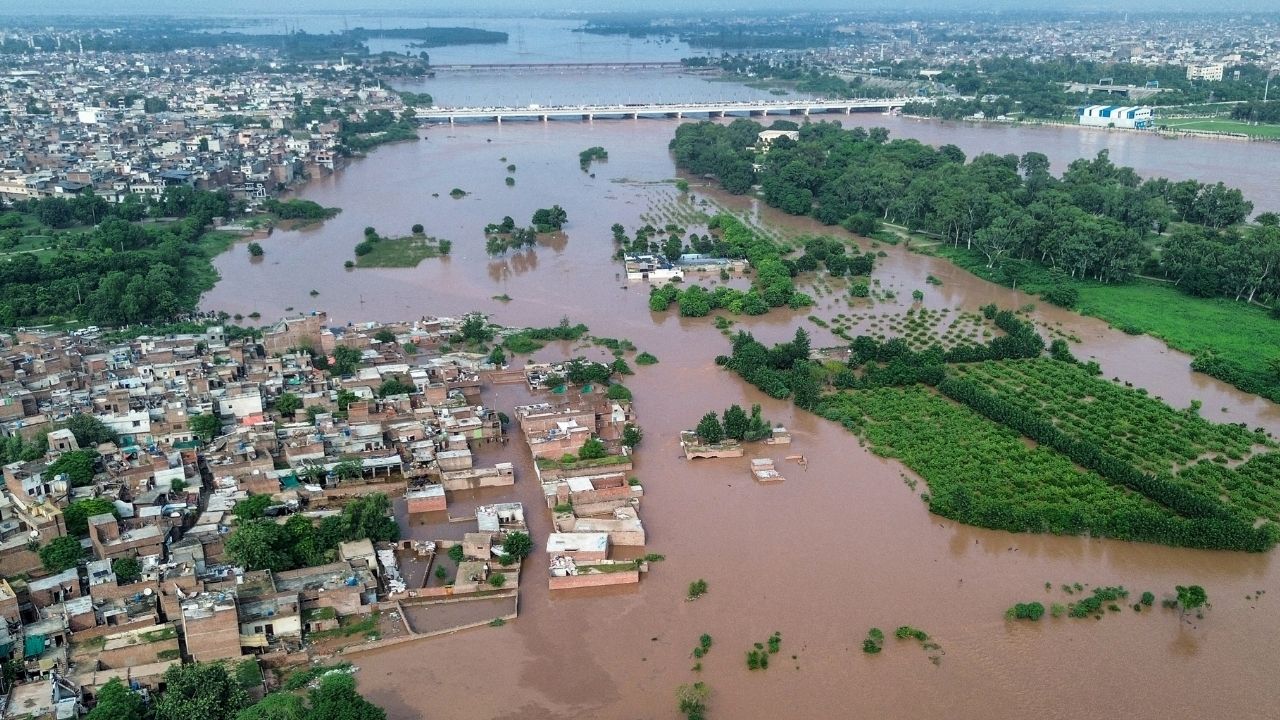
In Punjab, where around 1.5 million lives are at risk, at least 30 people have died after India opened major dams, including the Salal and Baglihar dams on the Chenab River, releasing water into Pakistan and worsening levels in the Sutlej, Ravi, and Chenab rivers.
The Current reached out to Idrees Mahsud, Member of Disaster Risk Reduction at the National Disaster Management Authority (NDMA), who stated that “All preparations to facilitate victims and animals are in place,” adding that “obviously it can’t be an ideal situation.”
“Our main priority is to evacuate people. Camp management is very important; it has its own SOPs, and we are trying our best within the given resources to provide all facilities to the affectees, including medical relief camps, which are available everywhere and largely staffed by volunteers. This is a disaster situation; nothing can be ideal,” he said.
Flooding in the Chenab river has submerged 991 villages, Sialkot flooding has affected 395 villages, 127 in Jhang, 124 in Multan, 48 in Chiniot, 66 in Gujrat, 51 in Khanewal, 45 in Hafizabad, 41 in Sargodha, 35 in Mandi Bahauddin, and 19 villages in Wazirabad.
According to Relief Commissioner Nabeel Javed, more than 2,308 villages across Punjab had been underwater, and 481,000 people have been evacuated to safer areas. 511 relief camps have been set up by the provincial administration where flood affectees are being provided food and shelter, along with 351 medical camps and 321 veterinary camps. Moreover, more than 405,000 animals have also been moved to different places.
Iterating that over 1.4 million people have been rescued and are in relief camps, Mahsud said: “Which government on this earth has been responding better than this government?”
He clarified that the NDMA is not claiming to provide “two-star or four-star hotel facilities” in these camps. “Relief camps mean you save a human being and help them sustain for a few days, until they are able to return to their homes once the water recedes, with whatever means are available.”
Mahsud further said that if any camp faces issues, people are encouraged to inform the authorities so they can verify and resolve the problems. “We try to facilitate people in every way, from camps and shelter to medical treatment and medicines.”
So far, this year, at least 800 people have died across Pakistan in the flooding, while 1,018 have been injured, 6,630 houses damaged, and 5,548 livestock killed, according to the National Disaster Management Authority (NDMA).
What’s next?
These floods are yet to hit Sindh, where Guddu Barrage will receive inflows of 700,000–800,000 cusecs early next week. The province's Senior Minister Sharjeel Inam Memon warns that around 1.6 million people across 1,657 villages could be at risk.
Meanwhile, Chief Minister Syed Murad Ali Shah, over 52,000 families along the Indus are under threat. He has directed authorities to set up over 500 relief camps along embankments to safeguard people and livestock, while more than 30,000 personnel of Rescue-1122 and 178 boats have been deployed in northern and southern districts.
Previously, the 2022 floods had affected 33 million people in Pakistan and destroyed 897,014 houses and damaged another 1,391,467. The climatic disaster also killed 1,164,270 livestock, primarily in Balochistan, while access to flood-hit areas was severely hindered by damage to 13,115 kilometres of roads and the destruction of 439 bridges.
'%3e%3crect%20y='0.445312'%20width='48'%20height='48'%20rx='24'%20fill='white'%20fill-opacity='0.5'/%3e%3crect%20x='0.5'%20y='0.945312'%20width='47'%20height='47'%20rx='23.5'%20stroke='%23808080'/%3e%3cpath%20d='M34.625%2024.4453L14%2024.4453'%20stroke='%23808080'%20stroke-width='0.920053'/%3e%3cpath%20d='M23.375%2034.4453L13.375%2024.4453L23.375%2014.4453'%20stroke='%23808080'%20stroke-width='0.920053'/%3e%3c/g%3e%3cdefs%3e%3cfilter%20id='filter0_b_489_44344'%20x='-12'%20y='-11.5547'%20width='72'%20height='72'%20filterUnits='userSpaceOnUse'%20color-interpolation-filters='sRGB'%3e%3cfeFlood%20flood-opacity='0'%20result='BackgroundImageFix'/%3e%3cfeGaussianBlur%20in='BackgroundImageFix'%20stdDeviation='6'/%3e%3cfeComposite%20in2='SourceAlpha'%20operator='in'%20result='effect1_backgroundBlur_489_44344'/%3e%3cfeBlend%20mode='normal'%20in='SourceGraphic'%20in2='effect1_backgroundBlur_489_44344'%20result='shape'/%3e%3c/filter%3e%3c/defs%3e%3c/svg%3e)
'%3e%3crect%20y='0.445312'%20width='48'%20height='48'%20rx='24'%20fill='white'%20fill-opacity='0.5'/%3e%3crect%20x='0.5'%20y='0.945312'%20width='47'%20height='47'%20rx='23.5'%20stroke='%23808080'/%3e%3cpath%20d='M13.375%2024.4453L34%2024.4453'%20stroke='%23808080'%20stroke-width='0.920053'/%3e%3cpath%20d='M24.625%2014.4453L34.625%2024.4453L24.625%2034.4453'%20stroke='%23808080'%20stroke-width='0.920053'/%3e%3c/g%3e%3cdefs%3e%3cfilter%20id='filter0_b_489_44344'%20x='-12'%20y='-11.5547'%20width='72'%20height='72'%20filterUnits='userSpaceOnUse'%20color-interpolation-filters='sRGB'%3e%3cfeFlood%20flood-opacity='0'%20result='BackgroundImageFix'/%3e%3cfeGaussianBlur%20in='BackgroundImageFix'%20stdDeviation='6'/%3e%3cfeComposite%20in2='SourceAlpha'%20operator='in'%20result='effect1_backgroundBlur_489_44344'/%3e%3cfeBlend%20mode='normal'%20in='SourceGraphic'%20in2='effect1_backgroundBlur_489_44344'%20result='shape'/%3e%3c/filter%3e%3c/defs%3e%3c/svg%3e)