
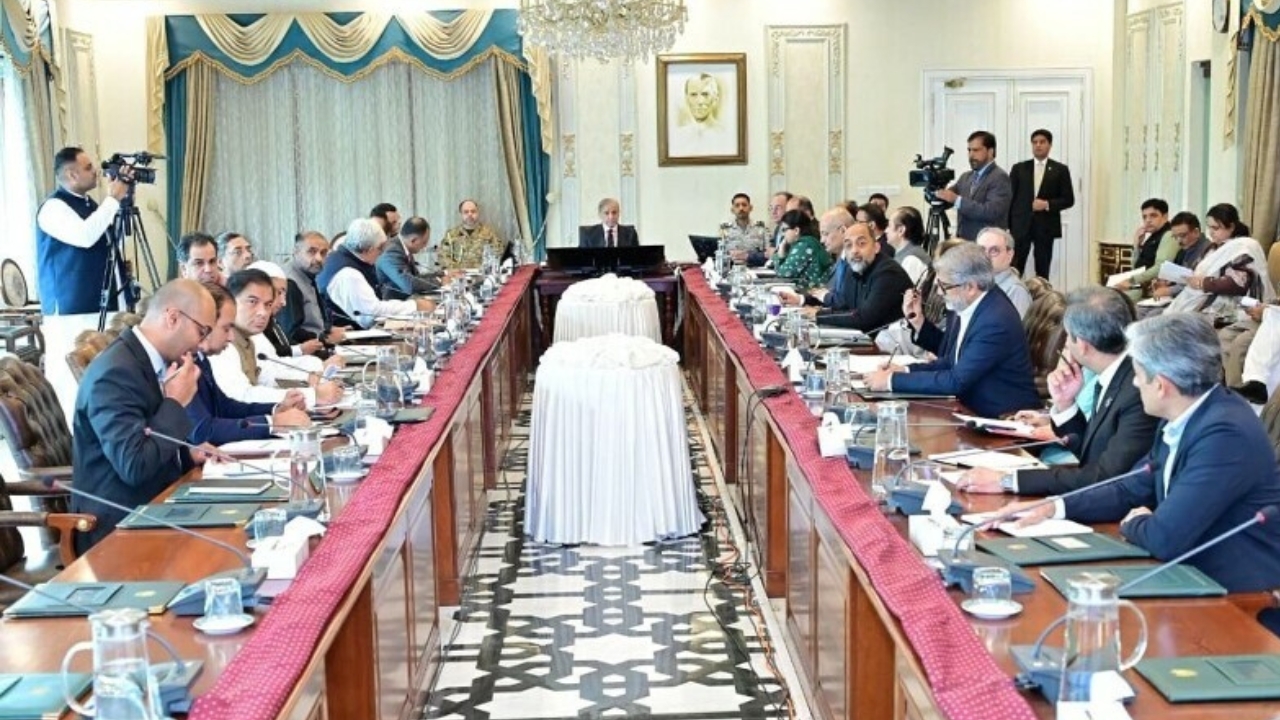


In a bid to accelerate the shift toward a cashless economy, Prime Minister (PM) Shehbaz Sharif announced that the federal government is actively working to digitalise financial transactions. He made the remarks during a review meeting on Sunday regarding the transition to a cashless system.
According to details, PM Shehbaz directed provincial chief secretaries to coordinate with Islamabad to expand the Raast system, with plans to extend the digital payment network down to the district level.
Moving to a cashless economy will yield great benefits for the federal government, especially in the sphere of revenue collection. This is because businesses and individuals alike can evade taxes when making financial transactions with cash as the medium of payment.
However, digital payments to businesses are recorded and are eligible for taxation. As per reports, the Prime Minister has expressed pleasure over the progress authorities have made thus far to transition to a cashless economy with digital financial systems.
According to reports, the meeting was informed of the initiative wherein Pakistan will create a digital public infrastructure to enable efficient and secure digital payments.
Under the proposed public digital infrastructure, the government is to create digital IDs for all Pakistanis, integrate citizens’ biometrics, mobile numbers, and national identity cards. Moreover, the stakeholders present at the meeting were briefed on the progress of provincial governments over connecting public-to-government and government-to-public payments with the Raast system.
While the federal government has made strides to boost digital payments between the public sector and private entities, authorities should work towards digitising financial transactions taking place between private parties. This is because doing so will likely lead to an uptick in the collection figures of the Federal Board of Revenue (FBR).
The government could encourage individuals to switch to a cashless economy by offering greater incentives. Currently, individuals pay a five percent tax on digital transactions compared to the 18 percent General Sales Tax (GST) levied on cash transactions. A reduction in the digital transaction tax or an increase in the GST could help accelerate nationwide adoption of digital payments.
According to reports, development authorities in Islamabad have granted the right of way for fibre connectivity to support the transition to a cashless economy. Additionally, the federal government expects the National Highway Authority and Pakistan Railways to help improve digital infrastructure.
'%3e%3crect%20y='0.445312'%20width='48'%20height='48'%20rx='24'%20fill='white'%20fill-opacity='0.5'/%3e%3crect%20x='0.5'%20y='0.945312'%20width='47'%20height='47'%20rx='23.5'%20stroke='%23808080'/%3e%3cpath%20d='M34.625%2024.4453L14%2024.4453'%20stroke='%23808080'%20stroke-width='0.920053'/%3e%3cpath%20d='M23.375%2034.4453L13.375%2024.4453L23.375%2014.4453'%20stroke='%23808080'%20stroke-width='0.920053'/%3e%3c/g%3e%3cdefs%3e%3cfilter%20id='filter0_b_489_44344'%20x='-12'%20y='-11.5547'%20width='72'%20height='72'%20filterUnits='userSpaceOnUse'%20color-interpolation-filters='sRGB'%3e%3cfeFlood%20flood-opacity='0'%20result='BackgroundImageFix'/%3e%3cfeGaussianBlur%20in='BackgroundImageFix'%20stdDeviation='6'/%3e%3cfeComposite%20in2='SourceAlpha'%20operator='in'%20result='effect1_backgroundBlur_489_44344'/%3e%3cfeBlend%20mode='normal'%20in='SourceGraphic'%20in2='effect1_backgroundBlur_489_44344'%20result='shape'/%3e%3c/filter%3e%3c/defs%3e%3c/svg%3e)
'%3e%3crect%20y='0.445312'%20width='48'%20height='48'%20rx='24'%20fill='white'%20fill-opacity='0.5'/%3e%3crect%20x='0.5'%20y='0.945312'%20width='47'%20height='47'%20rx='23.5'%20stroke='%23808080'/%3e%3cpath%20d='M13.375%2024.4453L34%2024.4453'%20stroke='%23808080'%20stroke-width='0.920053'/%3e%3cpath%20d='M24.625%2014.4453L34.625%2024.4453L24.625%2034.4453'%20stroke='%23808080'%20stroke-width='0.920053'/%3e%3c/g%3e%3cdefs%3e%3cfilter%20id='filter0_b_489_44344'%20x='-12'%20y='-11.5547'%20width='72'%20height='72'%20filterUnits='userSpaceOnUse'%20color-interpolation-filters='sRGB'%3e%3cfeFlood%20flood-opacity='0'%20result='BackgroundImageFix'/%3e%3cfeGaussianBlur%20in='BackgroundImageFix'%20stdDeviation='6'/%3e%3cfeComposite%20in2='SourceAlpha'%20operator='in'%20result='effect1_backgroundBlur_489_44344'/%3e%3cfeBlend%20mode='normal'%20in='SourceGraphic'%20in2='effect1_backgroundBlur_489_44344'%20result='shape'/%3e%3c/filter%3e%3c/defs%3e%3c/svg%3e)
