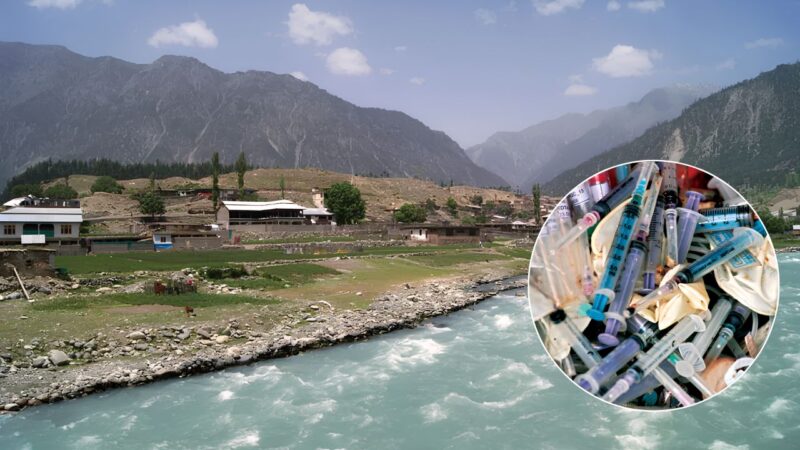
Hazardous medical waste has been found dumped along the Swat River in Charsadda, raising concerns over public health, environmental contamination and the disposal practices of healthcare facilities, according to local residents.
Used syringes, blood-stained test tubes, laboratory vials and other infectious waste were found scattered along the riverbank, residents said.
The site is located near a popular recreational area where families and young people gather during the summer, with hundreds visiting the river for swimming and leisure activities.
Residents warned that the discarded medical waste posed a risk of injuries from used needles and broken laboratory glass, while blood-contaminated materials could expose people to communicable diseases.
They also expressed concern that children frequently play near the riverbank, increasing the likelihood of accidental contact with contaminated sharp objects.
According to residents, some private laboratories have been disposing of used syringes, contaminated test tubes and other infectious waste at the site for an extended period. They alleged that the waste had accumulated over time without monitoring or intervention by the authorities.
Environmental experts said that medical waste is classified as hazardous because it may contain infectious material capable of transmitting disease if not handled and disposed of in accordance with prescribed safety standards.
Residents also cautioned that rainfall or flooding could wash the waste into the Swat River, polluting the water and threatening aquatic life.
Residents called on the district administration, the district health officer and the Environmental Protection Agency to inspect the site, safely dispose of the hazardous waste and identify those responsible for the alleged illegal dumping.
They also urged authorities to strictly enforce medical waste disposal regulations, saying regular inspections and monitoring were needed to ensure hospitals, clinics and laboratories disposed of infectious waste through approved methods rather than in open areas.