
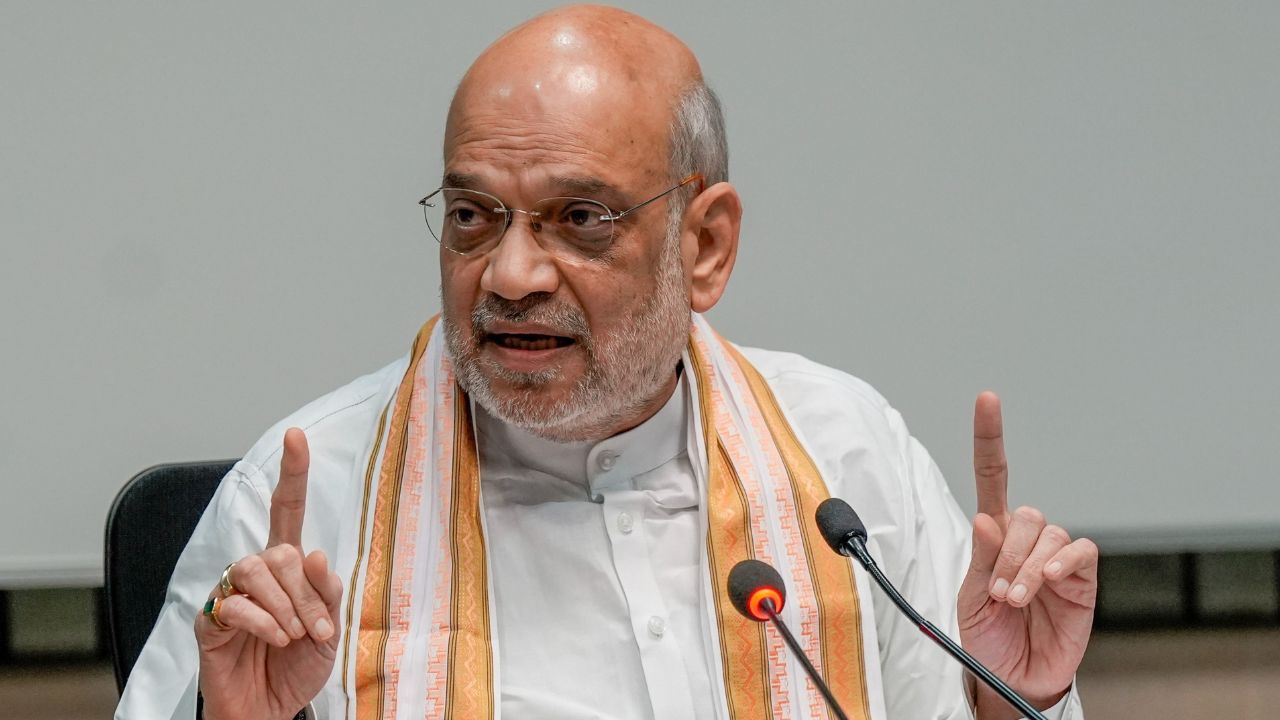


Indian Union Home Minister Amit Shah on Saturday said that New Delhi will never restore the Indus Waters Treaty (IWT) with Islamabad, and the water flowing to Pakistan will be diverted for internal use.
Following the April 22 Pahalgam incident in Indian Illegally Occupied Jammu and Kashmir (IIOJK), New Delhi unilaterally suspended the long-standing IWT, which, through wars, near-conflict, and complete diplomatic breakdowns, had endured.
According to the treaty, three eastern rivers, Sutlej, Beas and Ravi, were awarded to India, while Pakistan received the three Western rivers, Indus, Chenab and Jhelum, which account for the majority (almost 80 per cent) of the shared basin’s water.
According to the agreement, India retains the right to use the western rivers for non-consumptive purposes like hydropower, and for limited irrigation, but is barred to store or divert their flows in ways that harm downstream access.
In an interview with the Times of India, the Indian home minister said, “No, it [IWT] will never be restored,” adding, “We will take water that was flowing to Pakistan to Rajasthan by constructing a canal. Pakistan will be starved of water that it has been getting unjustifiably.”
Islamabad has already clarified its stance regarding the India action of illegally putting IWT in abeyance, saying that any act of diverting or blocking the share of Pakistan’s water will be considered “an act of war,” as well as clarifying in the past that the treaty has no provision for one side to unilaterally pull back.
Weeks after the suspension of IWT, Defence Minister Khawaja Asif warned New Delhi that it would strike if India attempts to construct any structure to block the flow of water into Pakistan in violation of the treaty.
“If they attempt to construct such a type of structure, we will strike it and destroy it,” the defence minister said while speaking on a private news outlet in response to a question of whether Pakistan will strike first if India attempts to divert or stop the flow of water from western rivers.
Additionally, Asif said that stopping water will be an act of aggression against Pakistan. “Aggression is not only carried out through artillery shells or gunfire. It has many types and phases. [Stopping the water] is also a phase of aggression. Such actions can lead nations to die from hunger and thirst,” he explained.
Meanwhile, Pakistan is reportedly exploring a legal challenge to India’s decision to hold the treaty in abeyance under international law.
'%3e%3crect%20y='0.445312'%20width='48'%20height='48'%20rx='24'%20fill='white'%20fill-opacity='0.5'/%3e%3crect%20x='0.5'%20y='0.945312'%20width='47'%20height='47'%20rx='23.5'%20stroke='%23808080'/%3e%3cpath%20d='M34.625%2024.4453L14%2024.4453'%20stroke='%23808080'%20stroke-width='0.920053'/%3e%3cpath%20d='M23.375%2034.4453L13.375%2024.4453L23.375%2014.4453'%20stroke='%23808080'%20stroke-width='0.920053'/%3e%3c/g%3e%3cdefs%3e%3cfilter%20id='filter0_b_489_44344'%20x='-12'%20y='-11.5547'%20width='72'%20height='72'%20filterUnits='userSpaceOnUse'%20color-interpolation-filters='sRGB'%3e%3cfeFlood%20flood-opacity='0'%20result='BackgroundImageFix'/%3e%3cfeGaussianBlur%20in='BackgroundImageFix'%20stdDeviation='6'/%3e%3cfeComposite%20in2='SourceAlpha'%20operator='in'%20result='effect1_backgroundBlur_489_44344'/%3e%3cfeBlend%20mode='normal'%20in='SourceGraphic'%20in2='effect1_backgroundBlur_489_44344'%20result='shape'/%3e%3c/filter%3e%3c/defs%3e%3c/svg%3e)
'%3e%3crect%20y='0.445312'%20width='48'%20height='48'%20rx='24'%20fill='white'%20fill-opacity='0.5'/%3e%3crect%20x='0.5'%20y='0.945312'%20width='47'%20height='47'%20rx='23.5'%20stroke='%23808080'/%3e%3cpath%20d='M13.375%2024.4453L34%2024.4453'%20stroke='%23808080'%20stroke-width='0.920053'/%3e%3cpath%20d='M24.625%2014.4453L34.625%2024.4453L24.625%2034.4453'%20stroke='%23808080'%20stroke-width='0.920053'/%3e%3c/g%3e%3cdefs%3e%3cfilter%20id='filter0_b_489_44344'%20x='-12'%20y='-11.5547'%20width='72'%20height='72'%20filterUnits='userSpaceOnUse'%20color-interpolation-filters='sRGB'%3e%3cfeFlood%20flood-opacity='0'%20result='BackgroundImageFix'/%3e%3cfeGaussianBlur%20in='BackgroundImageFix'%20stdDeviation='6'/%3e%3cfeComposite%20in2='SourceAlpha'%20operator='in'%20result='effect1_backgroundBlur_489_44344'/%3e%3cfeBlend%20mode='normal'%20in='SourceGraphic'%20in2='effect1_backgroundBlur_489_44344'%20result='shape'/%3e%3c/filter%3e%3c/defs%3e%3c/svg%3e)