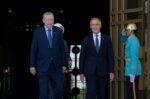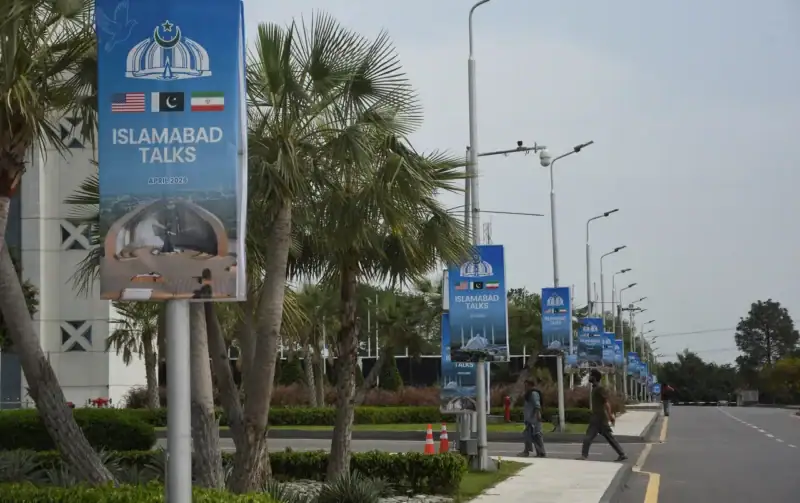
Iranian Foreign Minister (FM) Abbas Araghchi arrived in Islamabad on Friday night, holding meetings with senior Pakistani officials including Chief of Defence Forces (CDF) Field Marshal Asim Munir, but prospects for a second round of direct US-Iran talks appear to be dim.
The Iranian Foreign Ministry confirmed the meeting between Araghchi and Munir through a post on X, while meetings with the Foreign Office (FO) and Prime Minister (PM) are also underway. Despite initial reports suggesting Araghchi’s stay would last only a few hours, his visit stretched well beyond that.
Tehran, however, has made its position clear. Iranian Foreign Ministry spokesperson Esmaeil Baqaei said in a post on X, late Friday that “no meeting is planned to take place between Iran and the US,” adding that “Iran’s observations would be conveyed to Pakistan”. A senior Iranian official also confirmed that Iranian representatives had no plans to meet with US negotiators who were headed to Islamabad.
The development drew a wave of reactions from journalists and analysts tracking the negotiations closely.
Journalist Kamran Khan reported that prospects for the second round of talks were “rapidly fading,” with Tehran insisting that Washington DC end its blockade of the Strait of Hormuz as a precondition for resuming negotiations.
Najam Ali, CEO and Director at Next Capital, offered a sharper economic reading of Iran’s position. He argued that despite blockades and pressure, Iran was not negotiating from a position of weakness, pointing to the closure of the Strait of Hormuz as a factor that had disrupted global oil flows and put pressure on dollar-based financial systems. “This is not a local conflict anymore. It is systemic,” he wrote, concluding that the only viable path forward was a negotiated settlement, but “not a quick one, not on US terms”.
Journalist Omer Azhar pushed back against those who had questioned Pakistan’s role in the process, pointing to Araghchi’s presence in Islamabad as proof of Tehran’s trust. “Tehran does not send its Foreign Minister anywhere it doesn’t fully trust. Pakistan isn’t Trump’s proxy. It’s the only channel both sides believe in,” he wrote.
Analyst Iftikhar Firdous broke down Araghchi’s regional tour covering Islamabad, Muscat and Moscow as signaling three things: Pakistan’s continued centrality to the process, Oman’s traditional role in facilitating indirect talks including in managing the Hormuz situation, and Russia’s importance to Iran’s broader power alignment and sanctions management. He added that despite the noise in the media, “there is covert diplomacy and overt back channeling that Iran needs for a comprehensive peace plan”.
Journalist Hassan Khan cautioned that Pakistan needed to tread carefully. “The peace talks between the US and Iran are in the tough zone, just slogging as on a marshy tract,” he wrote, warning that a single misstep could cause significant damage. He also called for stricter message discipline, urging that only the Foreign Office be allowed to issue statements on the process.