
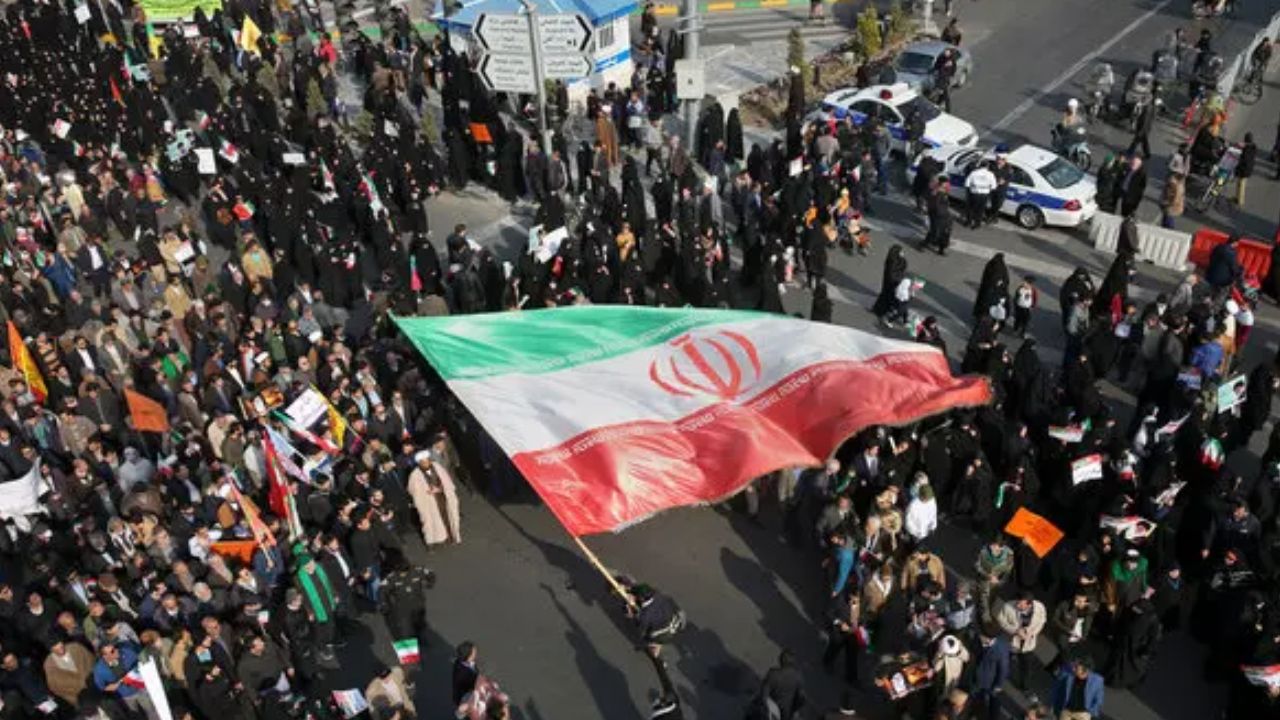


Iran has entered one of its most volatile periods in years as protests driven by economic hardship have spread across dozens of cities, drawing international attention, state crackdowns and a communication blackout.
What began as anger over inflation and a collapsing currency has escalated into nationwide demonstrations openly challenging the Islamic Republic’s authority.
As the world speculates that the movement could lead to the “falling of Tehran”, here is what you need to know about it.
PROTESTS BEGIN
The latest wave of unrest ignited late last month after shopkeepers in Tehran’s Grand Bazaar closed their businesses in protest against the government’s economic policies and the sharp fall of the rial.
The central bank’s decision to end a programme that allowed some importers to access cheaper US dollars caused overnight spikes in the prices of basic goods such as cooking oil and chicken, while some products disappeared from the market entirely.
Millions of Iranians are now grappling with rampant inflation, unaffordable medicine and a currency that has plunged to historic lows. As sanctions tightened and Iran struggled after the 12-day war, its currency collapsed in December and protests began soon after.
PROTESTS SPREAD NATIONWIDE
Demonstrations have now reached more than 100 cities across Iran, from Ilam near the Iraqi border to Mashhad in the northeast, according to an international media outlet.
Cities including Tehran, Qom, Isfahan, Shiraz, Bandar Abbas, Borujerd, Arsanjan, Gilan-e Gharb, Fardis, Ilam, Shermin, Mashhad, Bojnurd, Lorestan, Golestan and Aligudarz have all reported unrest.
Protesters have blocked roads, set fires and marched through neighbourhoods chanting slogans against the ruling system.
In Tehran, witnesses described neighborhoods erupting into chants late Thursday night, including “Death to the dictator!” and “Death to the Islamic Republic!” Others praised the former monarchy, shouting, “This is the last battle! Pahlavi will return!” Thousands were seen on the streets before communications were cut.
Footage verified by an international media outlet showed demonstrators lighting fires in the capital, blocking highways and clashing with security forces. In Shiraz, video showed security vehicles driving through a protest barrier that read, “We revolt due to hunger.”
As protests intensified, Iran was plunged into a nationwide internet and telephone blackout on Thursday evening. Authorities cut access shortly after demonstrations began, limiting the flow of information both domestically and internationally.
The blackout also appeared to take Iran’s state-run and semi-official news agencies offline. State television acknowledged the protests hours later, claiming that violence had caused casualties and that public and private property, including buses, metro stations, motorcycles and cars, had been set on fire.
CASUALTIES
The true human toll remains unclear. Iranian authorities have not released comprehensive casualty figures, while rights groups report conflicting numbers.
US-based Human Rights Activists News Agency said at least 42 people were killed and more than 2,270 detained. Norway-based Iran Human Rights reported at least 45 deaths, including children, while Iranian media have confirmed fewer fatalities, including members of the security forces.
Rights organisations have accused security forces of using live ammunition, tear gas and mass arrests to suppress demonstrations.
ROLE OF PRINCE REZA PAHLVI
The protests have also tested the influence of exiled Crown Prince Reza Pahlavi, who called on Iranians to take to the streets at 8 pm on Thursday and Friday. His appeal appeared to resonate, with chants supporting the former monarchy heard in several cities.
As the latest protests unfolded, Pahlavi posted encouragement on X, urging Iranians to “take to the streets and, as a united front, shout demands”.
Pahlavi had said he would offer further plans depending on the response to his call. His support of and from Israel has drawn criticism in the past – particularly after the 12-day war Israel waged on Iran in June.
Demonstrators have shouted in support of the shah in some demonstrations, but it isn’t clear whether that’s support for Pahlavi himself or a desire to return to a time before the 1979 Islamic Revolution.
TEHRAN’S REACTION
Iranian Supreme Leader Ayatollah Ali Khamenei promised not to “yield to the enemy” following US President Trump’s comments, which acquired added significance after the US military raid that abducted Venezuelan President Nicolas Maduro, a longtime ally of Tehran, over the weekend.
Khamenei acknowledged economic grievances but blamed “external forces” for inciting riots.
Iran’s top judicial and military officials issued stark warnings. Chief Justice Gholam-Hossein Mohseni-Ejei said there would be no leniency for those accused of inciting unrest, claiming they were “operating in line with the enemies of the Islamic Republic of Iran”.
Mohseni-Ejei was referring to comments by President Trump, who threatened last week that if Tehran “violently kills peaceful protesters, which is their custom, the United States of America will come to their rescue”.
Army chief Major-General Amir Hatami warned that Iran would “cut off the hand of any aggressor” and said the armed forces were more prepared than before the recent war with Israel.
Despite this rhetoric, President Masoud Pezeshkian has publicly urged restraint. His office said security forces were ordered not to take action against peaceful demonstrators and to distinguish between protesters and armed rioters.
German officials condemned Iran’s use of “excessive force” while Israeli Prime Minister Benjamin Netanyahu expressed solidarity with protesters, saying the Iranian people may be “taking their fate into their own hands”.
'%3e%3crect%20y='0.445312'%20width='48'%20height='48'%20rx='24'%20fill='white'%20fill-opacity='0.5'/%3e%3crect%20x='0.5'%20y='0.945312'%20width='47'%20height='47'%20rx='23.5'%20stroke='%23808080'/%3e%3cpath%20d='M34.625%2024.4453L14%2024.4453'%20stroke='%23808080'%20stroke-width='0.920053'/%3e%3cpath%20d='M23.375%2034.4453L13.375%2024.4453L23.375%2014.4453'%20stroke='%23808080'%20stroke-width='0.920053'/%3e%3c/g%3e%3cdefs%3e%3cfilter%20id='filter0_b_489_44344'%20x='-12'%20y='-11.5547'%20width='72'%20height='72'%20filterUnits='userSpaceOnUse'%20color-interpolation-filters='sRGB'%3e%3cfeFlood%20flood-opacity='0'%20result='BackgroundImageFix'/%3e%3cfeGaussianBlur%20in='BackgroundImageFix'%20stdDeviation='6'/%3e%3cfeComposite%20in2='SourceAlpha'%20operator='in'%20result='effect1_backgroundBlur_489_44344'/%3e%3cfeBlend%20mode='normal'%20in='SourceGraphic'%20in2='effect1_backgroundBlur_489_44344'%20result='shape'/%3e%3c/filter%3e%3c/defs%3e%3c/svg%3e)
'%3e%3crect%20y='0.445312'%20width='48'%20height='48'%20rx='24'%20fill='white'%20fill-opacity='0.5'/%3e%3crect%20x='0.5'%20y='0.945312'%20width='47'%20height='47'%20rx='23.5'%20stroke='%23808080'/%3e%3cpath%20d='M13.375%2024.4453L34%2024.4453'%20stroke='%23808080'%20stroke-width='0.920053'/%3e%3cpath%20d='M24.625%2014.4453L34.625%2024.4453L24.625%2034.4453'%20stroke='%23808080'%20stroke-width='0.920053'/%3e%3c/g%3e%3cdefs%3e%3cfilter%20id='filter0_b_489_44344'%20x='-12'%20y='-11.5547'%20width='72'%20height='72'%20filterUnits='userSpaceOnUse'%20color-interpolation-filters='sRGB'%3e%3cfeFlood%20flood-opacity='0'%20result='BackgroundImageFix'/%3e%3cfeGaussianBlur%20in='BackgroundImageFix'%20stdDeviation='6'/%3e%3cfeComposite%20in2='SourceAlpha'%20operator='in'%20result='effect1_backgroundBlur_489_44344'/%3e%3cfeBlend%20mode='normal'%20in='SourceGraphic'%20in2='effect1_backgroundBlur_489_44344'%20result='shape'/%3e%3c/filter%3e%3c/defs%3e%3c/svg%3e)