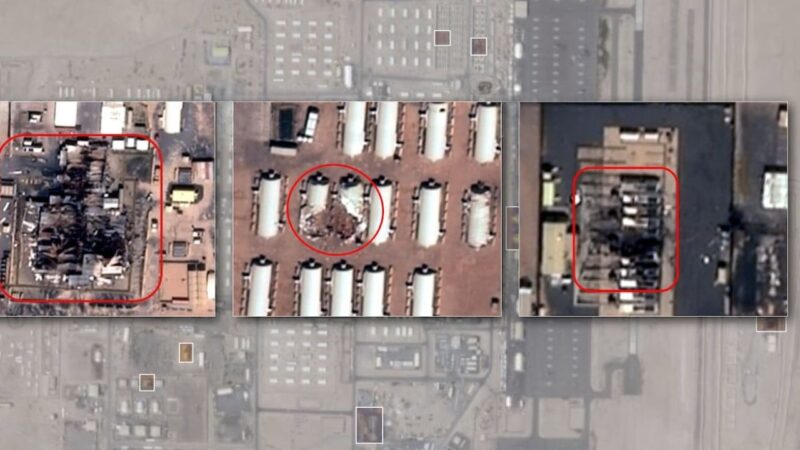
An analysis by an American newspaper of satellite imagery has said that Iranian strikes damaged or destroyed at least 228 structures and pieces of equipment at United States (US) military sites across the Middle East since the start of the war on February 28.
According to the report, the strikes targeted hangars, barracks, fuel depots, aircraft, radar systems, communication infrastructure and air defence equipment at 15 US military installations in the region.
The publication reported that the scale of destruction was “far larger” than what had been publicly acknowledged by the US government.
The report stated that the threat of Iranian attacks forced the US military to reduce staffing levels at several bases, with commanders relocating personnel outside the range of Iranian fire during the early phase of the conflict.
It added that seven US service members have been killed in attacks on American facilities in the regiony, including six in Kuwait and one in Saudi Arabia, while over 400 troops were injured by late April. At least 12 personnel suffered what officials classified as serious injuries.
The newspaper said that satellite imagery from the Middle East has become difficult to access after major commercial providers allegedly limited or delayed publication of images following requests from the US government.
However, Iranian state-affiliated media outlets continued releasing high-resolution satellite images on social media, claiming they showed damage caused by Iranian counterstrikes.
For its investigation, the newspaper reviewed more than 100 Iranian-released satellite images and said that it verified 109 of them through comparisons with imagery from the European Union’s Copernicus satellite system and additional commercial images where available.
The report noted that no Iranian images reviewed by the publication appeared to have been manipulated.
“The Iranian attacks were precise. There are no random craters indicating misses,” said Mark Cancian, a senior adviser at the Center for Strategic and International Studies and a retired Marine Corps colonel.
The publication stated that several experts who reviewed the imagery believed the attacks exposed weaknesses in US military preparedness and its ability to respond to modern drone warfare.