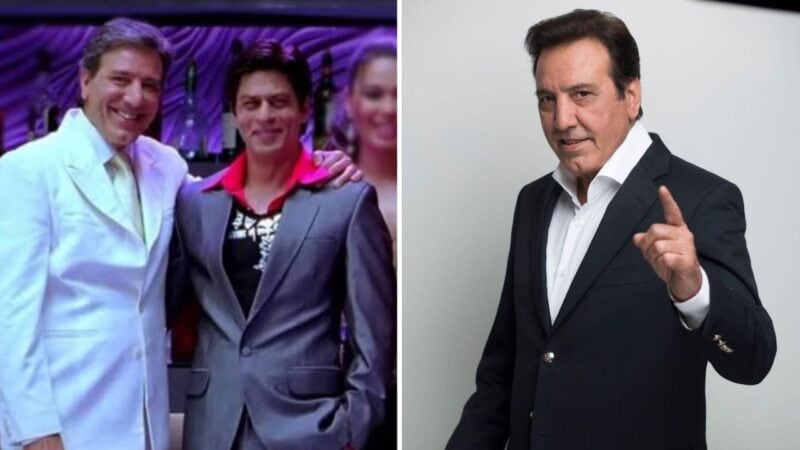
Veteran actor Javed Sheikh has revealed that he initially refused to accept a fee for his role in the Indian film “Om Shanti Om,” calling it an honour to work alongside Bollywood star Shah Rukh Khan.
Filmmaker Farah Khan and Shah Rukh Khan, however, insisted on paying him.
During a recent interview, Sheikh reflected on playing Shah Rukh’s father in the 2007 blockbuster, recalling how welcomed and appreciated he felt throughout his time on set.
“We don’t stay in touch, but we had a great friendship when I was there. The time I spent with Shah Rukh during Om Shanti Om was excellent, superb,” he said.
Discussing salary negotiations, Sheikh said he never intended to charge for his work on the film. “Farah Khan wanted me to play Shah Rukh’s father and they started discussing my fee. I said, ‘Money? I won’t take it.’ They said that was impossible,” he recalled. He added, “I told them it was such a big honour that, out of everyone in India, they had chosen a Pakistani actor to play Shah Rukh Khan’s father. Money wasn’t important.”
Sheikh said he eventually offered to accept a symbolic payment. “I would take one rupee,” he recalled telling them. But Farah Khan and Shah Rukh Khan refused once they learned of the offer. “When Farah and Shah Rukh found out, they refused. They wanted to return the goodwill, so they gave me a very good deal,” he revealed.
He also praised Shah Rukh Khan for the respect and care he showed him on set. “He also took so much care of me. That was unbelievable,” Sheikh stated.
The conversation then turned to the actor’s early struggles in the industry. Sheikh said it took him nearly a decade to establish himself despite his passion for acting. “When I became a hero, my family was happy, but my father was very strict. I used to run from school to Radio Pakistan because I loved performing. Once I got a striped shirt from somewhere in Karachi and when my father saw it, he ripped it apart and said, ‘You want to be a hero?'” he recalled.
Sheikh said his father’s support often depended on the success of his films. “When I became a hero, he hugged me and said, ‘Wow, my son is a hero.’ Then if my film flopped, he would tell me to leave this profession and do something else.” To reassure his father, Sheikh took on other jobs, including a clerical role, while continuing to pursue acting. “I thought I would follow my passion on the side,” he mused.
After his debut film “Dhamaka” (1974) failed, Sheikh said that he landed a small role in a television drama that gave him hope. He had just a two-line part, but when his name was announced for it, his father looked at him with shock.
Sheikh also recalled one of the most painful setbacks of his career, during the making of “Bivi Ho To Aisi” (1982), when producers considered replacing him because distributors were unwilling to buy the film due to his earlier box office failures. “They called me to a hotel for a meeting. There were around 10 to 15 people there. They told me the film wasn’t being bought because it had flop actor Javed Sheikh from Dhamaka,” he recalled.
The rejection left him devastated, and he said he cried because of it. Five years later, his fortunes changed with the hit drama “Ankahi,” which gained popularity across Pakistan and India and helped revive his career.
Reflecting on the outlook that guided his career, Sheikh said, “I focus on what I can do, not who is in front of me. I never had jealousy in me. I just knew I had to keep getting better.”
The veteran actor remains active in both film and television, with recent projects including “Delhi Gate,” “Aag Lagey Basti Mein” alongside Mahira Khan and Fahad Mustafa, and the drama “Kabhi Main Kabhi Tum.”