
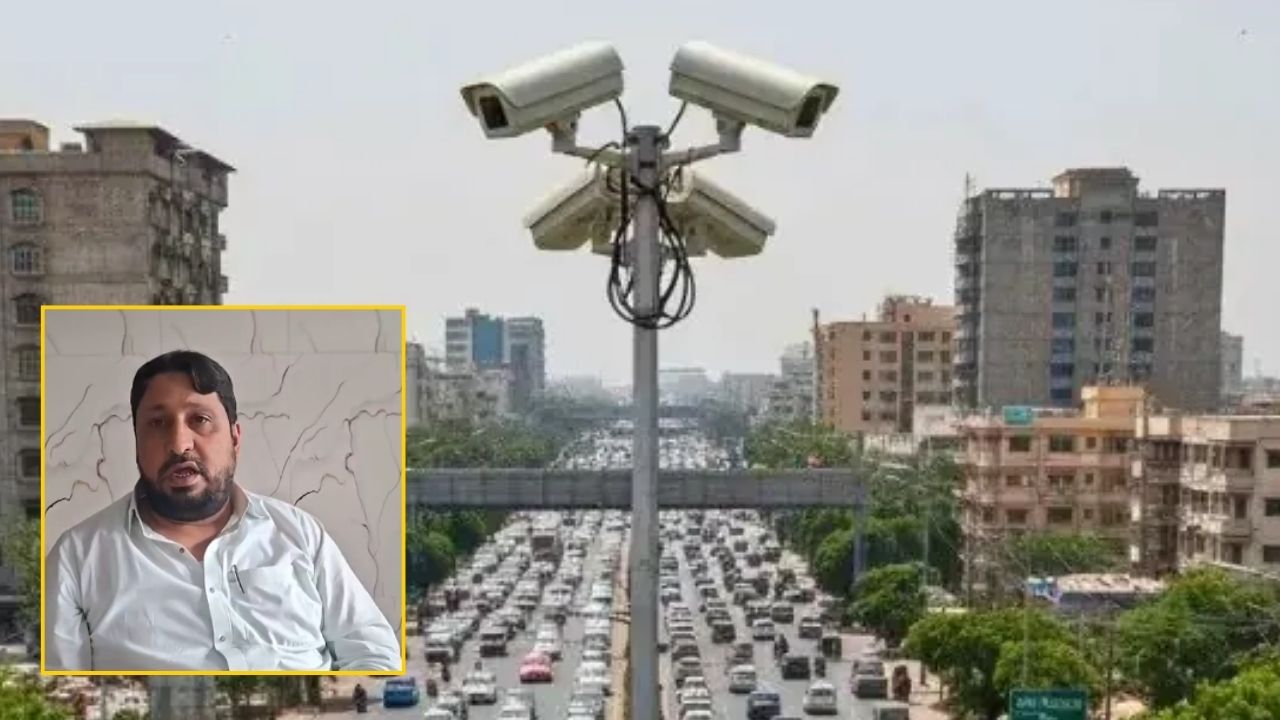


Karachi’s electronic traffic challan (e-challan) system has come under fire after a motorist was issued five separate fines worth Rs50,000 in a single day.
Reports quoted the citizen, Hakimullah, as saying that all five challans were generated on October 30.
Three of the challans were recorded at 12:03 pm in Mauripur while the fourth and fifth were issued ten minutes later at 12:13 pm in Hasan Square.
All fines were imposed for failing to wear a seatbelt, Hakimullah said, adding that he was left stunned after realising that paying them would cost him Rs50,000.
While traffic police officials confirmed that they have contacted the citizen and advised him to visit the facilitation center for his concern to be addressed, authorities have assured the people of Karachi that their challans will be reviewed with first violations waived off.
It may be noted that the port city, which is rather infamous for its traffic, got its own e-challan system last week.
With Karachi traffic police releasing data from the newly-launched system shortly after, it was revealed that more than 2,600 challans with Rs12.5 million in fines were issued within just six hours.
These included 419 for overspeeding, three for lane violations, four for stop-line violations, 1,535 for not wearing seatbelts, 166 for crossing red lights and 507 for riding motorcycles without helmets.
Four challans were issued for wrong-way driving on one-way streets, seven for tinted windows, five for wrong parking, 32 for using mobile phones while driving, three for driving in the wrong direction and another five for illegal or no-parking violations.
Officials said the e-challan system marks a major step forward in improving traffic monitoring and aims to encourage citizens to follow traffic rules.
While traffic police have urged citizens to cooperate, the system has for now landed in the midst of a controversy as opposition leaders and citizens question its legality.
The Sindh High Court has received a petition challenging the system, arguing that heavy fines are being imposed on residents without proper infrastructure or clear legal procedures.
The petitioners’ lawyer, Usman Farooq Advocate, told the court that e-challans are being sent to vehicle owners using CCTV cameras and artificial intelligence, regardless of who was actually driving at the time of the violation.
He said the system unfairly penalizes owners, not necessarily the real offenders.
The lawyer also highlighted poor road conditions in Karachi and across Sindh, noting the lack of speed limit signs and zebra crossings in many areas. He pointed out that ongoing development projects often force traffic police to direct vehicles onto the wrong side of the road.
'%3e%3crect%20y='0.445312'%20width='48'%20height='48'%20rx='24'%20fill='white'%20fill-opacity='0.5'/%3e%3crect%20x='0.5'%20y='0.945312'%20width='47'%20height='47'%20rx='23.5'%20stroke='%23808080'/%3e%3cpath%20d='M34.625%2024.4453L14%2024.4453'%20stroke='%23808080'%20stroke-width='0.920053'/%3e%3cpath%20d='M23.375%2034.4453L13.375%2024.4453L23.375%2014.4453'%20stroke='%23808080'%20stroke-width='0.920053'/%3e%3c/g%3e%3cdefs%3e%3cfilter%20id='filter0_b_489_44344'%20x='-12'%20y='-11.5547'%20width='72'%20height='72'%20filterUnits='userSpaceOnUse'%20color-interpolation-filters='sRGB'%3e%3cfeFlood%20flood-opacity='0'%20result='BackgroundImageFix'/%3e%3cfeGaussianBlur%20in='BackgroundImageFix'%20stdDeviation='6'/%3e%3cfeComposite%20in2='SourceAlpha'%20operator='in'%20result='effect1_backgroundBlur_489_44344'/%3e%3cfeBlend%20mode='normal'%20in='SourceGraphic'%20in2='effect1_backgroundBlur_489_44344'%20result='shape'/%3e%3c/filter%3e%3c/defs%3e%3c/svg%3e)
'%3e%3crect%20y='0.445312'%20width='48'%20height='48'%20rx='24'%20fill='white'%20fill-opacity='0.5'/%3e%3crect%20x='0.5'%20y='0.945312'%20width='47'%20height='47'%20rx='23.5'%20stroke='%23808080'/%3e%3cpath%20d='M13.375%2024.4453L34%2024.4453'%20stroke='%23808080'%20stroke-width='0.920053'/%3e%3cpath%20d='M24.625%2014.4453L34.625%2024.4453L24.625%2034.4453'%20stroke='%23808080'%20stroke-width='0.920053'/%3e%3c/g%3e%3cdefs%3e%3cfilter%20id='filter0_b_489_44344'%20x='-12'%20y='-11.5547'%20width='72'%20height='72'%20filterUnits='userSpaceOnUse'%20color-interpolation-filters='sRGB'%3e%3cfeFlood%20flood-opacity='0'%20result='BackgroundImageFix'/%3e%3cfeGaussianBlur%20in='BackgroundImageFix'%20stdDeviation='6'/%3e%3cfeComposite%20in2='SourceAlpha'%20operator='in'%20result='effect1_backgroundBlur_489_44344'/%3e%3cfeBlend%20mode='normal'%20in='SourceGraphic'%20in2='effect1_backgroundBlur_489_44344'%20result='shape'/%3e%3c/filter%3e%3c/defs%3e%3c/svg%3e)