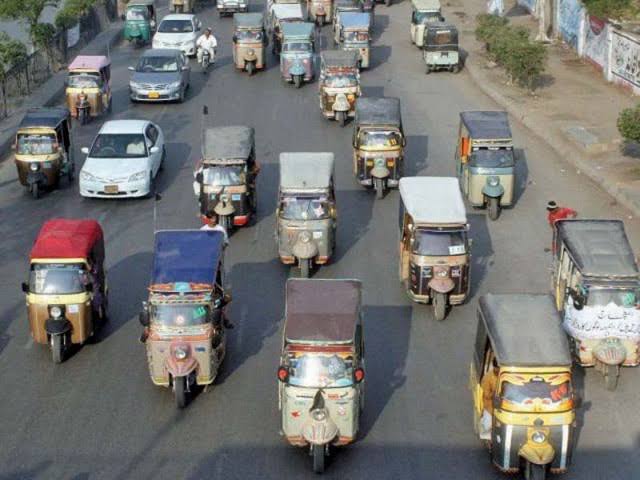
Karachi Traffic Police intend to ban all categories of rickshaws from the roads of the port city, only permitting meter-fitted vehicles to operate under an upcoming policy.
Deputy Inspector General (DIG) Traffic Pir Muhammad Shah announced the development during a media briefing, stating that the current e-ticketing system forms part of the Safe City project.
According to the official, the system, alongside lane marking, has assisted in regulating traffic flow across Karachi.
He stated that traffic officials are actively working to remove motorbike-rickshaws from primary corridors ahead of the broader ban, which will exempt only those units equipped with meters.
The announcement triggered immediate public backlash, with citizens raising concerns over the lack of transport alternatives. “Karachi where people literally have broken buses in the name of public transportation and no metro train, no electric buses. How ** [are] ppl gonna manage??” questioned one citizen, highlighting the severe absence of intracity transit options.
Another resident echoed this sentiment, calling out the policy for being unrealistic “in a city with zero public transport”.
Safety and financial survival for daily commuters also emerged as a primary concern. Commenting on how the move will disrupt the commute of female passengers, a resident urged authorities to halt the policy, stating, “Don’t do this. Young females feel safe traveling in these Rickshaws [sic].”
Economic anxiety and potential unemployment for thousands of drivers prompted warnings from the public. “People don’t have job if they stop Raksha how many people will lose jobs,” one individual pointed out, while another demanded structural sequencing from the government. “First arrange alternative for them. Then start new operations.”
Critics also suggested that systemic changes must involve welfare networks backing the transport sector. “Traffic police should enforce this through funding organizations like Saylani etc who provide financing for new rickshaws,” a commentator noted.
They added, “Good thing that they provide the rozegaar [livelihood] but at the same time they are allowing rickshaw drivers to fleece customers who are barely making ends meet.”
Earlier, the traffic official also revealed that approximately 45,000 vehicles within the city are currently operated by individuals who are not registered owners. He noted that authorities seize vehicles operating with fake registration plates and transfer them to respective police stations.
Addressing public grievances about the electronic challan system, Shah acknowledged that citizens raised valid complaints. He stated that because e-challans are generated through an automated process, errors take place.
Shah added that the total volume of electronic challans issued during the current period remains below the volume of manual tickets generated during the previous year. He also confirmed that motorcyclists operating within the fourth lane in violation of traffic regulations are receiving e-tickets.