
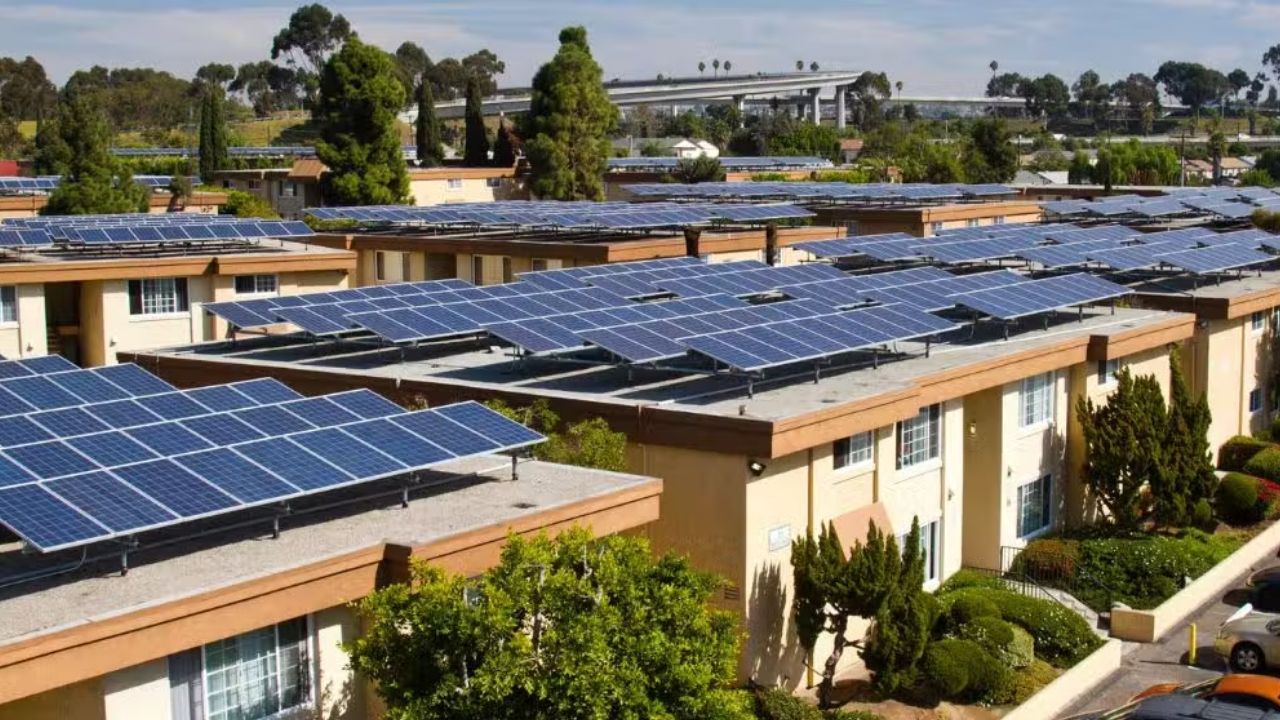


The Khyber Pakhtunkhwa (KP) government has launched a Rs20 billion solar project aimed at reducing the province’s reliance on fossil fuels and easing the burden of chronic load-shedding.
Under the first phase, 32,500 households have been selected via electronic balloting to receive free solar systems, including panels, batteries, fans, and lights. The initiative—officially inaugurated by Chief Minister Ali Amin Gandapur—received an overwhelming 2.5 million online applications, highlighting the urgent public demand for reliable and affordable energy solutions.
The complete project targets 130,000 households, including 30,000 in the merged districts. Half will receive the systems free of cost, while the rest will be offered subsidized units with easy installment plans.
Vulnerable groups such as widows, transgender individuals, and low-income families have been prioritized in the selection process, which the government insists is transparent and free from political interference. While critics raise concerns about infrastructure readiness and transparency in implementation, officials maintain that systems are being put in place to ensure quality, oversight, and sustainability.
The government is also working to solarize schools, mosques, and public buildings to ease pressure on the national grid and promote long-term savings. Experts view the move as a “much-needed transition” from coal-based energy, urging investment in storage systems and energy audits to maximize solar potential.
Despite early challenges, the solar project represents a significant step toward energy independence, environmental responsibility, and economic relief for thousands of KP families. With strong public interest and government commitment, KP is positioning itself as a national leader in renewable energy adoption.
'%3e%3crect%20y='0.445312'%20width='48'%20height='48'%20rx='24'%20fill='white'%20fill-opacity='0.5'/%3e%3crect%20x='0.5'%20y='0.945312'%20width='47'%20height='47'%20rx='23.5'%20stroke='%23808080'/%3e%3cpath%20d='M34.625%2024.4453L14%2024.4453'%20stroke='%23808080'%20stroke-width='0.920053'/%3e%3cpath%20d='M23.375%2034.4453L13.375%2024.4453L23.375%2014.4453'%20stroke='%23808080'%20stroke-width='0.920053'/%3e%3c/g%3e%3cdefs%3e%3cfilter%20id='filter0_b_489_44344'%20x='-12'%20y='-11.5547'%20width='72'%20height='72'%20filterUnits='userSpaceOnUse'%20color-interpolation-filters='sRGB'%3e%3cfeFlood%20flood-opacity='0'%20result='BackgroundImageFix'/%3e%3cfeGaussianBlur%20in='BackgroundImageFix'%20stdDeviation='6'/%3e%3cfeComposite%20in2='SourceAlpha'%20operator='in'%20result='effect1_backgroundBlur_489_44344'/%3e%3cfeBlend%20mode='normal'%20in='SourceGraphic'%20in2='effect1_backgroundBlur_489_44344'%20result='shape'/%3e%3c/filter%3e%3c/defs%3e%3c/svg%3e)
'%3e%3crect%20y='0.445312'%20width='48'%20height='48'%20rx='24'%20fill='white'%20fill-opacity='0.5'/%3e%3crect%20x='0.5'%20y='0.945312'%20width='47'%20height='47'%20rx='23.5'%20stroke='%23808080'/%3e%3cpath%20d='M13.375%2024.4453L34%2024.4453'%20stroke='%23808080'%20stroke-width='0.920053'/%3e%3cpath%20d='M24.625%2014.4453L34.625%2024.4453L24.625%2034.4453'%20stroke='%23808080'%20stroke-width='0.920053'/%3e%3c/g%3e%3cdefs%3e%3cfilter%20id='filter0_b_489_44344'%20x='-12'%20y='-11.5547'%20width='72'%20height='72'%20filterUnits='userSpaceOnUse'%20color-interpolation-filters='sRGB'%3e%3cfeFlood%20flood-opacity='0'%20result='BackgroundImageFix'/%3e%3cfeGaussianBlur%20in='BackgroundImageFix'%20stdDeviation='6'/%3e%3cfeComposite%20in2='SourceAlpha'%20operator='in'%20result='effect1_backgroundBlur_489_44344'/%3e%3cfeBlend%20mode='normal'%20in='SourceGraphic'%20in2='effect1_backgroundBlur_489_44344'%20result='shape'/%3e%3c/filter%3e%3c/defs%3e%3c/svg%3e)