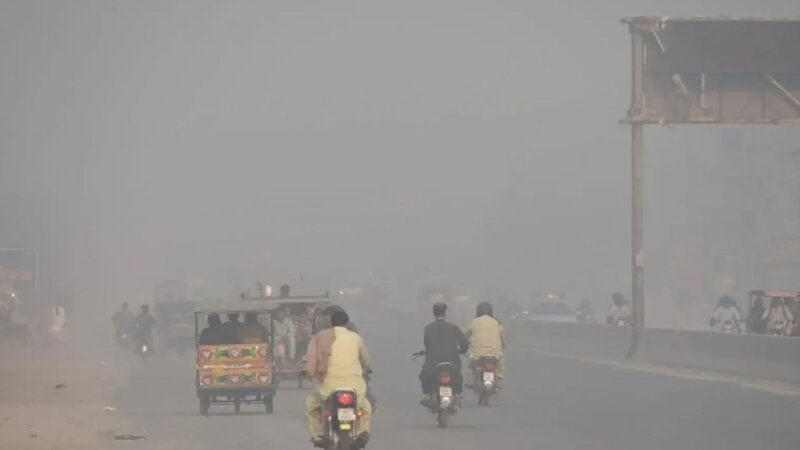
Lahore once again ranked as the world’s most polluted city as air quality deteriorated across Punjab, with several areas recording hazardous levels of PM2.5, according to Air Quality Index (AQI).
The IQAir live ranking placed Lahore at the top, with a reading of 310 particulate matter recorded during the morning hours.
Kolkata in India ranked second with 280 while Dhaka, Bangladesh took third place.
According to the AQI monitoring website, Lahore recorded an overall reading of 367, falling in the hazardous category, with PM2.5 identified as the main pollutant.
Within Lahore, Burki Road near Paragon recorded a reading of 828 while Allama Iqbal Town registered 619. Both areas reported pollution levels above 500, according to the monitoring data.
Other Pakistani cities also recorded high pollution levels. Multan registered 318 particulate matter, followed by Lahore at 306 and Bahawalpur at 281, while Quetta recorded 194, according to the figures shared in the report by Geo News.
According to the news outlet, the air pollution in Lahore had increased during the morning hours. The city had previously fallen behind Multan in Pakistan’s pollution rankings but had once again taken the top position.
The outlet explained that the recent improvement in air quality came after a change in wind direction and light rainfall in several cities, including Lahore. The weather conditions had provided residents with a few days of relief before pollution levels began rising again.
The outlet added that the Pakistan Meteorological Department (PMD) had not forecast rainfall in the coming days. Dry weather is expected to continue, with fog and mist likely to increase during the morning and evening hours.
It was further reported that medical experts had advised residents to wear masks when leaving their homes as dry winter conditions could contribute to an increase in nose, ear and throat illnesses.
Last week, Punjab Information Minister Marriyum Aurangzeb had attributed smog in the province partly to fireworks during Diwali celebrations in India.
The Punjab Environment Protection Agency (EPA), in its assessment of the Diwali period, found that polluted air from India had crossed into Punjab and contributed to higher particulate matter levels.