United States (US) President Donald Trump has announced that Israel and Lebanon have agreed to extend their ceasefire for an additional three weeks.
The announcement came after Trump on Thursday hosted Israeli Ambassador Yechiel Leiter and Lebanese Ambassador Nada Moawad in the Oval Office for ceasefire talks. The extension follows the initial 10-day truce, which began on April 16.
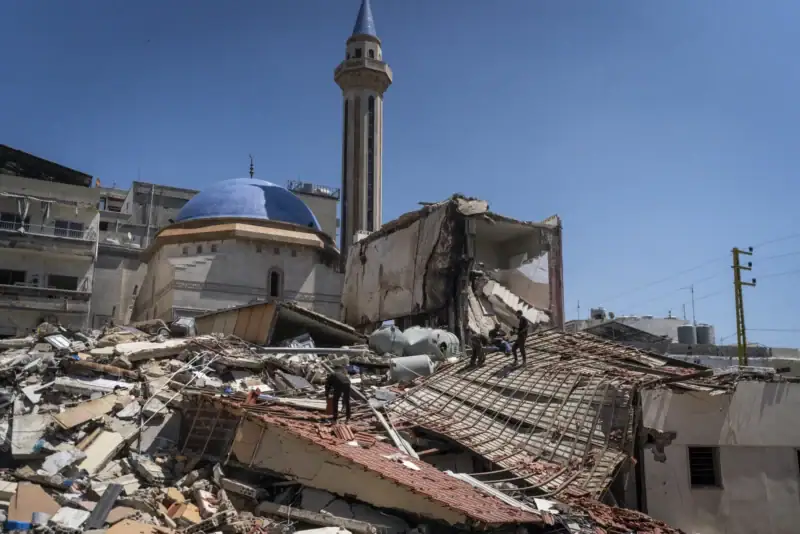
Despite the pause in major combat, the fragility of the agreement was highlighted by continuing Israeli aggression including a strike that killed five people, among them a journalist.
The US president stated on Truth Social that the meeting went “very well” and emphasised that the US intends to assist Lebanon in protecting itself from Hezbollah.
While Hezbollah is not a party to the talks, the group maintains its stance on the right to resist occupying forces.
Trump also indicated plans to host Israeli Prime Minister (PM) Benjamin Netanyahu and Lebanese President Joseph Aoun in the near future, suggesting a “great chance” for a formal peace agreement within the year.
The terms of the ceasefire, facilitated by the US State Department, outline specific obligations for both nations. While Israel, under the agreement, maintains the “right to act in self-defence against imminent or ongoing attacks”, Lebanon is tasked with taking steps to prevent Hezbollah and other non-state armed groups from launching operations against Israeli targets.
The agreement also recognises Lebanese security forces as having the sole responsibility for the country’s internal security.
Lebanon’s Minister of Information, Paul Morcos, stated that the extension was requested by the Lebanese government. He noted that Beirut is willing to deploy the national army to the borders and work toward a “monopoly of arms,” provided that Israeli forces withdraw from the country.
Morcos described the ongoing Israeli presence as an obstacle to the government’s efforts to disarm non-state groups.
Inside the Oval Office, Ambassador Moawad thanked Trump for the “historic moment” and expressed a desire to “make Lebanon great again” with American support. Ambassador Leiter remarked that the two countries have “never been next to each other more than today”, noting that the diplomatic progress was decades in the making.
However, skepticism remains regarding the longevity of the truce. Israel’s Ambassador to the United Nations (UN) Danny Danon told CNN the extension is “not 100 percent” certain because the Lebanese government lacks full control over Hezbollah.
Meanwhile, US Secretary of State Marco Rubio has credited Trump’s personal involvement as the factor that made the extension possible, allowing more time for negotiations toward a permanent settlement.