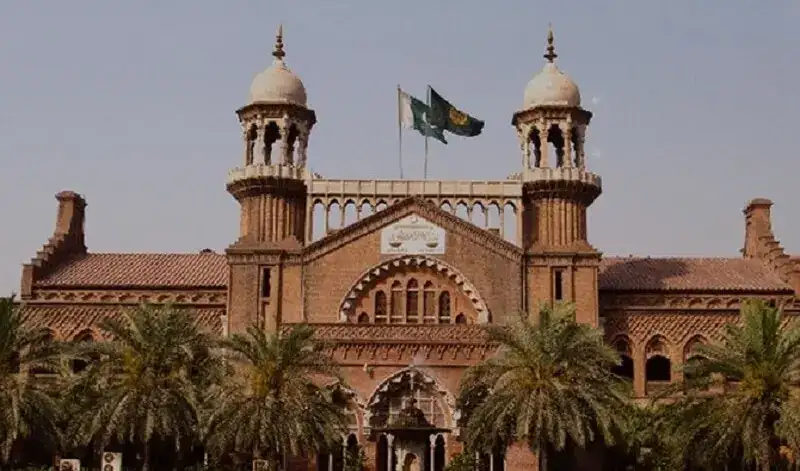
The Lahore High Court (LHC) has dismissed a petition from a father seeking to avoid child support payments based on a past agreement, establishing that a minor’s right to financial maintenance is a continuous legal and religious obligation that cannot be permanently waived.
The Court ruled that a father cannot use a previous settlement to escape his ongoing legal, moral, and religious obligation to maintain his minor child.
The court held that a minor’s right to maintenance cannot be permanently extinguished or waived through private contracts.
Justice Mohsin Akhtar Kayani issued the ruling while dismissing a petition filed by Akhtar Hussain Awan. The petitioner had challenged the concurrent judgments of both a family court and an appellate court, which had previously allowed a maintenance claim filed by a minor, Naseer Akhtar Awan, through his mother, Sadia Awan.
The father argued that a previous maintenance suit had already been settled through a compromise agreement in 2007. Under that specific agreement, he paid Rs 60,000, and both parties agreed not to raise any future financial claims.
Based on this, the petitioner contended that a subsequent suit filed in 2019 was barred by limitation laws and the principle of res judicata, which prevents a matter from being litigated twice.
Justice Kayani rejected these arguments, ruling that previous agreements preventing minors from enforcing their future maintenance rights are void under the law. The judgment clarified that while past accrued financial claims can be settled, a minor’s ongoing right to maintenance during their period of dependency cannot be signed away.
The court ruled that the maintenance of a minor child constitutes a recurring cause of action, meaning it is not barred by the principle of res judicata.
The judgment stated that providing food, clothing, shelter, education, healthcare, and other essential necessities remains a father’s continuous responsibility.
Justice Kayani observed that under the law, every father is bound by a legal and moral obligation to maintain his wife and minor children in all respects. The court stated that this obligation is neither optional nor contingent upon the will of the father, defining it as a continuing responsibility imposed by both statutory law and Islamic injunctions.
Citing the Holy Quran and the traditions of the Holy Prophet (PBUH), the judge stated that a father cannot avoid this divine duty through private deals that harm the welfare of a minor.
The court also held that Article 120 of the Limitation Act, 1908, does not apply to claims for the past maintenance of a minor child or a wife during an existing marriage.
Following the dismissal of the petition, the court ordered the judgment to be sent to the Law and Justice Commission and the Ministry of Law to consider reforms that align limitation laws for maintenance cases with Islamic principles.