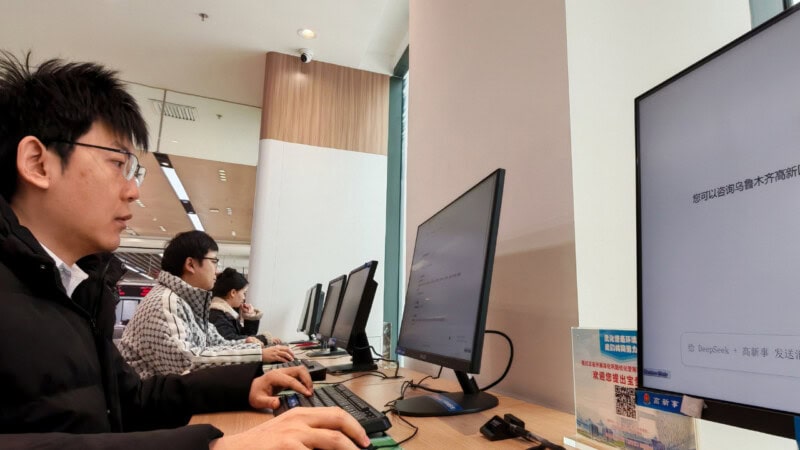
In the tech hubs of Shanghai and Suzhou, a shift in the labor market is taking place as young professionals bypass traditional corporate ladders to establish one-person companies (OPCs).
Driven by a combination of workplace age discrimination and the rapid advancement of Artificial Intelligence (AI), these individuals are using AI to perform roles that previously required entire teams.
The movement gains momentum as workers confront the “curse of 35,” a term popularized on Chinese social media to describe the invisible barrier where employees in tech and government sectors face termination or stagnation due to their age.
Karen Dai, the 38-year-old founder of SoloNest, hosts events in Shanghai for those looking to exit the traditional workforce. “At 35-years-old, there’s like this invisible line,” Dai said. “When you’re 30 or even younger, you’ll ask yourself: when I reach that invisible line of 35, what preparations should I make?”
Dai noted that while running a solo business was once a logistical hurdle, AI tools have lowered the entry barrier.
This technological shift allows solo entrepreneurs to maintain an “efficiency advantage,” according to 26-year-old Wang Tianyi.
Wang resigned from his position as a product manager at an internet firm last year and now generates up to 40,000 yuan ($5,800) per month by producing AI-generated commercials for clients.
This trend aligns with Beijing’s broader objective of technological self-reliance. Municipal governments are now offering financial incentives to encourage solo startups.
In Suzhou, officials pledged to cultivate 10,000 “OPC talents” by 2028, allocating 700 million yuan ($100 million) toward sectors like smart transportation and AI robotics.
Chengdu has introduced subsidies of up to 20,000 yuan for graduates launching AI-driven firms.
For the government, these subsidies serve as a cost-effective method to address youth unemployment, which currently affects one in six people aged 16 to 24 in China.
However, for many, the transition is rooted in necessity rather than just opportunity.
Wei Xin, 34, pivoted to social media content creation after realizing her role as a document reviewer at a consulting firm was at risk of automation. “There’s a bit of AI anxiety,” she said. “If I don’t use it, don’t approach it, I might soon be eliminated”.
While the model offers a sense of control and creativity, obstacles remain regarding long-term profitability. Wang noted that while many of his peers are choosing independent projects over corporate competition, the challenge lies in the execution. “The important thing in the future will be how to sell it,” he said.