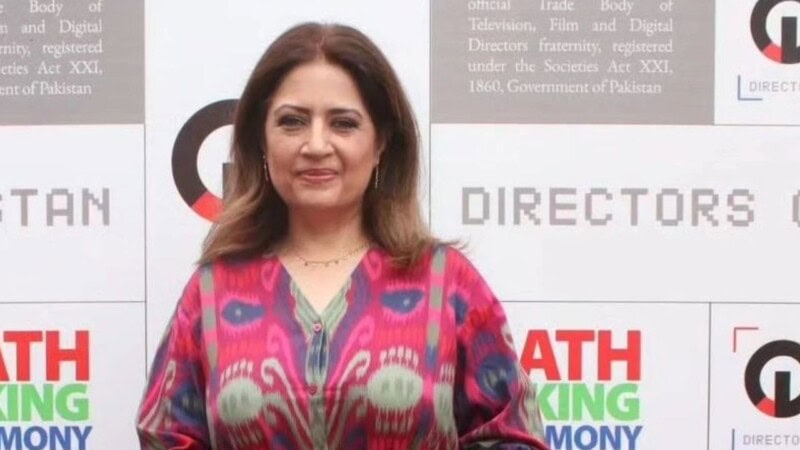
Veteran actress and Kia Drama Hai co-host Atiqa Odho is setting the record straight after two of her recent remarks unleashed major online backlash.
Odho, known for her unapologetic commentary on Kya Drama Hai, weighed in on everything from cultural taboos around arranged marriages to male actors’ wardrobe choices. But while some applauded her honesty, others accused her of overstepping her boundaries.
Now, she’s doubling down and sticking to her guns.
During a segment critiquing the drama Dastak, Odho called out actor Ali Raza for appearing onscreen with an unbuttoned shirt, exposing his chest. Her take was blunt.
“It’s not necessary to show a hairy chest on screen,” she said. “Please, do wax your chest. Hairy chests are the biggest turn-off. I can even take you to the salon.”
The comment, meant partly in jest, quickly went viral, with viewers split between outrage and laughter.
In a recent interview on Beyond with Bahjat, Odho addressed the fallout.
“I give my opinion as a senior commentator on Kia Drama Hai,” she said. “It doesn’t mean I’m trying to put down new actors. I just don’t think men should be showing up on family TV looking like that.”
Another flashpoint was her candid reflection on arranged marriages in conservative societies. Odho questioned how two strangers navigate intimacy immediately after marriage, an observation that, unsurprisingly, hit a nerve.
“We live in a conservative society where boys and girls often don’t even know each other before marriage,” she said on the show. “When the wedding night comes, they have to go through an experience like intimacy with a stranger.”
Many saw the comment as inappropriate. Odho disagrees.
“I still stand by that comment,” she told Beyond with Behjat. “It was real curiosity. In our culture, girls are told not to talk to men, and suddenly they become someone’s spouse. I wanted to understand how they feel on that first night.”
Odho emphasized that her role isn’t to shock, it’s to question, reflect, and hopefully spark change.
“The purpose of my comments is not criticism, it’s correction and improvement,” she said. “As seniors, we want to guide the new generation. Unfortunately, things get misrepresented.”