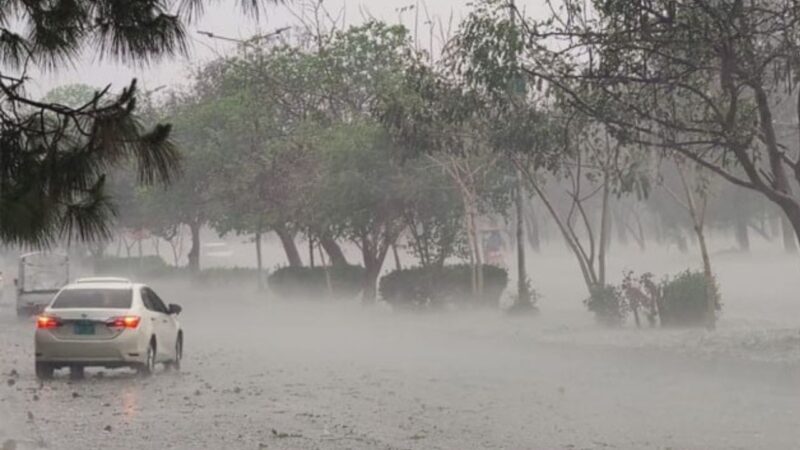
The death toll from monsoon rains across the country has risen to 109 while a powerful new weather system threatens to intensify flooding across Pakistan.
According to the daily situation data released by the National Disaster Management Authority (NDMA), two new deaths and 16 injuries over a 24-hour period have brought total nationwide injuries to 360, alongside widespread destruction of 305 houses and the loss of 92 livestock.
The Pakistan Meteorological Department (PMD) has forecast a powerful monsoon spell beginning July 29, warning of potential urban flooding and surging water levels in hill streams, nullahs, and upper river catchments.
Escalating transport disruptions, severe floodwaters have severed the vital rail link between Lahore and Faisalabad. Swelling flows and breaches along Nullah Deg and Bherr eroded soil beneath railway infrastructure near Qila Sattar Shah on the Lahore-Shahdara-Sheikhupura-Faisalabad section.
Pakistan Railways Lahore Divisional Superintendent Inam-ullah Khan confirmed that engineering teams suspended all passenger and freight train operations after breaches occurred at 25 locations along the route, forcing cancellations of departures and leaving travelers scrambling for refunds.
Simultaneously, rising water levels in the Chenab River have intensified flood risks around Head Panjnad in Ahmedpur East, prompting district authorities to issue urgent evacuation orders.
According to the flood control room, water inflow in the Chenab River at Head Panjnad has been recorded at 144,809 cusecs, while the outflow is recorded at 130,559 cusecs.
After the water inflow at the headworks climbed sharply, the local residents in vulnerable settlements such as Bet Ahmad, Chak Kahal, and Bet Bhutto initiated immediate relocation as rescue agencies monitor the expanding inundation zones.
Responding to mounting weather hazards, the Punjab government has imposed Section 144 across the province for 60 days. The Home Department notification strictly bans swimming, bathing, and unauthorized boating in rivers, canals, dams, lakes, ponds, and accumulated rainwater puddles. District administrations have been instructed to enforce the restrictions rigorously to prevent accidental drownings while disaster response teams remain on high alert.