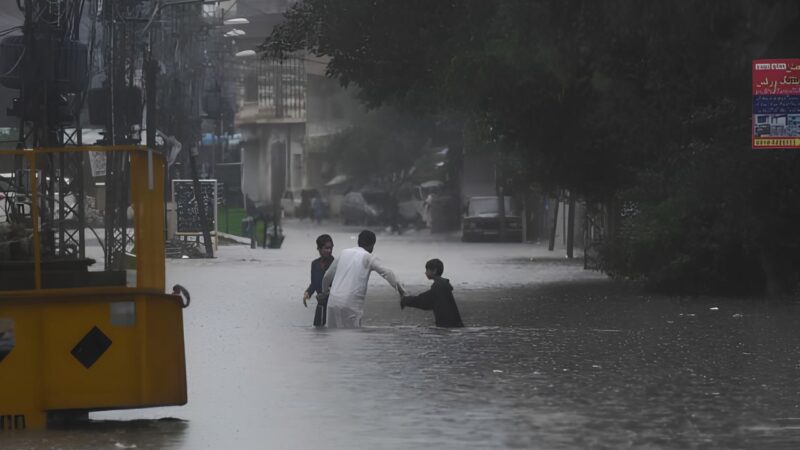
At least 37 people have lost their lives across the country in rain-related incidents as an intense monsoon spell triggered destructive flash floods, widespread landslides and collapsed buildings.
The severe weather has severely battered Khyber Pakhtunkhwa, Punjab, Gilgit-Baltistan, and Azad Jammu and Kashmir, leaving infrastructure damaged and communities marooned.
Torrential downpours have lashed major urban and rural centres, with Gujranwala recording a staggering 245mm of rainfall. Sialkot received 139mm, Mandi Bahauddin registered 138mm, and Lahore recorded 123mm, while Narowal and Gujrat experienced 117mm and 95mm respectively. The relentless precipitation has paralyzed routine activities, inundating major thoroughfares and urban underpasses.
The disaster has claimed 20 lives in Khyber Pakhtunkhwa and 17 across Punjab, where structural collapses, lightning strikes, and electrocution incidents compounded the human toll.
Property destruction mounted as dozens of houses were partially damaged or completely destroyed, while vital trade routes like the Wana-Gomal Zam Road in Lower South Waziristan faced blockages from massive landslides.
In Gilgit-Baltistan, cloudbursts triggered severe flash floods and landslides in Astore district, damaging homes, agricultural land, and cutting off the vital Astore Valley Road. Authorities warn that rapid glacier melt heightens the risk of glacial lake outburst floods across northern mountainous communities, threatening suspension bridges in Bagrot and Hunza. The Met office has warned of a glacial lake outburst flood in Gilgit- Baltistan till July 26.
Meanwhile, water levels in the Chenab River surged from heavy inflows and increased water releases from across the border, placing headworks under medium flood alerts. Rescue operations and relief distributions remain active across affected zones as meteorological departments predict continued downpours.