
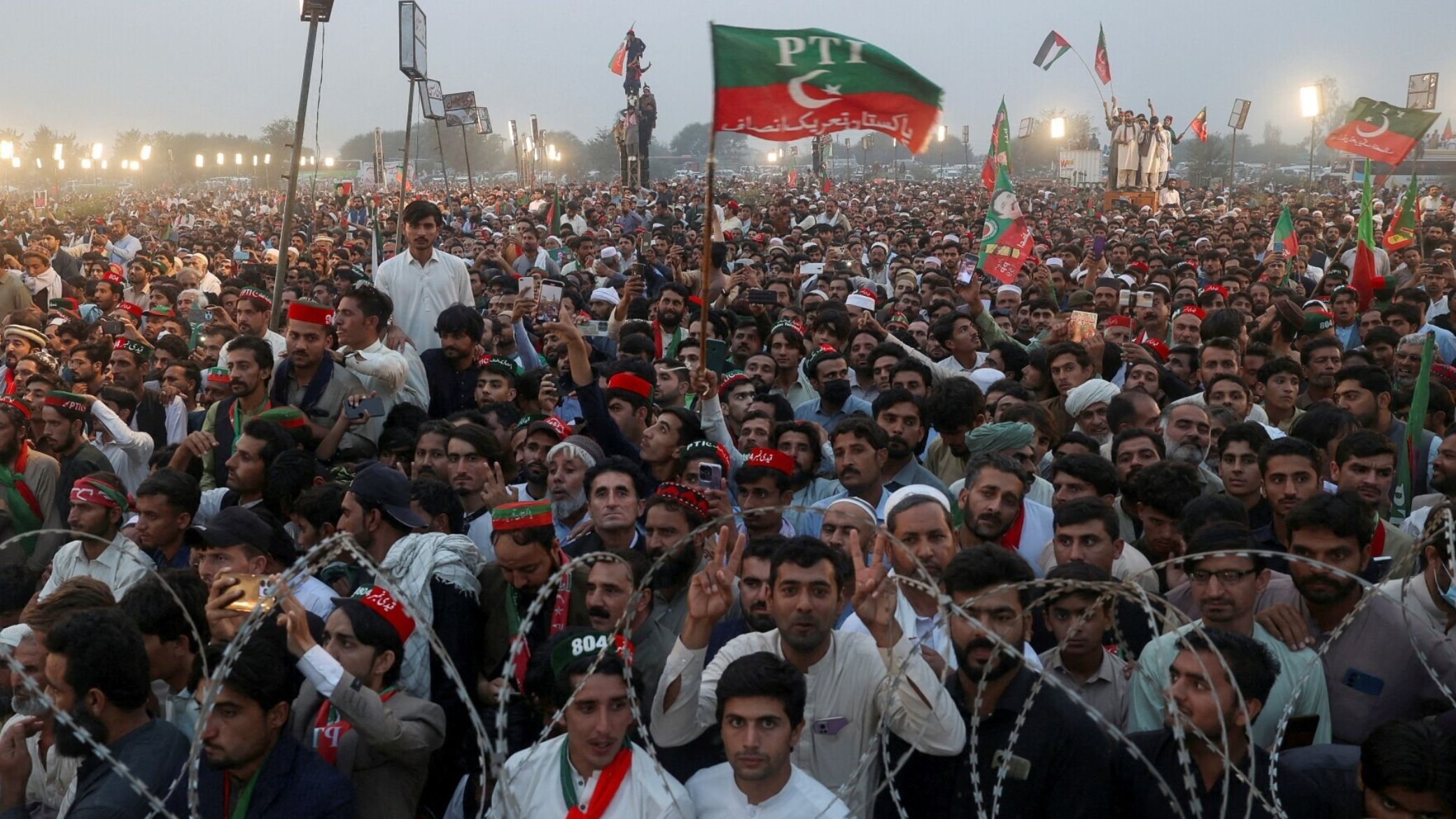


More than half of Khyber Pakhtunkhwa (KP) residents have rejected the idea of participating in future Pakistan Tehreek-e-Insaf (PTI)-led protests, according to a new survey conducted by Gallup Pakistan.
Reported by a private media outlet, the survey reveals that a large majority of residents in KP prefer collaboration with the federal government instead of street agitation.
The province-wide poll, conducted between February and March 2025 and involving 3,000 respondents, shows that 85 percent of KP residents support working with the federal government for the province’s development. Only 10 percent opposed cooperation, while five percent chose not to respond.
Interestingly, while most respondents back collaborative governance, nearly two-thirds believe that targeted protests can still play a role in pushing for change at the federal level. This indicates a public that wants development through coordination but still sees protest as a legitimate last resort.
Across political lines, 86 percent of PTI voters, 93 percent of PML-N supporters, 87 percent of JUI-F backers and 86 percent of ANP constituencies favoured federal cooperation.
When asked about future PTI-led protests, 53 percent of respondents rejected participation, 40 percent planned to join, and 7 percent were undecided. Regarding past sit-ins and demonstrations, 60 percent criticised the provincial government for allowing such activities to distract from governance and public welfare, while 32 percent supported them and 8 percent did not answer.
Despite some resistance to protest culture, 60 percent still consider protests against the federal government a valid way to demand change. About 32 percent disagreed, while 8 percent did not respond.
The survey also compared provincial leadership. Around 50 percent of KP residents rated Punjab Chief Minister Maryam Nawaz’s performance better than that of KP Chief Minister Ali Amin Gandapur, while 39 percent said Gandapur was performing better. Among PTI supporters, 37 percent also rated Maryam’s performance higher.
When asked whether Gandapur should be replaced, 47 percent favoured removing him, 40 percent opposed the idea, and 13 percent did not respond.
A majority of respondents (53 percent) expressed dissatisfaction with the government’s efforts to curb corruption, while 49 percent were unhappy with employment opportunities. However, 47 percent approved of the government’s work to provide jobs.
In terms of public services, 64 percent were satisfied with healthcare and access to clean water, while 34 and 35 percent respectively, expressed dissatisfaction. Access to education was seen positively by 62 percent, though 36 percent remained unhappy.
During PTI’s 13 years of rule in KP, 59 percent said roads improved, 53 percent saw better public transport, and 50 percent noticed better sanitation. However, 54 percent said no further development had happened since the 2024 elections.
Concerns remain about the lack of progress in public transport and sanitation, with 61 percent and 58 percent, respectively, saying the situation is unsatisfactory. Even PTI voters echoed this, with nearly half saying there had been no recent work in these areas.
While 74 percent acknowledged better access to clean water and education, and 66 percent cited improved roads, many still criticised other amenities. About 81 percent were unhappy with libraries, 77 percent with parks, 70 percent with community centres, and 66 percent with gas supply.
The survey also highlighted that southern districts like DI Khan lag behind other regions in basic facilities. Overall, the findings reflect mixed public sentiment, with some recognition of progress but deep concerns over governance, corruption and regional inequalities that could shape KP’s political landscape in the coming months.
'%3e%3crect%20y='0.445312'%20width='48'%20height='48'%20rx='24'%20fill='white'%20fill-opacity='0.5'/%3e%3crect%20x='0.5'%20y='0.945312'%20width='47'%20height='47'%20rx='23.5'%20stroke='%23808080'/%3e%3cpath%20d='M34.625%2024.4453L14%2024.4453'%20stroke='%23808080'%20stroke-width='0.920053'/%3e%3cpath%20d='M23.375%2034.4453L13.375%2024.4453L23.375%2014.4453'%20stroke='%23808080'%20stroke-width='0.920053'/%3e%3c/g%3e%3cdefs%3e%3cfilter%20id='filter0_b_489_44344'%20x='-12'%20y='-11.5547'%20width='72'%20height='72'%20filterUnits='userSpaceOnUse'%20color-interpolation-filters='sRGB'%3e%3cfeFlood%20flood-opacity='0'%20result='BackgroundImageFix'/%3e%3cfeGaussianBlur%20in='BackgroundImageFix'%20stdDeviation='6'/%3e%3cfeComposite%20in2='SourceAlpha'%20operator='in'%20result='effect1_backgroundBlur_489_44344'/%3e%3cfeBlend%20mode='normal'%20in='SourceGraphic'%20in2='effect1_backgroundBlur_489_44344'%20result='shape'/%3e%3c/filter%3e%3c/defs%3e%3c/svg%3e)
'%3e%3crect%20y='0.445312'%20width='48'%20height='48'%20rx='24'%20fill='white'%20fill-opacity='0.5'/%3e%3crect%20x='0.5'%20y='0.945312'%20width='47'%20height='47'%20rx='23.5'%20stroke='%23808080'/%3e%3cpath%20d='M13.375%2024.4453L34%2024.4453'%20stroke='%23808080'%20stroke-width='0.920053'/%3e%3cpath%20d='M24.625%2014.4453L34.625%2024.4453L24.625%2034.4453'%20stroke='%23808080'%20stroke-width='0.920053'/%3e%3c/g%3e%3cdefs%3e%3cfilter%20id='filter0_b_489_44344'%20x='-12'%20y='-11.5547'%20width='72'%20height='72'%20filterUnits='userSpaceOnUse'%20color-interpolation-filters='sRGB'%3e%3cfeFlood%20flood-opacity='0'%20result='BackgroundImageFix'/%3e%3cfeGaussianBlur%20in='BackgroundImageFix'%20stdDeviation='6'/%3e%3cfeComposite%20in2='SourceAlpha'%20operator='in'%20result='effect1_backgroundBlur_489_44344'/%3e%3cfeBlend%20mode='normal'%20in='SourceGraphic'%20in2='effect1_backgroundBlur_489_44344'%20result='shape'/%3e%3c/filter%3e%3c/defs%3e%3c/svg%3e)