
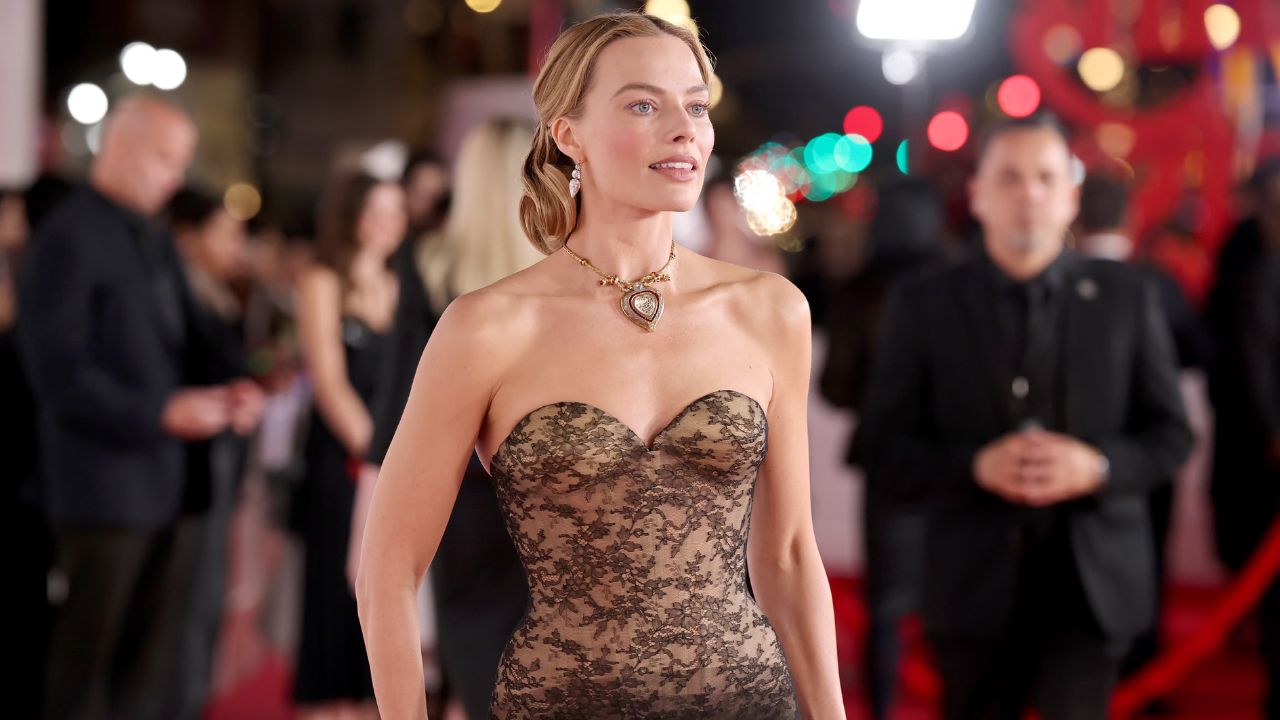


Margot Robbie turned heads at the Los Angeles premiere of her upcoming film Wuthering Heights but it wasn’t her acting or gown that dominated conversation on social media. The spotlight fell on an opulent piece of jewellery with a centuries-old history: Mughal Empress Nur Jahan’s Taj Mahal Diamond necklace.
The heart-shaped diamond, mounted in jade and suspended from a gold, ruby, and diamond chain, bears an inscription in Persian reading “Love is Everlasting”, alongside Nur Jahan’s name.
The jewel was originally gifted by Mughal Emperor Jehangir to his wife as a symbol of devotion and later passed down to Empress Mumtaz Mahal.
Over the centuries, the necklace changed hands multiple times. Cartier acquired the piece, redesigning it with a gold and ruby chain, rondelles, and tassels. In 1972, Cartier president Michael Thomas presented it to Elizabeth Taylor and Richard Burton as a birthday and Valentine’s Day gift, creating one of the most iconic jewels in Hollywood history.
The necklace was sold as part of Taylor’s estate in December 2011 for $8.8 million, setting a record for Indian jewellery at the time.
Now decades later, Robbie has worn the necklace under the glare of the red carpet, reviving Mughal history.
But the appearance has sparked a wave of criticism online, with social media users highlighting the necklace’s colonial and controversial provenance. “Give us our jewels back… Go make and display and museumify your own,” one netizen wrote, while another noted, “That means she was wearing a stolen neckpiece. xD” Others drew attention to Cartier’s role in the historical acquisition of such jewels: “Cartier - the thief? The symbol of colonialism and revisionism,” one commentator said.
Many reactions focused on the broader implications of a white Hollywood actress wearing a piece tied to India’s royal heritage. One user asked, “Before people justify what this brand has done, ask yourself why they never ask other actors who are people of colour to wear these jewels? Why always white women? What message do they wanna send? That it belongs to white people?”
As Wuthering Heights prepares for its February 13 release, the necklace has become an unexpected focal point, raising questions about history, ownership, and the ethics of luxury jewellery.
'%3e%3crect%20y='0.445312'%20width='48'%20height='48'%20rx='24'%20fill='white'%20fill-opacity='0.5'/%3e%3crect%20x='0.5'%20y='0.945312'%20width='47'%20height='47'%20rx='23.5'%20stroke='%23808080'/%3e%3cpath%20d='M34.625%2024.4453L14%2024.4453'%20stroke='%23808080'%20stroke-width='0.920053'/%3e%3cpath%20d='M23.375%2034.4453L13.375%2024.4453L23.375%2014.4453'%20stroke='%23808080'%20stroke-width='0.920053'/%3e%3c/g%3e%3cdefs%3e%3cfilter%20id='filter0_b_489_44344'%20x='-12'%20y='-11.5547'%20width='72'%20height='72'%20filterUnits='userSpaceOnUse'%20color-interpolation-filters='sRGB'%3e%3cfeFlood%20flood-opacity='0'%20result='BackgroundImageFix'/%3e%3cfeGaussianBlur%20in='BackgroundImageFix'%20stdDeviation='6'/%3e%3cfeComposite%20in2='SourceAlpha'%20operator='in'%20result='effect1_backgroundBlur_489_44344'/%3e%3cfeBlend%20mode='normal'%20in='SourceGraphic'%20in2='effect1_backgroundBlur_489_44344'%20result='shape'/%3e%3c/filter%3e%3c/defs%3e%3c/svg%3e)
'%3e%3crect%20y='0.445312'%20width='48'%20height='48'%20rx='24'%20fill='white'%20fill-opacity='0.5'/%3e%3crect%20x='0.5'%20y='0.945312'%20width='47'%20height='47'%20rx='23.5'%20stroke='%23808080'/%3e%3cpath%20d='M13.375%2024.4453L34%2024.4453'%20stroke='%23808080'%20stroke-width='0.920053'/%3e%3cpath%20d='M24.625%2014.4453L34.625%2024.4453L24.625%2034.4453'%20stroke='%23808080'%20stroke-width='0.920053'/%3e%3c/g%3e%3cdefs%3e%3cfilter%20id='filter0_b_489_44344'%20x='-12'%20y='-11.5547'%20width='72'%20height='72'%20filterUnits='userSpaceOnUse'%20color-interpolation-filters='sRGB'%3e%3cfeFlood%20flood-opacity='0'%20result='BackgroundImageFix'/%3e%3cfeGaussianBlur%20in='BackgroundImageFix'%20stdDeviation='6'/%3e%3cfeComposite%20in2='SourceAlpha'%20operator='in'%20result='effect1_backgroundBlur_489_44344'/%3e%3cfeBlend%20mode='normal'%20in='SourceGraphic'%20in2='effect1_backgroundBlur_489_44344'%20result='shape'/%3e%3c/filter%3e%3c/defs%3e%3c/svg%3e)